




A study in Nutrients 2025 reviewed decades of research on magnesium and migraine in adults. The authors analysed clinical trials and observational studies and concluded that magnesium supplementation is associated with fewer migraine attacks and reduced pain intensity in both acute and long-term episodes.
The work focuses on people with migraine, one of the leading causes of neurological disability in the world. For those who live with these recurrent headaches, the message is clear: magnesium status in the body matters and can make a difference to the frequency and impact of attacks.
Migraine is common, and so is magnesium deficiency.
The review reminds us that migraine affects around 15 per cent of the world’s population each year and is one of the leading causes of years lived with disability in adults aged 20-59. It is not just a headache, but is accompanied by nausea, sensitivity to light and noise and can completely limit daily activity.
In parallel, magnesium deficiency is very common. Diets poor in plant foods, digestive or renal losses and some medications reduce its levels. The authors collect data showing less magnesium in blood, saliva and inside the cells of people with migraine, even when standard tests appear normal.
How magnesium modulates brain excitability and pain
Magnesium is involved in over 600 enzymatic reactions and is key to cellular energy production. In the nervous system it acts as a physiological brake, blocking in a controlled way the calcium channel of the NMDA receptor, a gateway for excitatory signals related to pain and neuronal overload.
When magnesium is missing, this gateway is more open. It increases the excitability of neurons, promotes oxidative stress and facilitates so-called cortical spreading depression, an electrical phenomenon associated with migraine aura and the activation of pain pathways. The mineral also influences the release of neurotransmitters, the production of nitric oxide which regulates vascular tone, and the inflammatory response.
What the evidence says about magnesium supplementation in migraine
The article compiles clinical trials with magnesium intravenously in the emergency department and orally in prevention. In acute attacks, most studies with intravenous magnesium sulphate show rapid relief of pain and symptoms such as nausea and photophobia, with a favourable safety profile.
In prevention, several trials with different magnesium salts, such as citrate or oxide, describe fewer migraine days per month and lower average pain intensity. Not all studies are positive, partly because of differences in dosage, chemical forms and duration, but recent meta-analyses point to a significant reduction in attack frequency in those who take magnesium continuously.
Daily habits that support magnesium and the migraine-sensitive brain
Beyond supplements, the study highlights that many people with migraine have diets of lower nutritional quality. Increasing consumption of pulses, green leafy vegetables, nuts and whole grains helps to meet the needs of magnesium and B vitamins, which help in energy metabolism and balance the nervous system.
Other habits are also important, such as maintaining regular sleep schedules, staying well hydrated, limiting excess caffeine and alcohol and avoiding prolonged fasting that can trigger crises. Moderate and constant physical activity helps to stabilise sensitivity to pain and mood, factors that are closely linked to the migraine experience.
How Nutribiolite’s MAG-FUSION fits into this magnesium physiology
The heart of the scientific paper is clear: when the body has enough magnesium, neuronal excitability is better modulated and the migraine response becomes less extreme. It is this same physiological pathway that a magnesium-focused food supplement such as MAG-FUSION seeks to support.
Although the specific formulation of MAG-FUSION is not detailed in the available information, the main focus is on magnesium itself. The product is intended as a nutritional support for adults who want to take care of their neuromuscular balance and their daily energy feeling, areas where magnesium has a well-described role in the scientific literature.
In practice, this means accompanying with a capsule a routine that already includes a plant-rich diet, adequate hydration and sensible stress management. The supplement does not replace these pillars, it reinforces them from within by providing magnesium in a concentrated, easy-to-take form.
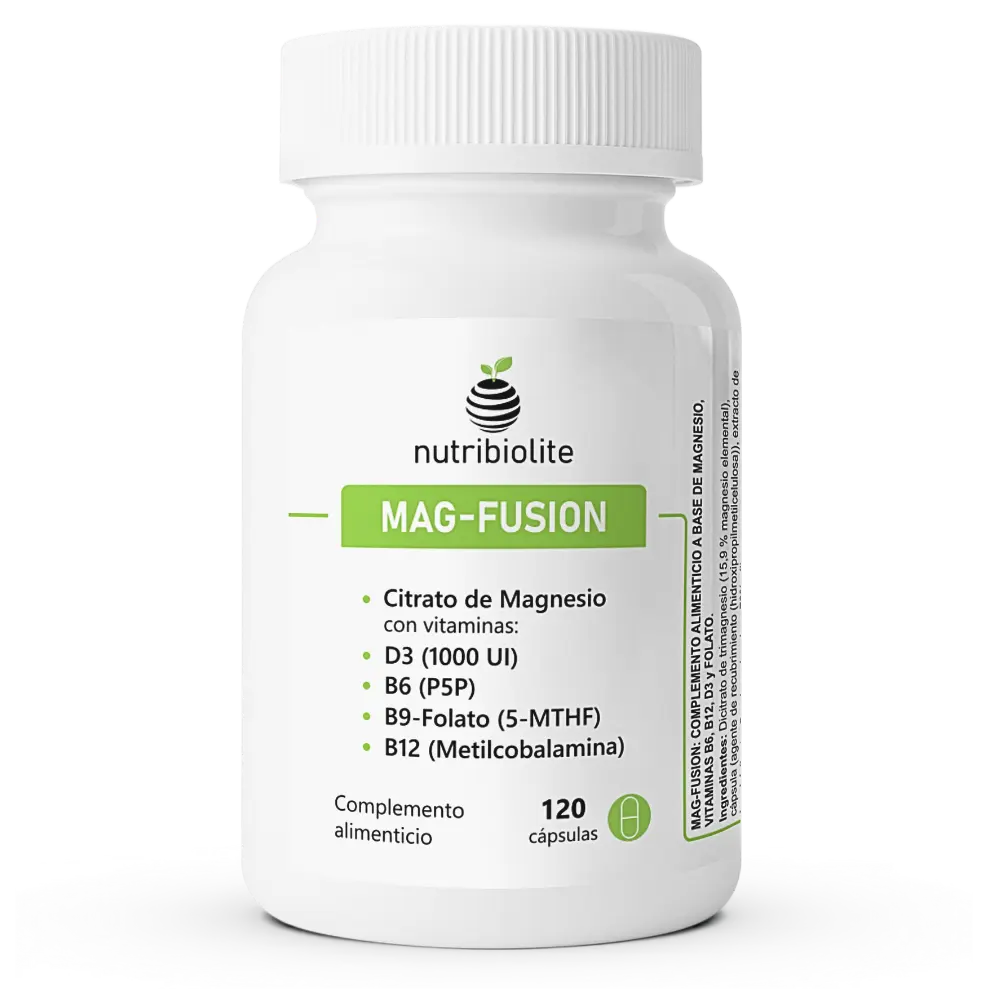
Nutribiolite MAG-FUSION is a magnesium supplement designed for adults who want to support their energy and neuromuscular function on a daily basis.
Final summary, magnesium, migraine and daily self-care
The review in Nutrients reinforces an important idea, magnesium is part of the physiology of migraine and its deficiency is associated with more attacks and greater pain intensity. Supplementation shows benefits in many trials, both in acute episodes and in prevention, although larger and more homogenous studies are still needed.
For everyday life, the combination of a magnesium-rich diet, regular rest habits and, when it makes sense, a supplement like MAG-FUSION, offers a coherent way to support the nervous system and everyday energy from a physiological perspective, without promising miracle solutions.
This content is informative and does not replace the advice of a health professional.
Frequently asked questions
What is the relationship between magnesium and migraine according to the reviewed study?
The review in Nutrients reports that people with migraine tend to have lower levels of magnesium in the blood and inside the cells. In addition, many clinical trials show that magnesium supplementation is associated with fewer attacks and less pain intensity.
Does magnesium cure migraine or eliminate it completely?
Magnesium is not intended as a cure, but as a physiological support. It helps modulate the excitability of the nervous system and some studies show fewer attacks, but migraine remains a complex condition influenced by genetics, hormones, stress and lifestyle.
For whom might a magnesium supplement like MAG-FUSION make sense?
MAG-FUSION may suit adults who experience frequent fatigue, muscle tension or high mental workload and want to take care of their neuromuscular function and energy. It makes more sense for people who already take care of their diet and are looking for additional support in line with the physiology of magnesium.
Is diet enough to cover magnesium if I have a migraine?
A diet rich in legumes, nuts, seeds and green leafy vegetables greatly improves magnesium intake. However, the review reminds us that many people fall short of the recommendations, so in some cases, a supplement may be a reasonable additional tool.
How long does it usually take to see changes when magnesium is taken continuously?
The clinical trials reviewed usually last between one and three months. The authors describe improvements that appear progressively, so magnesium should be considered as a sustained support over time, as part of an overall self-care strategy.