



A study in Frontiers in nutrition in 2025 looked at how an acute dose of caffeine influences performance in 15 elite badminton players. It was a randomised, double-blind, crossover clinical trial, with specific tests of anticipation, agility and repeated sprints following a fatigue protocol.
Athletes who took caffeine showed better reaction times, greater accuracy in anticipating shots and better ability to maintain speed in repeated sprints. The effect was observed in the context of fatigue, i.e. when the body and brain were already stressed. For everyday life, these results reinforce the idea that caffeine, used judiciously, can support attention and mental performance in high-demand situations.
In badminton players, the improvement was particularly clear in speed of response and the ability to sustain intense effort. No relevant changes were observed in the accuracy of very fine strokes, such as the smash, suggesting that caffeine influences decision-making speed and resistance to fatigue more than highly automated technique.
These findings are particularly interesting for people who work or train under mental and physical pressure, where maintaining clarity and reaction speed makes the difference between performing well or being overcome by fatigue.
What the study did and what changes were observed in the athletes
The work involved 15 elite badminton players, all young men with extensive competitive experience and low regular caffeine intake. Each participated in two sessions separated by a week, taking caffeine in one session and a placebo in the other, without knowing which condition they were in.
The dose was 5 milligrams of caffeine per kilogram of body weight, ingested once and with a 45-minute wait to allow for absorption. The athletes then underwent a 50-minute fatigue protocol followed by a number of specific tests, including anticipation tests, reaction times, running agility and repeated sprints.
The results showed that, under caffeine, anticipation improved after fatigue, while under placebo it worsened. Reaction times were shortened with caffeine and lengthened with placebo. In physical tests, overall agility was better with caffeine and distance covered in repeated sprints was maintained or increased, compared to a decrease with placebo. Subjective perception of effort did not change, suggesting that athletes performed better without feeling they were working harder.
In contrast, smash accuracy showed no clear differences between conditions. This indicates that caffeine was associated with better information processing and greater effort capacity, but did not change a highly trained and stable technical skill.
How caffeine acts on the brain and muscles in fatiguing situations
Caffeine is a central nervous system stimulant that acts primarily by blocking adenosine receptors. Adenosine is a molecule that accumulates with exertion and prolonged wakefulness and sends signals to the brain that it is tired. When caffeine occupies these receptors, the message of fatigue is attenuated and the subjective feeling of exhaustion is reduced.
On a cognitive level, this blockage translates into increased alertness, better attention span and shorter reaction times. In sports such as badminton, where the shuttlecock can reach very high speeds and decisions must be made in milliseconds, this improvement in the perceive-decide-act chain has a direct impact on performance.
At the muscle level, caffeine is associated with increased calcium release within the muscle fibres and improved contractile arousal. This makes it easier for the muscle to generate force repeatedly and delays the onset of fatigue in high-intensity, short-duration efforts. Increased use of fat as a fuel has also been described, which helps to save muscle glycogen during prolonged exercise.
Together, these mechanisms explain why, in the study, athletes maintained their sprints and agility better after the fatigue protocol when they had taken caffeine. The brain continued to process information quickly and the muscles retained the ability to respond powerfully.
Daily habits that support an alert mind and a quick response
Beyond the lab, a combination of good sleep hygiene, balanced nutrition and regular physical activity is the foundation for a fast-responding brain. Getting enough sleep, at regular times, helps attention and memory circuits function steadily throughout the day.
In nutrition, maintaining a moderate caffeine intake spread throughout the day can support alertness, as long as it does not interfere with a good night’s rest. Limiting consumption in the hours before bedtime and avoiding very high doses all at once reduces the risk of jitteriness or insomnia.
Movement is also key. Activities that combine physical exertion and rapid decision-making, such as racket sports, team games or training with changes of direction, train both the body and the speed of mental processing. Integrating active breaks and short breaks during intense work days helps to avoid accumulated mental fatigue.
Finally, taking care of hydration and avoiding large swings in blood glucose, for example with very sugary meals followed by long periods without food, helps to maintain a more stable sense of energy and sustained attention.
How Nutribiolite’s ONIT, a mental performance supplement, aligns with this evidence
The study in badminton players shows that an acute dose of caffeine can sustain attention, shorten reaction times and help maintain physical performance under fatigue. This kind of effect on alertness and speed of response is precisely the focus of a nootropic supplement such as ONIT from Nutribiolite, designed for adults who want to maintain mental clarity and performance in times of high demand.
ONIT is a food supplement based on plant extracts, amino acids, choline and phosphatidylserine. Within its plant profile, it incorporates natural sources of caffeine such as guarana and green tea, which provide this stimulant in a phytocomplex context, together with other bioactive compounds specific to these plants. The presence of caffeine in this framework is aimed at promoting alertness, concentration and a feeling of mental energy, in line with what has been observed in the trial with elite athletes.
ONIT’s formulation combines this plant-based caffeine with nutrients related to cognitive function, such as choline and phosphatidylserine, which are involved in the structure of neuronal membranes and the transmission of signals between neurons. This combination seeks a more comprehensive approach, where caffeine acts on speed and wakefulness and the other components support the structural and functional basis of the brain.
The product is thus positioned as a physiological support for people who already take care of their diet, rest and physical activity and who want an additional boost for attention, concentration and resistance to mental fatigue on demanding days.
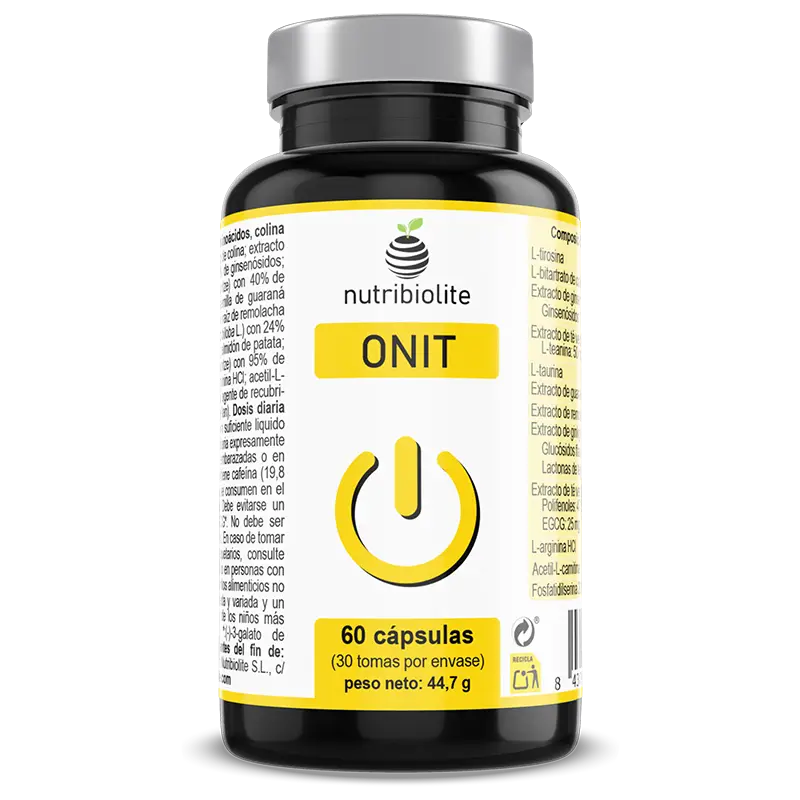
A nootropic supplement based on plants, amino acids, choline and phosphatidylserine, designed for adults looking to support their mental clarity and cognitive performance on demanding days.
Final summary, science, habits and nutritional support for mental performance
The trial in elite badminton players indicates that an acute dose of caffeine can make differences in reaction speed, anticipation and the ability to sustain intense sprints under fatigue. These effects are supported by well-described mechanisms on adenosine, neuronal activation and muscle function.
In everyday life, taking care of sleep, nutrition, movement and responsible caffeine use remains the basis for sustainable mental performance. In this context, supplements such as Nutribiolite’s ONIT are presented as an additional tool for those who wish to support attention and mental clarity in times of particular demand.
This content is informative and is not a substitute for the advice of a healthcare professional.
Frequently asked questions
What does it mean that caffeine has an acute effect on cognitive performance?
It means that a single dose, taken shortly before activity, is associated with measurable changes in attention, reaction times and ability to sustain effort. In the study, these effects were observed after 45 minutes of absorption and under fatigue-induced conditions.
Do the results of the badminton study apply to any active person?
The work was conducted in young male, elite athletes with low habitual caffeine intake. The physiological principles are general, but the magnitude of the effect may vary in people with different levels of training, age or caffeine tolerance.
How ONIT can fit into a routine to improve daily concentration
ONIT is designed to fit into a routine that already includes good rest, a balanced diet and physical activity. Its combination of caffeinated plant extracts, amino acids, choline and phosphatidylserine aims to support mental clarity and focus on days of high intellectual or physical demand.
Is caffeine in coffee the same as in a supplement such as ONIT?
The caffeine is the same molecule, but the context changes. In a supplement like ONIT, caffeine from plants such as guarana and green tea is combined with other nutrients geared towards cognitive performance, allowing for a more targeted approach than a stand-alone drink.
Does it make sense to use ONIT if I already consume caffeine on a daily basis?
It may make sense for adults who want more structured support for cognitive function and not just a one-off boost. The key is to maintain a moderate overall caffeine intake and to place ONIT within a health strategy that prioritises rest, nutrition and movement.