




A study in Nutrients 2025 reviewed dozens of papers on people with obesity, type 2 diabetes and Alzheimer’s disease. The authors explain how chronic inflammation and insulin resistance damage the brain and how certain nutrients, especially omega-3 fatty acids, can modulate these mechanisms.
The message is clear, metabolism and brain are connected. What happens in fat tissue and blood glucose ultimately influences memory, attention and mental speed. Taking care of these axes through diet and well-studied nutrients becomes a direct investment in brain ageing.
Obesity, insulin resistance and inflammation intertwine with cognitive decline
The article describes how obesity promotes low-grade inflammation in adipose tissue. This tissue releases inflammatory cytokines that reach the brain, alter communication between neurons and damage key memory structures such as the hippocampus.
Insulin resistance, typical of type 2 diabetes, exacerbates the problem. In the brain, insulin is involved in neuronal survival and synaptic plasticity. When neurons no longer respond well to insulin, it facilitates the accumulation of beta-amyloid and abnormal phosphorylation of tau protein, two hallmarks of age-related cognitive decline.
The authors point out that these alterations do not appear overnight. They are built up over years of inflammation, excess calories and a sedentary lifestyle. So intervening early with lifestyle changes and nutrients that reduce inflammation and oxidative stress can make a difference in the long term.
Omega-3 and other dietary compounds modulate inflammatory and oxidative mechanisms
The paper reviews the role of several bioactive compounds, including omega-3 polyunsaturated fatty acids found in fish oil. Two stand out, eicosapentaenoic acid, known as EPA, and docosahexaenoic acid, known as DHA, which is very abundant in the membranes of neurons.
In animal models and human studies, adequate levels of DHA and EPA are associated with reduced production of inflammatory cytokines, improved function of microglia, the brain’s defence cell, and an increased ability to remove beta-amyloid deposits. In addition, DHA is involved in the formation of mediators such as neuroprotectin D1, which protects against oxidative damage.
The review also reports epidemiological observations that people with higher consumption of oily fish or higher blood omega-3 levels show less cognitive decline with age. This is not a miraculous effect, but a continuous support for the integrity of neuronal membranes and a less inflamed brain environment.
Lifestyle habits that support the same mechanisms described by the study
The authors insist that the basis remains a lifestyle that reduces inflammation and improves insulin sensitivity. This includes a diet rich in vegetables, fruit, legumes, nuts and oily fish, along with reasonable control of sugars and trans fats.
Regular movement, including brisk walking on most days, improves insulin signalling and reduces systemic inflammation. Getting enough sleep and managing stress with breathing techniques or meditation also helps to keep the inflammatory pathways connecting metabolism and brain in check.
In this context, omega-3s from fish, in dietary form or concentrated in supplements, act as a specific booster on neuronal membranes and inflammatory mediators. The study in Nutrients fits with this vision of a brain that ages better when the metabolic environment is more stable.
How Nutribiolite’s DHA and phosphatidylserine supplement aligns with these mechanisms
Within this physiology, a supplement such as Nutribiolite’s DHA-PS, a fish oil-based supplement rich in DHA combined with phosphatidylserine, is of interest. The focus of the study is on long-chain omega-3s and their ability to modulate inflammation, oxidative stress and signals related to cognitive decline.
DHA from fish oil is a structural component of neuronal membranes. It provides membrane flexibility and promotes the proper insertion of receptors and ion channels, resulting in more efficient signal transmission. Studies reviewed in Nutrients link adequate levels of DHA with reduced beta-amyloid accumulation, improved neuronal debris clearance and a more balanced inflammatory profile.
Phosphatidylserine, on the other hand, is a key phospholipid on the inner side of the membrane of neurons. It is involved in cell-to-cell communication, neurotransmitter release and synaptic plasticity processes. Combining DHA and phosphatidylserine in the same formulation enhances both the physical quality of the membrane and the signalling processes that depend on it.
This synergy is consistent with the pathway described by the study, where the aim is to reduce chronic inflammation, limit oxidative damage and sustain communication between neurons in the face of the metabolic burden of modern life. A concentrated supply of DHA from fish oil, together with phosphatidylserine, provides physiological support for these mechanisms in adults who want to take care of their mental performance and brain ageing.
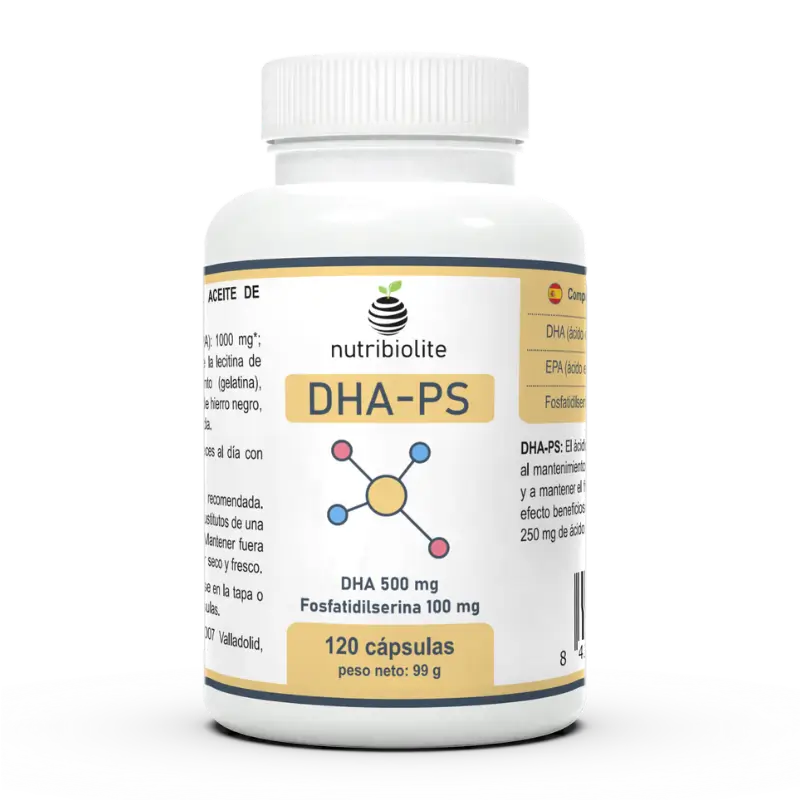
A supplement with DHA from fish oil and phosphatidylserine, designed for adults who wish to physiologically support their daily brain function.
Integrating nutritional support into a sustainable brain routine
The value of a formulation like DHA-PS is best understood when it is integrated into a routine that already takes care of metabolism. People with high mental workloads, adults who work long hours in front of screens, or those with a family history of cognitive decline often seek strategies to sustain their mental clarity over the years.
In these cases, combining a diet rich in oily fish, vegetables and fruit, regular exercise and good rest management with a supplement that provides concentrated DHA and phosphatidylserine can offer additional support at the level of neuronal membranes and inflammatory pathways. It is not a matter of replacing habits, but of reinforcing mechanisms that are already in place.
Frequently asked questions
What brain mechanisms does omega-3 from fish oil support?
The DHA present in fish oil is incorporated into the membranes of neurons. It provides flexibility, improves cell-to-cell communication and is associated with less inflammation and less beta-amyloid accumulation, according to the review in Nutrients.
Why combine DHA with phosphatidylserine?
DHA strengthens neuronal membrane structure and phosphatidylserine is involved in signalling and neurotransmitter release. Together they support both the physical support of the neuron and the communication processes that sustain memory and attention.
What is the link between insulin resistance and cognitive impairment?
Insulin resistance makes it difficult for neurons to use insulin well, impairing their survival and plasticity. The revised study links it to more brain inflammation, more beta-amyloid and increased risk of cognitive decline over time.
What type of person might a supplement like DHA-PS make sense for?
It is intended for adults who already take care of their diet, physical activity and rest, and who want additional support for their brain function. It may be of interest to people who are mentally demanding or concerned about cognitive ageing.
Does an omega-3 and phosphatidylserine supplement replace a diet rich in fish?
It does not replace a varied diet. Provides a concentrated and convenient form of DHA and phosphatidylserine that can complement the consumption of oily fish and other brain-healthy habits.
This content is for information only and is not a substitute for the advice of a healthcare professional.