




A large study in Advances in nutrition (Bethesda, Md.) published in 2025 reviewed decades of research on how diet modulates serotonin, a key molecule for mood, appetite, gut and sleep. The authors analysed clinical trials, observational studies and systematic reviews in adults, integrating data from different countries.
The central message is clear: what we eat influences the availability of tryptophan and the cofactors the brain needs to make serotonin and, from it, melatonin. This is linked to symptoms such as anxiety, sleep disturbances, appetite changes and digestive discomfort, which many people experience on a daily basis.
For the general adult population, the work suggests that serotonin functions as a bridge between diet, gut microbiota and mental well-being. A diet poor in certain nutrients may limit this pathway, while patterns rich in fibre, B vitamins, vitamin D, iron, magnesium and omega-3 fatty acids appear to promote it.
The study is particularly relevant for those who notice changes in sleep or mood in contexts of stress, irregular shifts or unbalanced diets. It does not propose a single solution, but rather a set of pieces that, when coordinated, help the serotonin-melatonin system to work more efficiently.
The review explains how diet conditions serotonin in the brain and gut
The review compiles papers in which serotonin markers were measured in blood, urine, gut tissue and, in some cases, by brain imaging techniques. It is not a single trial, but a global mapping of the available evidence up to 2025.
The authors describe that tryptophan, an essential amino acid that only comes through the diet, competes with other amino acids for entry into the brain. The ratio of tryptophan to other large amino acids, along with the effect of insulin after eating carbohydrates, determines how much tryptophan crosses the blood-brain barrier.
The paper classifies the effects as mild or moderate depending on the context. For example, a high-carbohydrate, low-protein meal may moderately increase tryptophan entry into the brain, while a pattern of chronic deficiency of B vitamins or iron may more sustainably reduce the ability to produce serotonin.
Serotonin, melatonin and microbiota form an axis connecting gut, brain and sleep
The article details the biochemical pathway, from tryptophan to serotonin and, in the pineal gland, to melatonin. It explains that the first enzyme, tryptophan hydroxylase, requires iron and a cofactor derived from folate and vitamin B12, while the conversion of 5-hydroxytryptophan to serotonin depends on active vitamin B6.
In addition, the review describes how the gut microbiota transforms some tryptophan into other compounds and how short-chain fatty acids, produced by fermenting fibre, stimulate enteroendocrine cells in the gut to manufacture peripheral serotonin. This serotonin does not cross into the brain, but modulates gut motility, sensation and signals that travel along the vagus nerve.
Taken together, the data support that a diet rich in fibre, with sufficient fermented foods and micronutrients, supports an environment where central and peripheral serotonin are kept in balance. This is associated in studies with fewer depressive symptoms, better appetite regulation and less frequent sleep disturbances.
Daily habits that support the tryptophan-serotonin-melatonin axis
From this review, several consistent habits emerge. Firstly, ensure an adequate intake of quality protein, spread throughout the day, to guarantee sufficient tryptophan without resorting to protein excesses in a single meal that reduce its entry into the brain.
Secondly, take care of the carbohydrate pattern. Light dinners with carbohydrates of moderate absorption, such as wholegrain cereals or legumes in prudent portions, can favour the ratio of tryptophan to other amino acids and, with it, the synthesis of serotonin in the hours before sleep.
It is also important not to neglect micronutrients. Diets rich in green leafy vegetables, legumes, nuts, oily fish and wholegrain foods help to cover B vitamins, vitamin D, magnesium, zinc and iron, all of which are involved in the enzymes of the serotonin pathway.
Finally, the review highlights the role of the microbiota. Daily inclusion of prebiotic fibre, such as that from fruits, vegetables and some cereals, along with fermented foods, supports the production of short-chain fatty acids and more stable gut-brain signalling.
How a rest supplement can align with serotonin physiology
This scientific framework helps to understand why some night’s rest formulations focus on the serotonin melatonin tryptophan pathway and accompanying nutrients. The idea is not to strain the system, but to provide parts that the body already uses naturally.
In this context, supplements that include serotonin precursors, such as 5-hydroxytryptophan derived from Griffonia simplicifolia, together with low-dose melatonin and cofactor micronutrients, rely on the same biochemistry described by the review. The aim is to accompany internal rhythms when diet and habits alone do not achieve stable rest.
4Sleep by Nutribiolite, a sleep supplement inspired by the serotonin-melatonin pathway
Although the scientific review does not directly study 4Sleep, it does reinforce the importance of tryptophan and its derivatives in the regulation of the serotonergic system and its connection with sleep. Griffonia simplicifolia provides 5-hydroxytryptophan, a form already advanced in the pathway, which the body converts into serotonin and subsequently into melatonin according to its own controls.
4Sleep, a supplement based on plant extracts and melatonin, is based on this physiological logic. The presence of melatonin in adjusted doses aims to clearly signal the onset of rest, while 5-hydroxytryptophan from Griffonia contributes to the supply of substrate for serotonin synthesis, the centrepiece of the system described in the scientific article.
The formulation is completed by plant extracts traditionally used for relaxation, which create an environment conducive for the gut-brain-sleep axis to function with less interference. In this way, 4Sleep does not replace lifestyle habits, but is integrated as a support for adults who already take care of their diet and wish to physiologically reinforce their sleep routines.
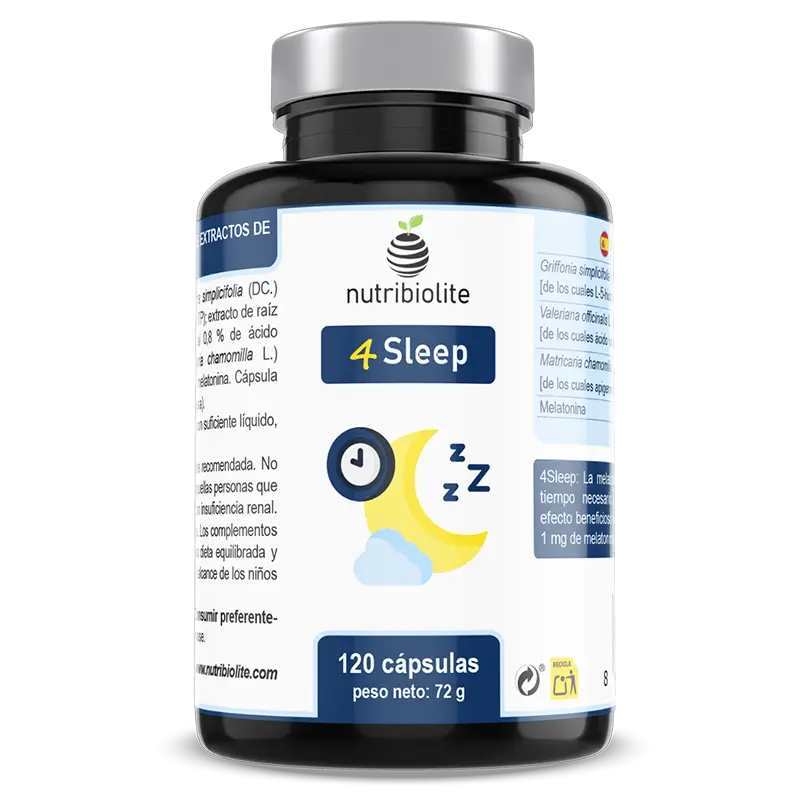
4Sleep by Nutribiolite is designed for adults who wish to support the physiological processes involved in a more stable night’s sleep with melatonin and plant extracts.
Practical summary, serotonin, habits and supplementary support
The review in Advances in nutrition shows that serotonin is at the interface between what we eat, the microbiota, mood and sleep. Maintaining a diet rich in tryptophan, key micronutrients and fermentable fibre, along with light routines and regular schedules, helps this system work in favour of rest.
Supplements such as 4Sleep are inspired by this same physiology, providing melatonin and plant-based tryptophan derivatives to accompany internal rhythms in more demanding stages. Together, diet, lifestyle and nutritional support can form a coherent strategy for taking care of the balance between mind, gut and sleep.
This content is informative and does not replace the advice of a health professional.
Frequently asked questions
What is the relationship between serotonin, nutrition and sleep according to the scientific review?
The article explains that serotonin depends on dietary tryptophan and several micronutrients. This serotonin is a precursor of melatonin, the hormone that marks the onset of rest, so the quality of our diet influences the stability of our sleep.
Why are tryptophan and 5-hydroxytryptophan so often mentioned?
Tryptophan is the essential starting amino acid and 5-hydroxytryptophan is an intermediate step closer to serotonin. The review shows that the availability of these compounds conditions how much serotonin the body can produce, with an impact on mood, appetite and sleep.
What eating habits best support the serotonin pathway?
A diet with quality protein spread throughout the day, moderately absorbed carbohydrates at dinner, plenty of vegetables, legumes, nuts, oily fish and wholegrain foods helps to cover tryptophan, B vitamins, vitamin D, magnesium, zinc and iron, all of which are involved in this pathway.
How does 4Sleep line up with what the serotonin study describes
4Sleep combines melatonin with 5-hydroxytryptophan from Griffonia simplicifolia and plant extracts. It is thus on the same physiological pathway described by the review, connecting tryptophan, serotonin and melatonin, offering additional support to those who already take care of their diet and night-time routine.
Does it make sense to use 4Sleep in conjunction with changes in diet and routine?
The review underlines that the basis lies in diet and daily habits. In people who already make these changes, a supplement such as 4Sleep can be integrated as physiological support to reinforce the sleep onset signal and the supply of serotonin-related precursors.