




A study in Neurological sciences : official journal of the Italian Neurological Society and of the Italian Society of Clinical Neurophysiology published in 2025 looked at several clinical trials of melatonin in people with Parkinson’s disease and sleep disorders. The researchers pooled data from five placebo-controlled studies and found that melatonin significantly improved subjective sleep quality, although changes in objective parameters were modest.
For those living with Parkinson’s, and their families, this finding suggests that adjusting the melatonin rhythm can translate into nights that feel more restful, even if lab records don’t change that much. The key is how the brain perceives rest and the relief of non-motor symptoms that accompany the disease.
What melatonin showed in people with Parkinson’s and sleep problems
The paper is a systematic review with meta-analysis, i.e. a statistical synthesis of several randomised, double-blind clinical trials. It included five studies of 219 people with Parkinson’s disease, followed for four to 16 weeks, who received either oral melatonin or placebo.
The main measure was the Pittsburgh Sleep Quality Index, a scale summarising how people rate their sleep. Melatonin reduced this score by almost two points relative to placebo, indicating a better perception of sleep, although the change was modest. There were no clear differences in total time asleep, daytime sleepiness or in parameters such as sleep latency or sleep efficiency.
In Parkinson’s symptoms, melatonin was associated with an improvement in the non-motor symptom scale, which includes aspects such as fatigue, mood and pain. In contrast, no relevant changes were observed in the motor part of the UPDRS scale or in global quality of life. Side effects, such as headache or tiredness, were similar to placebo, supporting a favourable safety profile.
How melatonin fits into sleep and Parkinson’s physiology
Melatonin is a hormone produced by the pineal gland after dark. It acts as a signal to the brain to start the night and coordinates the internal clock with the light-dark cycle. In Parkinson’s disease, nocturnal melatonin secretion has been shown to be decreased and more flattened, contributing to fragmented sleep and daytime sleepiness.
In this context, oral exogenous melatonin may reinforce this nocturnal signal, which the body itself emits less intensely. The meta-analysis shows that this reinforcement translates mainly into a better sense of sleep quality and some relief of non-motor symptoms, which often worsen when nights are irregular.
The study also discusses the possible neuroprotective role of melatonin. Antioxidant and anti-inflammatory effects have been described, with reductions in markers such as lipoperoxides and nitric oxide, which could modulate processes involved in Parkinson’s progression. However, the included trials were not designed to measure long-term neuroprotection, so these aspects are considered promising hypotheses, not firm conclusions.
Daily habits that support sleep rhythm in people with Parkinson’s
Beyond melatonin, the study reinforces a key idea, sleep in Parkinson’s is fragile and dependent on many factors. Medication, pain, stiffness, mood and ambient light all influence how the night is organised. Taking care of these aspects of the daily routine can make a tangible difference.
It helps to keep regular bedtimes and wake-up times, including weekends, and to encourage exposure to natural light in the morning. Reducing bright screens and intense lights later in the day makes it easier for the brain to release its own melatonin. Light dinners, avoiding caffeine in the evening and creating a quiet and safe environment in the bedroom are also simple measures that support rest.
Adapted physical activity during the day, such as walking or gentle balance exercises, is associated with better sleep and mood in Parkinson’s. The most effective approach is often a combination of physical adjustment and exercise. The most effective approach usually combines medication adjustment, sleep hygiene and, when appropriate, melatonin support or other interventions, always within a plan supervised by the healthcare team.
How Nutribiolite’s 4Sleep, a supplement with melatonin and plant extracts, aligns with this sleep physiology
The meta-analysis highlights that oral melatonin can improve subjective sleep quality in adults with Parkinson’s disease and sleep disorders, with a safety profile similar to placebo. This reinforces the interest in formulations using melatonin in adjusted doses to support sleep onset and day-night rhythm in adults.
Nutribiolite 4Sleep is a food supplement based on plant extracts and melatonin, designed for adults who wish to physiologically support their sleep routine. Melatonin is the backbone of the formula and follows the same natural route described in the study, reinforcing the internal signal to the body that it is time to start the night.
Alongside melatonin, 4Sleep incorporates plant extracts traditionally used in the context of night-time rest and relaxation. This combination seeks a synergistic effect, where melatonin marks the start of the sleep period and the plant extracts help to create a calm environment that encourages continued rest.
The product is aimed at adults who already take care of their diet, physical activity and sleep hygiene, and who want additional support aligned with the physiology of the circadian rhythm. The study in Parkinson’s does not make melatonin a specific treatment for the disease, but it does support its role as a modulator of sleep and non-motor symptoms, which is integrated into the 4Sleep approach.
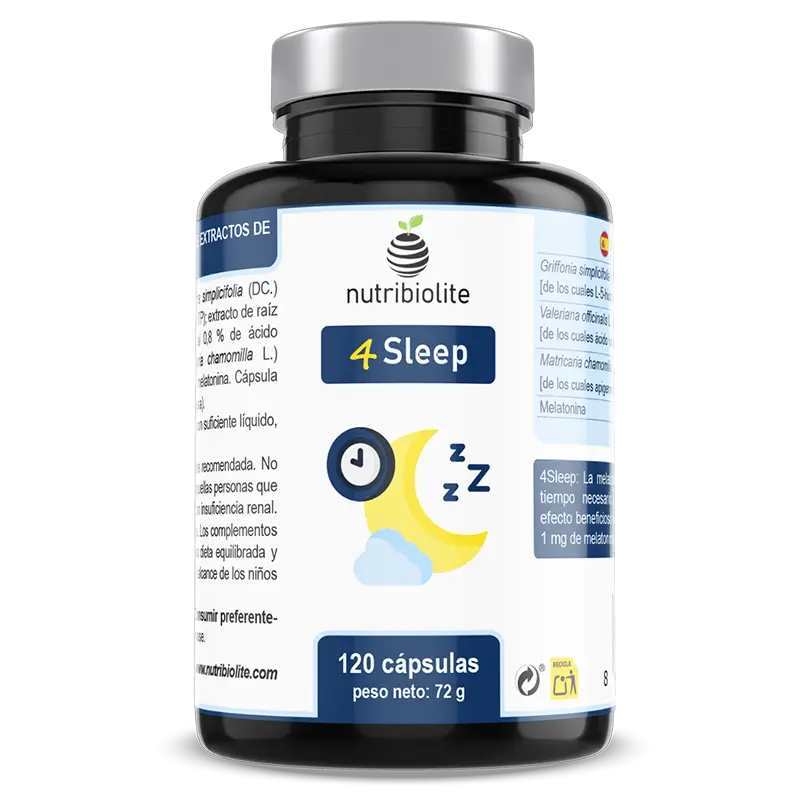
4Sleep by Nutribiolite combines melatonin with plant extracts to physiologically support the night-time routine in adults.
What we can take away from this study for everyday life
The review of melatonin trials in Parkinson’s shows that boosting the night-time melatonin signal can improve how sleep is perceived and alleviate some of the burden of non-motor symptoms. The effects on objective parameters and motor function are more discrete, so the role of melatonin is better understood as a supportive rather than sole focus of treatment.
In practice, this means combining three pillars: lifestyle habits that respect the internal clock, a good adjustment of medication and, where appropriate, the use of melatonin as part of an overall care plan. Supplements such as 4Sleep fit into this vision, where the priority is to accompany existing physiological processes and not to replace the medical approach.
This content is informative and does not replace the advice of a healthcare professional.
Frequently asked questions
What does it mean that melatonin improves subjective sleep quality in Parkinson’s?
It means that people who took melatonin scored their sleep better on validated questionnaires, although changes in total time asleep or in laboratory parameters were more discrete. It’s about a better sense of how you sleep.
Does the melatonin in the study cure sleep problems in Parkinson’s disease?
The meta-analysis does not show a complete resolution of sleep disorders, but a modest improvement in the perception of rest and some non-motor symptoms. Sleep problems in Parkinson’s still require a comprehensive approach with the healthcare team.
Does it make sense to use melatonin if I don’t have Parkinson’s but find it hard to sleep well?
The study focuses on people with Parkinson’s disease, so its results cannot be directly extrapolated to healthy adults. However, other work in the general population supports the use of melatonin in adjusted doses to promote sleep onset as part of good sleep hygiene.
How does this study relate to Nutribiolite’s 4Sleep supplement?
The study reinforces the role of oral melatonin in supporting sleep rhythm in adults with sleep disorders. 4Sleep uses melatonin as a key ingredient and combines it with plant extracts, following that same physiological route of signalling the onset of night within a healthy routine.
Is it enough to take a supplement like 4Sleep to sleep better if I have a lot of night-time interruptions?
Study data and clinical experience indicate that the best approach combines several elements, regular schedules, the right bedroom environment, stress management and, where appropriate, melatonin support. A supplement can be one more piece in the mix.