





A study in Frontiers in nutrition 2025 reviewed hundreds of human and animal studies on nutrition, gut microbiota and depression. The authors conclude that certain nutrients, including omega-3 fatty acids from fish, are associated with a more diverse microbiota, less inflammation and fewer depressive symptoms.
The paper focuses on people with major depression and the general population, and summarises clinical trials and observational studies from the last decade. Its practical message is clear: a diet rich in vegetables, fibre and oily fish is associated with a lower risk of depression and a more stable microbiota. For everyday life, this reinforces the idea that what we eat influences how we feel, including emotionally.
Study links nutrients, gut microbiota and depression through inflammation
The review looked at how deficits in protein, healthy fats, complex sugars, vitamins and minerals affect the diversity of the microbiota. It found that when the diet is poor in these nutrients, beneficial bacteria such as Bifidobacterium or Lactobacillus decrease and short-chain fatty acids, key molecules for gut and brain health, are reduced.
The authors describe a repeated pattern, less microbial diversity, more systemic inflammation and more depressive symptoms. In contrast, diets rich in fibre, fish and fresh foods are associated with higher abundance of bacteria producing these fatty acids, better gut barrier integrity and less inflammation. The effect is modest, but consistent across different types of studies.
Microbiota acts as a bridge between what we eat and our moods
The gut and brain communicate constantly via nerves, hormones, immune defences and metabolites in the microbiota. The study describes the microbiota as a metabolic bridge, transforming nutrients into compounds that travel through the blood, activate the vagus nerve or modulate the immune system and go on to influence mood-related brain circuits.
These compounds include short-chain fatty acids, which help maintain the gut barrier and regulate genes involved in neuronal plasticity, and tryptophan derivatives, which affect serotonin synthesis. When the microbiota becomes unbalanced, the production of these molecules decreases and inflammatory markers increase, which are associated with increased vulnerability to depression.
The role of fish omega-3s, such as EPA and DHA, appears in the review as part of this linkage. These fatty acids have been associated with reduced inflammation, improved neuronal membrane function and favourable changes in microbiota composition, which fits with the gut-brain pathway described by the authors.
Daily habits that support microbiota and emotional balance according to evidence
The practical message of the study is that an anti-inflammatory eating pattern can help reduce the risk of depression. This includes more vegetables, fruit, legumes, whole grains and oily fish, and less ultra-processed foods rich in sugars and low-quality fats. This is not a perfect diet, but a clear trend in favour of fresh foods.
The authors note that the strongest effects are seen when a good fibre base is combined with regular sources of marine omega-3. They also stress the importance of regularity – changes over time help the microbiota to stabilise and produce more beneficial metabolites.
In addition to diet, the article reminds us that sufficient sleep, daily movement and stress management also modulate the microbiota and the gut-brain axis. The result is a physiological environment more conducive to a stable mood, although the study stresses that it is not a substitute for medical treatments when needed.
How Nutribiolite’s OMEGA 3 EPA 400 mg + DHA 300 mg fits into this physiology
Within this vision, omega-3 fatty acids of marine origin occupy a central place. The reviewed study highlights that EPA, eicosapentaenoic acid, and DHA, docosahexaenoic acid, from fish, are associated with reduced inflammation, better functioning of neuronal membranes and possible favourable changes in gut microbiota. These effects have been linked to a lower burden of depressive symptoms in several clinical studies.
Nutribiolite OMEGA 3 EPA 400 mg + DHA 300 mg is based precisely on this physiological pathway. It provides a concentrated dose of EPA and DHA from fish oil, designed to supplement dietary intake of oily fish. The aim is to reinforce the availability of these fatty acids when the daily diet does not provide them on a consistent basis.
EPA is particularly associated with modulation of inflammatory response. It competes with other enzymatic fatty acids and promotes the formation of mediators that help resolve inflammation, which is highly relevant in the context described by the study, where chronic low-grade inflammation is repeatedly linked to depression.
DHA, on the other hand, is an important structural component of neuron membranes. Good DHA availability is associated with more fluid membranes and efficiently functioning neurotransmitter receptors. This fits with the idea that mood also depends on the physical quality of brain cells, not just chemical signals.
The combination of EPA 400 mg and DHA 300 mg in a single supplement makes it possible to act jointly on these two dimensions, inflammation and neuronal structure. From the perspective of the study, which links nutrients, microbiota, inflammation and depression, a formulation focused on marine omega-3s offers coherent physiological support for adults who already take care of their diet and physical activity and wish to reinforce the presence of EPA and DHA in their daily life.
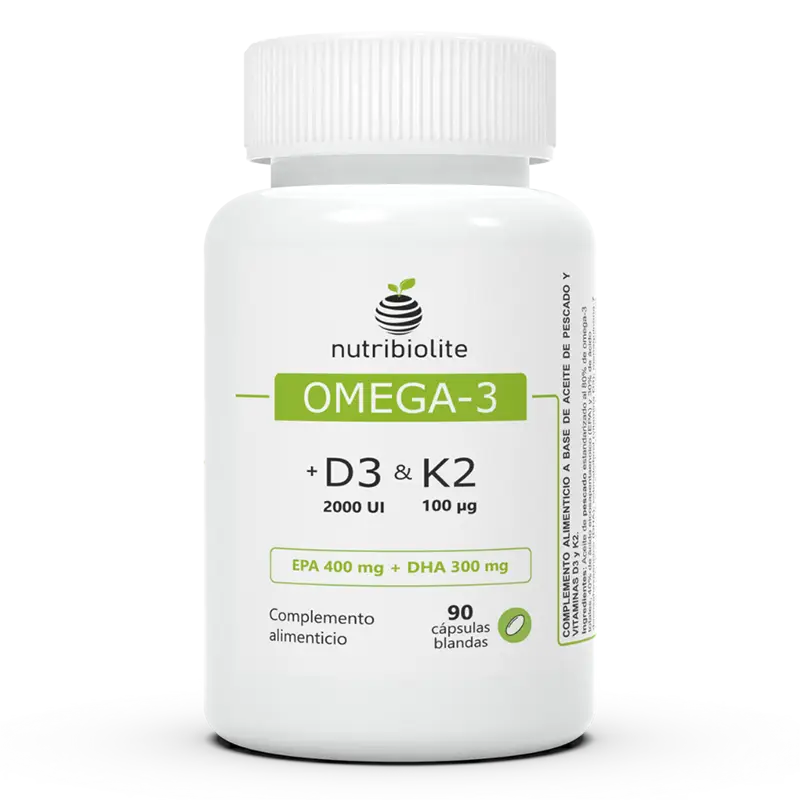
Nutribiolite OMEGA 3 EPA 400 mg + DHA 300 mg offers concentrated marine omega 3 as physiological support for those caring for their microbiota, heart and mental balance.
Practical summary, nurturing microbiota and omega-3 for a more resilient mood
The study in Frontiers in nutrition reinforces a key point that depression is not only dependent on psychological factors, but also on the quality of the diet and the state of the microbiota. Nutrients such as fibre and marine omega-3s are associated with lower inflammation and a biological environment more conducive to emotional stability.
In practice, this translates into two levels of action. First, a solid foundation of habits, more vegetables, legumes, whole grains and oily fish, less ultra-processed foods and added sugars. Second, in adults who wish to ensure a constant intake of EPA and DHA, a supplement such as OMEGA 3 EPA 400 mg + DHA 300 mg can be an additional tool aligned with this physiology.
This content is informative and does not replace the advice of a health professional.
Frequently asked questions
How does the microbiota relate to mood according to the study?
The review describes the microbiota as a bridge between diet and brain. When the microbiota loses diversity, inflammation and certain metabolites that are associated with more depressive symptoms increase. A microbiota rich in short-chain fatty acid-producing bacteria is associated with a more protective environment.
Why are fish omega-3s relevant to emotional health?
EPA and DHA are involved in the structure of neuronal membranes and the regulation of inflammation. The study reports work where adequate levels of omega-3s are associated with lower intensity of depressive symptoms and lower inflammatory profiles. They are not a treatment, but an interesting physiological support.
What type of diet is OMEGA 3 EPA 400 mg + DHA 300 mg best suited to?
It is suitable for adults who already follow or aspire to follow a Mediterranean-type dietary pattern, with an abundance of vegetables and legumes, but who do not always get their weekly servings of oily fish. Supplementation helps to ensure a stable EPA and DHA intake in this context.
Is taking an omega-3 a substitute for improving the diet to take care of the microbiota?
No. The study underlines that the basis of microbiota balance is the combination of plant fibre and key nutrients. An omega-3 supplement can add to, but does not replace the need for fruit, vegetables, legumes and whole grains in daily life.
When might it make sense to value an omega-3 supplement for mental wellbeing?
It makes sense for adults who consume little fatty fish, who wish to support their cardiovascular health and who seek additional physiological support for emotional balance, always within a healthy lifestyle and without replacing medical recommendations in the case of diagnosed depression.