





A study in Nutrients of over 1500 people with irritable bowel syndrome, conducted in Italy in a real-life clinical setting, found that a food supplement containing very poorly absorbable geraniol markedly improved digestive distress after four weeks. Pain, bloating and interference with daily life were reduced, with a clear normalisation of stool type.
For those living with bloating, gas and changes in bowel rhythm, these results point to an interesting avenue. The work focuses on a particular molecule, geraniol, and how its targeted delivery to the colon, thanks to a very low absorbable formulation, can modulate the microbiota and alleviate symptoms without acting like a classical drug.
A real-life study with very poorly absorbable geraniol in irritable bowel syndrome
Irritable bowel syndrome, known as IBS, is the most common functional digestive disorder. It presents with abdominal pain, bloating, gas and irregular stools, with a predominance of constipation, diarrhoea or a mixture of both. There is no single cause and treatment usually focuses on relieving symptoms.
The Italian study looked at 1585 adults diagnosed with IBS according to Rome IV criteria for about four weeks. All received a food supplement containing geraniol-rich essential oil of Palmarosa, formulated to be very poorly absorbable and largely reach the colon, adsorbed on ginger fibre. Symptoms were assessed using a standardised IBS severity questionnaire, the IBS Severity Scoring System.
After one month of use, an average reduction of about 68 percent in the total symptom score was observed. Bloating decreased by more than 80 percent, satisfaction with bowel habit improved and the impact of IBS on quality of life was significantly reduced. These changes were considered clinically relevant, not just slight.
How a very poorly absorbable geraniol acts on the microbiota and gut
Geraniol is a natural component of several essential oils. Previous research indicates that it has selective antimicrobial, anti-inflammatory and antioxidant properties. The challenge is that if it is rapidly absorbed in the small intestine, it barely reaches the colon, which is where it is of interest in IBS.
The research group developed formulations with different absorption. When geraniol is microencapsulated or fixed on plant fibre, its passage into the blood decreases and a higher fraction reaches the colon. In the very poorly absorbable formulation, only about 16 percent is absorbed, leaving about 85 percent available in the large intestine.
In animal models and in previous human studies, this poorly absorbable geraniol has been shown to modulate the gut microbiota. It reduces bacterial groups considered pathobionts, which can promote low-grade inflammation, and increases butyrate-producing bacteria such as Faecalibacterium, which are associated with a more stable mucosa. Lower expression of COX 2, an enzyme related to inflammation, and an improvement of the intestinal barrier were also observed.
In simple terms, the very poorly absorbable geraniol acts on the intestinal ecosystem from within the lumen of the colon. It does not seek a broad systemic effect, but rather a local adjustment of the microbiota and low-grade inflammation. This strategy may be of particular interest in IBS, where dysbiosis and visceral sensitivity play an important role.
Daily habits that support the gut in the presence of sensitisation and dysbiosis
The study was conducted under conditions of routine clinical practice, without imposing specific diets. Even so, the authors point out that the best results in IBS often occur when several parts – diet, stress management and movement – are combined.
In terms of diet, it is often helpful to reduce excess simple and ultra-processed sugars and prioritise vegetables, tolerated fruit, well-cooked pulses and wholegrain cereals according to tolerance. They provide fermentable fibre that nourishes beneficial bacteria, although in some people with IBS it is advisable to adjust the amount or resort to temporary low FODMAP guidelines under professional supervision.
Regular movement, including walking 20-30 minutes a day, improves bowel transit and helps modulate the gut-brain axis. Simple diaphragmatic breathing techniques, short breaks to stretch the body and more stable sleep routines also reduce the stress load on the digestive system.
In this context, a supplement with very poorly absorbable geraniol may fit in as additional physiological support, always integrated into a lifestyle that takes care of the microbiota and gut motility.
How an additive-free digestive supplement can align with this evidence
The work published in Nutrients focuses on a clean formulation, focusing on actives with a specific physiological function. It uses essential oil of Palmarosa titrated in geraniol, adsorbed on ginger root powder, in gastroresistant capsules. The absence of added sugars and the minimisation of excipients aims to reduce unnecessary stimuli on an already sensitive mucosa.
This approach coincides with a clear trend in new generation digestive supplements, prioritising ingredients with good local bioavailability in the gut, acting where they are needed and with as little systemic impact as possible. In the case of the very poorly absorbable geraniol, the key is in the formulation, which avoids rapid absorption and favours its arrival in the colon, where it modulates microbiota and low-grade inflammation.
For adults who already take care of their diet and physical activity, a digestive supplement without unnecessary additives and with ingredients designed to act locally can be an interesting tool. The study in Nutrients provides a solid basis for considering highly absorbable geraniol as a supportive option in the management of IBS, always as part of an overall strategy that includes consistent lifestyle habits.
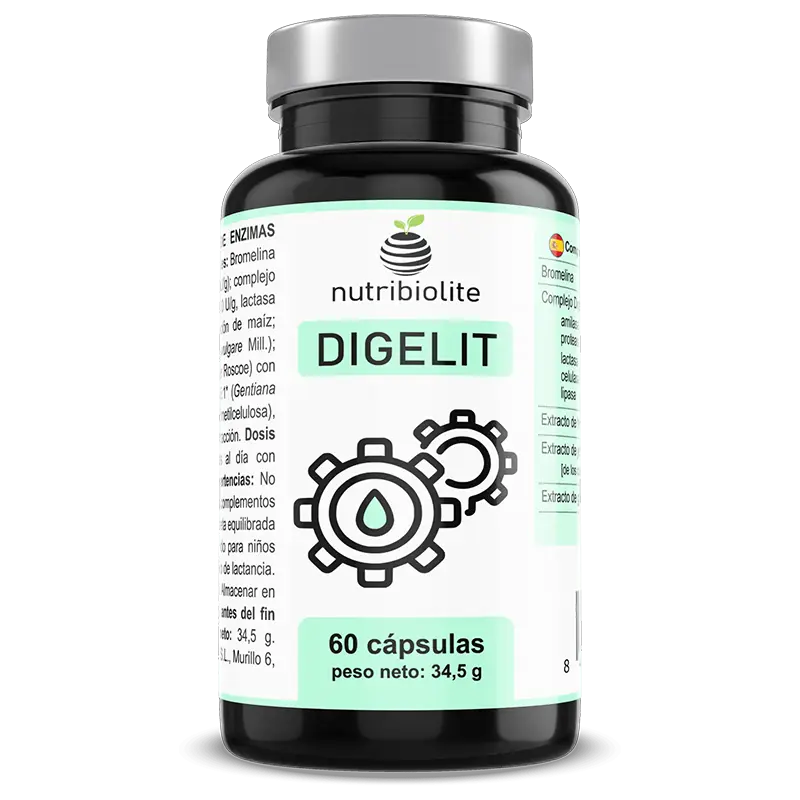
Digestive support designed for adults looking to take care of their intestinal wellbeing with a clean, physiologically oriented formula.
Frequently asked questions
What does it mean that geraniol is very low absorbable or very low absorbable?
It means that most of the geraniol does not enter the bloodstream in the small intestine and reaches the colon. There it acts locally on the microbiota and mucosa, which reduces the systemic impact and concentrates its effect where the changes are needed.
How long did it take to see changes in digestive symptoms?
In the Nutrients study, participants took the supplement for about four weeks. During this period there was a clear reduction in abdominal pain and bloating and a normalisation of stool type in the different subtypes of IBS.
Highly absorbable geraniol works for all types of IBS
The work included people with constipated, diarrhoeal, mixed and unclassifiable IBS. In all groups there was a significant decrease in the overall symptom score and an improvement in bowel habit, suggesting a broad effect on the physiology of the colon.
What role does the gut microbiota play in the observed effect?
Previous studies with poorly absorbable geraniol showed changes in the composition of the microbiota. Bacteria associated with inflammation were reduced and butyrate-producing species, associated with a more stable mucosa, were increased. These adjustments may explain some of the symptom relief.
Is supplementation enough or do habits need to change too?
Supplementation with very poorly absorbable geraniol is intended as a support within an overall strategy. The best results are expected when it is accompanied by proper nutrition, daily movement and simple stress management measures that take care of the gut-brain axis.
This content is for information only and is not a substitute for the advice of a healthcare professional.