


You do a blood test almost as a matter of routine and, when you see the LDL, something gets stuck in your head for days. You feel fine, you eat “more or less” right, you even walk, yet the number is there, cold, insistent, and suddenly cholesterol is no longer an abstract word but a real concern.
The frustrating thing about so-called “silent cholesterol” is just that, it gives no clear signals as it builds up pressure over the long term. That’s why many people get hooked on the trend to “optimise” the lipid profile as if it were a dashboard, because when the body doesn’t complain, the data becomes the only alarm available.
The good news is that LDL does not rise on a whim, it also responds to quite specific levers within the body. When you understand those levers, making decisions becomes simpler, yet without going to extremes or living by prohibitions.
When LDL shoots up without a signal
LDL is essentially a transporter: it carries cholesterol from the liver to the tissues, because cholesterol is also used for membranes and hormones. The problem arises when there are more particles circulating than the body removes efficiently, because then the exposure time of those particles to the vascular wall and oxidation increases.
Two sites are more important than it seems. On the one hand, the gut decides how much dietary and biliary cholesterol ends up entering the bloodstream, in fact bile recirculates and that “second round” counts for a lot. On the other hand, the liver regulates its own internal production, and when it makes more, it tends to release more lipoproteins and adjust receptors that capture LDL from the blood.
At the same time, low-grade inflammation, excess ultra-processed foods and sedentary lifestyles favour an environment in which LDL particles become more vulnerable. In contrast, when there is soluble fibre, movement and consistent fat intake, the system tends to behave more stably and the numbers tend to follow.
A daily strategy for your cholesterol
Starting with the basics is still the most cost-effective: more pulses and oats, daily vegetables, reasonable portions of nuts and dried fruit, and walks that raise the pulse a little. So if you only do one thing this week, make it repeatable, because repetition is what changes physiology over time.
Now, when LDL is already high, many people are looking for support that acts on just those levers that are in charge, without turning life into a never-ending experiment. That’s where Protecardio fits in logically: it combines plant sterols to compete with intestinal cholesterol absorption, red yeast rice with monacolins to support liver regulation, and astaxanthin as a relevant antioxidant support when lipoprotein “status” matters to you.
Three specific micro-benefits that are noticeable on a day-to-day basis when you’re looking for consistency and judgement: first, it gives you a complete formula to work the gut and liver at the same time, without having to improvise with individual ingredients; second, it simplifies your routine, which helps you sustain it for weeks, when your blood work starts to reflect the change; and finally, it provides extra antioxidant support to accompany your lifestyle, especially if you train or live under stress and are interested in looking after your oxidative balance.
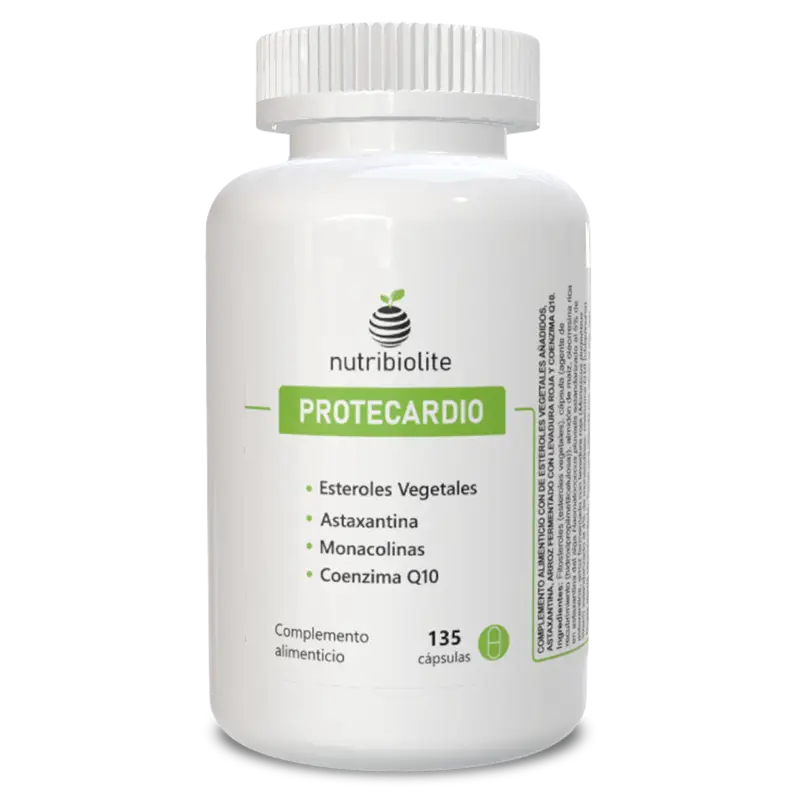
Well-formulated daily support to keep your cholesterol under control with a clear rationale.
If your goal is to look at your next blood test with more peace of mind, the winning approach is often twofold: habits that lower metabolic “noise” and support that works where it counts. Protecardio is designed for that middle ground, when you want to be serious about it without living on an eternal diet.
Typical questions, clear answers
If I already eat well, why do I need a supplement?
Because “eating well” doesn’t always mean that your gut absorbs less cholesterol or that your liver adjusts its production quickly, and that’s where specific support adds up. Also, many people do the right things Monday through Thursday and get messed up at the weekend, and a simple routine helps to stay on track.
When does it make sense to repeat the test?
In general, cholesterol changes are assessed over weeks of consistency, not days, so it usually makes sense to check at a reasonable time agreed with your practitioner. If you become obsessed with the short term, you beat yourself up mentally and lose focus on what is really moving the needle.
I’m concerned about red rice yeast, is it strong?
It is a formula that requires judgement, precisely because monacolins have a known action in regulating cholesterol. If you are already on cholesterol medication or have had liver problems, consult beforehand, but for many people it is still a useful remedy when used with supervision and common sense.
Can I combine it with omega-3 or fibre?
It is usually a common combination within a well-planned plan, because they act on different fronts and complement the diet. However, if you are taking blood thinners or have a medical condition, it is wise to check with a professional for personalisation.
Do I need to change my diet if I take it?
You should, because no supplement can compensate for a base full of ultra-processed foods and excess alcohol on a sustained basis. On the other hand, when you adjust the essentials and add a consistent formula, the feeling is that you are doing something concrete every day.
Before we begin, a note of caution
This content is for information only and is not a substitute for medical advice. Food supplements should not be used as a substitute for a balanced diet and healthy lifestyle, and the recommended daily dose should not be exceeded. Consult a healthcare professional before using Protecardio if you are pregnant, breastfeeding, if you have liver disease, if you are taking cholesterol medication or other drugs, or if you have had previous adverse effects with similar products.