





A study in Nutrition reviews in 2024 reviewed trials and observational studies in adults aged 50-93 years to understand how diet relates to cognitive function when there is a particular genetic variant, the APOE ε4 allele, associated with increased risk of late-onset Alzheimer’s disease. The review concludes that, with the exception of the Mediterranean dietary pattern, most dietary interventions and supplements showed inconclusive results in older people with APOE ε4.
This does not mean that diet does not matter, but that in this particular group the evidence is more fragile and difficult to demonstrate with the available studies. For everyday life, the message is cautious but clear, the basis remains an overall healthy and sustained dietary pattern over time, rather than a single pill or isolated nutrient.
For older people, especially those with a family history of cognitive impairment, these data call for a focus on overall dietary quality and an early start. The review points out that there is a lack of studies in middle-aged adults with APOE ε4 who are still healthy, a stage when habits may make the most difference in the long term.
It also recalls that nutraceuticals, such as long-chain omega-3s or phosphatidylserine, are part of the brain health research map, but their isolated effect in older people with APOE ε4 is difficult to demonstrate with current designs. Therefore, any supplementation makes more sense when it is integrated into an already well-maintained lifestyle routine.
What the review on APOE, diet and cognitive function looked at
The review is an umbrella of systematic reviews, i.e. a paper that compiles and evaluates other previous high-quality analyses. It included six reviews, which in turn brought together clinical trials and observational studies in adults aged 50-93, with varying levels of cognitive function.
The researchers looked at comprehensive dietary interventions, such as the Mediterranean diet or the ketogenic diet, as well as supplements and nutraceuticals, including products rich in healthy fats and compounds relevant to brain health. Both memory and attention tests and brain imaging techniques were measured. The changes observed were generally modest and often difficult to interpret because of the limited duration of the studies and the variability between studies.
A consistent finding was that the Mediterranean diet was associated with better cognitive outcomes compared to less healthy patterns, while other approaches, such as the ketogenic diet or various isolated supplements, did not show clear benefits in older APOE ε4 carriers. The uneven methodological quality of the studies also limits the strength of the conclusions.
Why the APOE ε4 gene can change the brain’s response to diet
The APOE gene encodes apolipoprotein E, a key protein in the transport of fats and cholesterol in blood and brain. The ε4 variant is associated with less efficient lipid handling and increased accumulation of abnormal proteins in brain tissue with age.
This may make the brain of an APOE ε4 carrier more vulnerable to oxidative stress and low-grade inflammation. In this context, diet has a dual role: on the one hand it provides energy and structural nutrients for neuronal membranes, on the other hand it can modulate inflammatory and oxidative processes that affect communication between neurons.
The authors of the review suggest that, in advanced stages of life or with already established deterioration, the room for manoeuvre of diet and supplements may be smaller. In contrast, in middle age, when brain tissue retains more reserve, a diet rich in healthy fats, antioxidants and bioactive compounds may have a more lasting impact on cognitive stability, although well-designed trials to confirm this are still lacking.
Eating and lifestyle habits that support brain health
Beyond a specific gene, the brain ages better when it receives a consistent environment over the years. The review reinforces the role of well-rounded dietary patterns, such as the Mediterranean diet, rich in oily fish, olive oil, fruits, vegetables, legumes and nuts, versus diets high in ultra-processed foods, added sugars and trans fats.
In practice, this means prioritising oily fish several times a week, plenty of colourful vegetables, regular use of extra virgin olive oil and cutting down on sugary drinks and pastries. Maintaining a stable weight, avoiding smoking and moderating alcohol also protects the blood vessels that nourish the brain.
Regular movement, sufficient rest and daily cognitive stimulation complete the picture. Brisk walking, adapted strength exercises, active social relationships and learning new things are all signals that the brain interprets as an invitation to continue adapting and repairing itself, even in old age.
How does a supplement such as DHA and phosphatidylserine fit into this brain physiology?
Among the nutraceuticals studied in the literature on cognitive health, two families stand out: long-chain omega-3 fatty acids, such as docosahexaenoic acid or DHA, and phospholipids such as phosphatidylserine. Both are part of the structure of neuronal membranes and are involved in the transmission of signals between neurons.
DHA is an essential component of the membranes of nerve cells and the retina. It helps the membrane to be flexible and the receptors to function accurately. Phosphatidylserine is a phospholipid concentrated on the inner side of the neuronal membrane, where it is involved in cell communication and response to chemical signals.
The studies included in the review mention nutraceuticals that provide these types of compounds as part of broader cognitive support strategies, particularly in older adults. Although the results in APOE ε4 carriers are heterogeneous, scientific interest remains because these nutrients are integrated into key physiological pathways, from neuronal membrane stability to modulation of inflammatory and oxidative processes.
Consistent habits when considering nutraceutical support for the brain
If an adult, especially over the age of 50, wants to take care of their brain health, the first step is to review their daily life. Ensuring a foundation of a Mediterranean diet, regular physical activity, quality sleep and control of vascular risk factors creates the ground on which any nutraceutical can make physiological sense.
In this context, supplements with DHA and phospholipids such as phosphatidylserine are seen as an additional support for those who already take care of their diet but may not achieve sufficient intake of oily fish or other rich sources of these nutrients. The key is to see them as part of a long-term strategy, not as a quick shortcut.
Neutral product block on DHA and phosphatidylserine in brain health
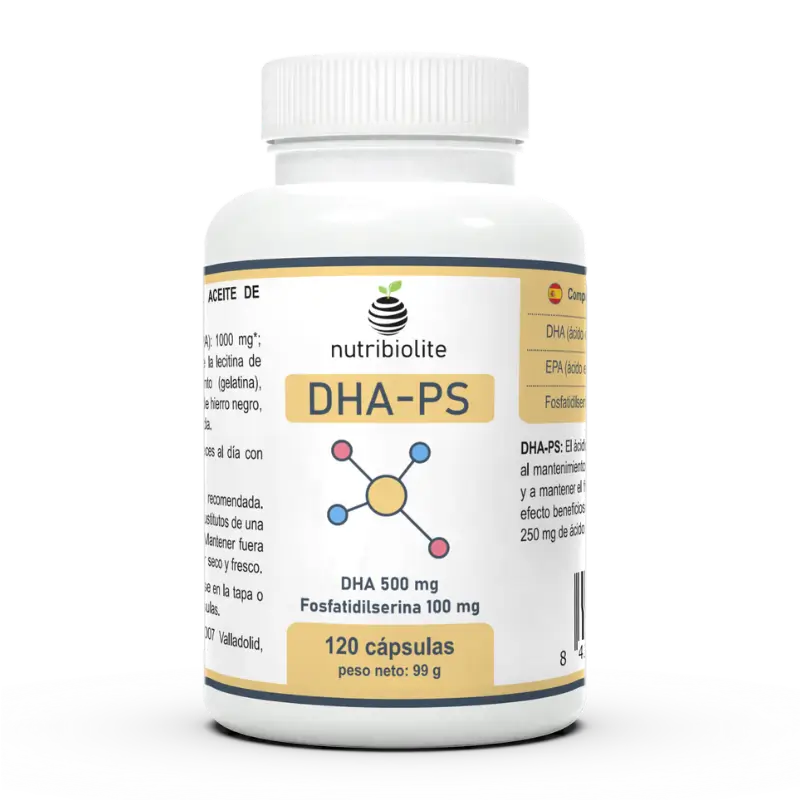
A supplement with DHA and phosphatidylserine for adults who are taking care of their diet and want additional physiological support for brain and vision.
Final message, genetics, habits and nutritional support work together
The review on APOE ε4 and diet is a reminder that genetics influences, but does not decide everything. In older carriers of this variant, the benefits of isolated supplements are difficult to demonstrate with current studies, while healthy dietary patterns show more consistent signals.
For an adult person concerned about brain health, the main focus remains a Mediterranean-type diet, daily movement, sufficient rest and mental stimulation. Nutraceuticals with DHA and phosphatidylserine are positioned as a possible physiological support within that broad strategy, especially when the diet consistently falls short of certain sources of structural fats for the brain.
This content is informative and is not a substitute for the advice of a healthcare professional.
Frequently asked questions
What does carrying the APOE ε4 gene mean for brain health?
Carrying the APOE ε4 allele is associated with an increased risk of developing cognitive impairment in later life. It does not imply a fixed fate, but it does imply an increased vulnerability that makes long-term lifestyle habits more relevant.
The role of the Mediterranean diet in people at genetic risk
The review identifies the Mediterranean diet as the pattern with the most consistent signs of association with better cognitive function. This includes an abundance of vegetables, legumes, fruit, oily fish and olive oil, along with a low presence of ultra-processed foods.
Why nutraceuticals such as DHA and phosphatidylserine are being studied
DHA and phosphatidylserine form part of neuronal membranes and are involved in communication between neurons. They are therefore investigated as nutritional support in brain ageing, as part of strategies that also include a balanced diet and other healthy habits.
Is taking a supplement enough to protect memory?
The available evidence suggests that single supplements alone have a limited effect, especially at older ages. They work best as a complement to a solid routine of diet, exercise, rest and mental stimulation over time.
When it makes sense to consider DHA and phosphatidylserine supplementation
It may make sense for adults who already eat a careful diet but consume little oily fish or other sources rich in these nutrients. In this context, a supplement may provide additional physiological support for brain and visual structures.