





The work was carried out on 79 healthy, menopausal women aged 45 to 60. The changes were modest but consistent, particularly in facial skin and in the amount of hair lost when combing their hair. For many women at this stage, where skin is thinning and hair is thinning, these results point to an interesting physiological pathway to support connective tissue from within.
What the study did with collagen, calcium and vitamin D in menopausal women
Participants were divided into four groups for six months. One group received a placebo, another took calcium and vitamin D, another took collagen alone, and the last group combined collagen, calcium and vitamin D. Body composition, markers of bone formation, skin hydration and elasticity, transepidermal water loss and hair loss were measured.
Changes in bone and body composition were small. Skin and hair, on the other hand, did show practical differences. The group taking collagen together with calcium and vitamin D improved skin hydration by about 23 percent and elasticity by about 9 percent compared to baseline. The collagen-only group also improved elasticity appreciably. Several groups reduced hair loss versus placebo.
How collagen, calcium and vitamin D relate to skin and hair
During the menopause, oestrogen drops and collagen loss in the dermis accelerates. It is estimated that up to 30 percent of skin collagen can be lost in the first five years. This loss results in thinner, less elastic and more fragile skin, as well as a less favourable environment for the hair follicle.
Hydrolysed collagen is in the form of small peptides that are easily absorbed by the intestine. These peptides provide amino acids such as glycine and proline, which the body uses to synthesise new collagen and other structural proteins. In the dermis this results in a denser and more organised extracellular matrix, which better supports the skin and provides a more stable environment for the hair follicle.
Calcium and vitamin D play an additional role. Calcium is involved in the signalling of the skin cells that form the outer layer of the skin. Vitamin D modulates this differentiation and promotes the production of natural moisturising factors. In the study, the combination of collagen with calcium and vitamin D was associated with more hydrated and elastic skin, which fits with this physiology.
Daily habits that support skin and hair in menopause
The first piece is basic care. Protecting yourself from the sun with appropriate sunscreens, avoiding smoking and moderating alcohol reduces the accumulated damage to the skin’s collagen. Gentle cleansing and the use of creams with moisturising ingredients help to maintain the skin barrier.
In the diet, ensure quality proteins, vegetables and fruits rich in vitamin C, which is involved in collagen synthesis, and healthy fats such as olive oil and nuts. Maintaining sufficient hydration helps the skin to retain water in its inner layers.
Regular movement also matters. Exercise promotes circulation and nutrient delivery to the skin and scalp. Sensible stress management, with breathing techniques or active breaks, helps to limit hormonal peaks that can aggravate hair loss. In this area of habits, some people consider incorporating a food supplement that supports the internal collagen synthesis pathways.
How Nutribiolite Collagen Complex fits with this evidence
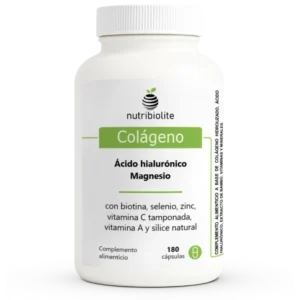
The clinical study supports a central idea that when the body receives sustained hydrolysed collagen, along with nutrients involved in skin and hair structure, the dermis gains hydration and elasticity and the hair follicle behaves more stably. This same physiological logic is the basis of Nutribiolite’s Hydrolyzed Collagen, Hyaluronic Acid, Bamboo Extract, Vitamins and Minerals Food Supplement.
This collagen complex is intended for adults who wish to support the structure of skin and hair from within, especially in stages such as the menopause, where the connective tissue becomes more vulnerable. The combination of hydrolysed collagen with other components aimed at skin hydration and hair follicle support seeks to reproduce and extend the type of synergy observed in the collagen, calcium and vitamin D trial.
In this formulation, hydrolysed collagen provides the basic building blocks for the dermal matrix. Hyaluronic acid contributes to water retention in the tissues, resulting in skin with increased internal volume and a longer-lasting moisturised feeling. Bamboo extract provides silicon, a mineral involved in the organisation of collagen and elastin fibres.
The complex is completed with vitamins and minerals selected for their role in skin and hair maintenance, including biotin, which is associated with hair integrity, and other micronutrients involved in protection against oxidative damage and in the synthesis of structural proteins. Overall, the formula supports the same processes that the study highlights, collagen synthesis and organisation, internal skin hydration and hair follicle stability.
Final message, skin and hair care from physiology
The trial in menopausal women shows that six months of collagen, especially when accompanied by key nutrients such as calcium and vitamin D, is associated with more hydrated, elastic skin and less hair loss. It is not about transforming the body, but about supporting existing processes that become more fragile with hormonal age.
Combined with a balanced diet, sun protection and consistent lifestyle habits, a supplement such as Hydrolyzed Collagen, Hyaluronic Acid, Bamboo Extract, Vitamins and Minerals Food Supplement can be a building block for those who want to take care of their skin and hair from within on a clear scientific basis. This content is for information purposes only and is not a substitute for the advice of a health care professional.
Frequently Asked Questions
What did the collagen study in menopausal women show?
The clinical trial in women aged 45 to 60 years showed that the combination of collagen with calcium and vitamin D improved skin hydration and elasticity and reduced hair loss compared to placebo. The changes were modest, but consistent after six months of continued use.
Who does a collagen complex like Nutribiolite make the most sense for?
It is intended for adults who are already taking care of their diet and want extra support for their skin and hair, especially women from the perimenopause and menopause onwards, when hormonal decline accelerates collagen loss and more dryness, loss of firmness and thinning hair are noticeable.
How long does it take to notice changes in skin and hair?
Studies with hydrolysed collagen usually show results after two to three months, with clearer effects after six months. The synthesis and reorganisation of collagen is a slow process, so consistency is key and should always be accompanied by healthy lifestyle habits.
What role do hyaluronic acid and bamboo extract play in the formula?
Hyaluronic acid promotes water retention in the tissues, which contributes to a more hydrated skin from within. Bamboo extract provides silicon, a mineral involved in the organisation of collagen and elastin fibres and in the structure of hair and nails.
Can a collagen supplement replace topical skin care?
No, it acts on another level. Topical skin care protects and improves the skin’s surface, while hydrolysed collagen and associated nutrients support the internal structure of connective tissue. It is most consistent to combine them within an overall care routine.