





A study in Cellular and molecular neurobiology published in 2025 reviews how certain polyunsaturated fatty acids, especially DHA and its phospholipids such as phosphatidylserine, support key functions of the adult brain. The authors compile decades of research in cellular, animal and human models and describe how these lipids are involved in memory, attention, mood and brain inflammatory response.
The central message is clear: the brain needs an adequate supply of DHA and phospholipids to maintain its membranes, form synapses, modulate inflammation and use glucose well. This review is especially relevant for adults who want to take care of their cognitive performance and for those who live with neurological risk factors throughout life.
Study describes how essential fatty acids support brain structure and activity
The review explains that the brain is one of the most lipid-rich organs in the body and that a significant portion of that fat is polyunsaturated fatty acids, especially DHA from the omega-3 family and arachidonic acid from the omega-6 family. These fatty acids are integrated into membrane phospholipids such as phosphatidylserine, which gives stability to neurons and synaptic connections.
The authors point out that the body does not manufacture enough of the essential precursors, so they depend on the diet. Once in the body, they are transformed in the liver and transported to the brain, where they are incorporated into neuronal membranes and myelin. The article summarises studies linking alterations in this metabolism to memory disorders, mood changes and neurodegenerative diseases.
DHA and phosphatidylserine are involved in synapses, neurogenesis, inflammation and glucose use.
On the mechanistic side, the review explains that DHA accumulates in phospholipids such as phosphatidylcholine, phosphatidylethanolamine and phosphatidylserine. From there, it influences neuronal membrane fluidity, synapse formation and signalling between neurons. Phosphatidylserine, rich in DHA, is associated with synaptic membrane stability and neurotransmitter release processes.
The text also describes how, in situations of stress or damage, specific enzymes release DHA from membranes and transform it into active mediators with neuroprotective functions. These derivatives help modulate inflammation, promote neuronal survival and support tissue repair. In addition, effects of DHA have been observed on glucose transport to the brain, a key point for maintaining the energy needed in regions involved in memory and attention.
Overall, the review links adequate levels of DHA and a balance between omega-3 and omega-6 to processes such as neurogenesis, synaptic plasticity and mood regulation. It is not about cures, but about how these lipids are part of the basic physiology that allows the brain to function with stability over time.
Daily habits that support fatty acid metabolism in the brain
The paper reminds us that the body relies on food for the precursors of these fatty acids. A dietary pattern that includes oily fish, seafood and plant sources of omega-3s, along with moderate consumption of meats and omega-6-rich products, supports a healthier balance between these families of lipids.
It is also mentioned that factors such as excess refined sugars, alcohol or trans fats can interfere with the enzymes that convert the precursors into DHA and other active derivatives. Maintaining a healthy weight, regular physical activity and a good night’s rest help to reduce oxidative stress and inflammation, making it easier for the brain to make efficient use of the fatty acids it receives.
For many adults with high mental workloads, the key is to combine a varied diet, rich in natural sources of omega-3s, with sensible stress management and a stable sleep routine. These pillars create the context in which DHA and phospholipid metabolism can play its role in supporting memory, concentration and emotional balance.
How Nutribiolite’s DHA PS, an omega-3 and phosphatidylserine supplement, fits into this brain physiology
Although the scientific review focuses on general mechanisms and does not evaluate a specific product, its message about the role of DHA and phosphatidylserine in the nervous system fits with the approach of a supplement such as Nutribiolite DHA PS, a fish oil supplement rich in DHA and phosphatidylserine.
The combination of DHA from fish oil and phosphatidylserine provides, in concentrated form, two of the structural components that the study itself describes as key in neuronal membranes. DHA is integrated into phospholipids and contributes to the fluidity and stability of membranes, while phosphatidylserine is directly involved in the organisation of synapses and in cell signalling related to memory and attention.
Such a supplement makes sense for adults who already take care of their diet and physical activity, but who want additional support in the physiological pathway that connects omega-3s with cognitive function. It is not a substitute for a balanced diet, but is intended as a way to ensure a constant availability of DHA and phosphatidylserine in people with high mental demand or irregular dietary intakes of oily fish.
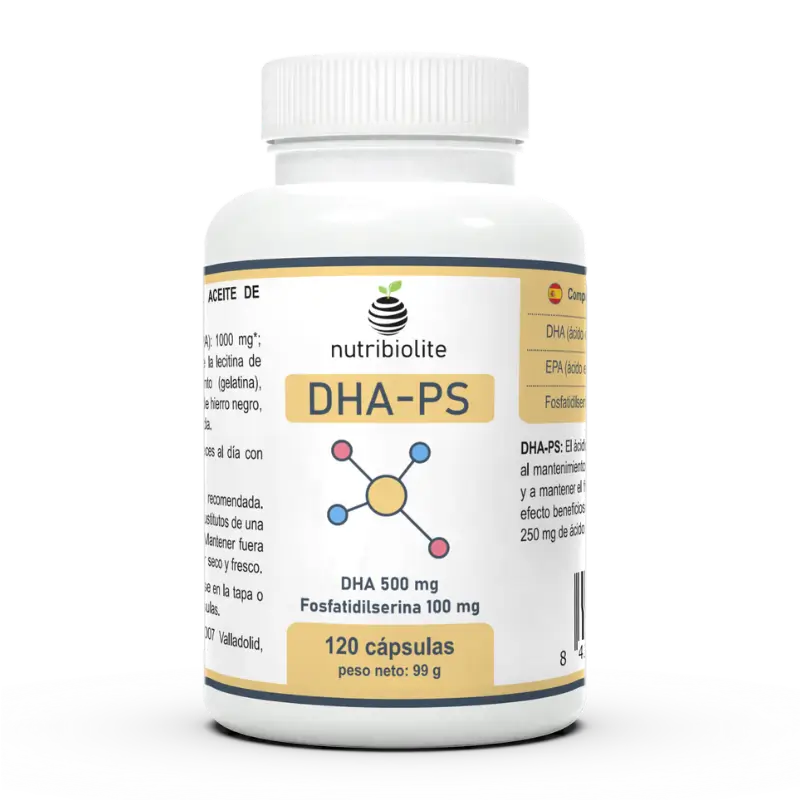
A supplement with DHA from fish oil and phosphatidylserine, designed for adults who wish to physiologically support their daily brain performance.
Final summary, brain care, science and habits in the same direction
The review in Cellular and molecular neurobiology reinforces a simple idea, the brain needs an adequate supply of DHA and phospholipids such as phosphatidylserine to support its structure, its ability to communicate and its inflammatory balance.
Habits such as a diet rich in oily fish, stress management, exercise and good rest set the stage for these lipids to work. In this context, a supplement such as Nutribiolite DHA PS can be an additional tool for those seeking to consciously care for their long-term brain health.
This content is for information only and is not a substitute for the advice of a healthcare professional.
Frequently asked questions
What role does DHA play in daily brain function?
DHA, docosahexaenoic acid, is an omega-3 that is integrated into the membranes of neurons. It promotes membrane fluidity, cell-to-cell communication and synapse formation, processes related to memory, attention and emotional stability.
Why is phosphatidylserine relevant to memory?
Phosphatidylserine is a phospholipid abundant in neuronal membranes. It is involved in the organisation of synapses and in internal signalling that regulates the release of neurotransmitters. Adequate levels are associated with improved efficiency in memory and learning processes.
What is the relationship between omega-3 and mood?
The review includes studies linking an adequate balance between omega-3 and omega-6 with reduced brain inflammation and better regulation of neurotransmitters. This is associated with a more stable mood, although it is not proposed as a treatment for specific disorders.
Can a DHA and phosphatidylserine supplement replace a good diet?
No, the basis is always a varied and balanced diet, rich in oily fish, fruit, vegetables and healthy fats. A concentrated DHA and phosphatidylserine supplement can be considered as an additional support when dietary intake is irregular or mental demand is high.
What type of person might Nutribiolite DHA PS make sense for?
It may suit adults who are already taking care of their lifestyle, who want to support their cognitive performance and who are looking for a concentrated supply of DHA and phosphatidylserine, as highlighted by brain lipid studies. Always within an overall routine of proper nutrition, movement and rest.