





A study in Nutrients 2025 reviewed hundreds of papers in adults and concluded that diet quality, body weight and chronic inflammation form a direct axis with brain ageing. The authors describe how dietary patterns rich in ultra-processed foods and sugars accelerate cognitive decline, while diets rich in vegetables, fibre and marine omega-3s are associated with slower mental decline.
This work is relevant to any adult, with or without obesity, who wants to maintain their memory and mental agility over the years. The central message is clear: what we eat and excess body fat influence inflammation, oxidative stress and neuronal DNA repair capacity, processes that set the pace of brain ageing.
How the brain-obesity-diet axis accelerates or slows mental ageing
The Nutrients article is a narrative review that integrates observational studies and clinical trials in thousands of adults from different countries. It is not a single experiment, but a synthesis of the evidence on how diet and obesity are related to memory, attention and dementia risk.
The authors describe that diets high in saturated fats, sugars and ultra-processed foods promote excess weight, insulin resistance and low-grade inflammation. This combination increases free radical production in the brain, damages neuronal lipids and proteins, and overloads DNA repair systems.
In parallel, inflamed adipose tissue releases signals that disrupt the blood-brain barrier and activate microglia, the brain’s immune cells. This creates a hostile environment for neurons, with less capacity for synaptic adaptation and greater vulnerability over time.
The study stresses that these effects are more pronounced when obesity appears in middle age. In contrast, Mediterranean-type dietary patterns, rich in vegetables, legumes, olive oil, oily fish and nuts, are associated with a slower rate of cognitive decline in cohorts followed for years.
Marine omega-3s and phospholipids as structural support for the brain
The study highlights that certain nutrients play a particularly important role in this brain obesity-diet axis. These include long-chain omega-3 fatty acids, in particular docosahexaenoic acid, or DHA, and its partner eicosapentaenoic acid, or EPA.
DHA is a structural component of the membranes of neurons and synapses. It provides membrane fluidity, facilitates communication between nerve cells and is involved in the formation of mediators that resolve inflammation. Low levels of DHA have been associated in observational studies with an increased risk of cognitive decline.
EPA, on the other hand, has a more pronounced action on systemic and vascular inflammation. Together, DHA and EPA contribute to a more favourable metabolic and vascular environment for the brain, which is especially important when overweight, insulin resistance or high blood pressure are present.
The review also mentions phospholipids, complex lipids that are part of cell membranes and may modulate neuronal signalling and the response to oxidative stress. Although most of the data focus on dietary patterns, the convergence of results supports interest in combinations that provide specific DHA and phospholipids in contexts of high cognitive demand or ageing.
Daily habits that protect the brain from the obesogenic environment
The main recommendation from the study is to prioritise dietary patterns that reduce inflammation and oxidative stress. In practice, this means basing the diet on vegetables, fruits, legumes, nuts, whole grains and unsaturated fat sources such as olive oil.
Oily fish, rich in DHA and EPA, is at the heart of the diet. Consuming oily fish several times a week is associated with better cognitive trajectories in follow-up studies. For many people, this means replacing some red meat and ultra-processed foods with quality seafood options.
Weight and blood glucose control is also key. Maintaining a stable body mass index, moving daily and avoiding frequent sugar spikes reduces the inflammatory load to the brain. The study highlights that the combination of healthy diet and exercise offers superior benefits to each intervention alone.
Finally, nurturing the gut microbiota through fibre and fermented foods contributes to better gut barrier and blood-brain barrier integrity. This limits the passage of toxins and inflammatory signals to the central nervous system, a point especially relevant in people with obesity or metabolic syndrome.
How a DHA and phosphatidylserine supplement might fit into this strategy
In this context, it makes sense that some adults with high mental workload or concerns about cognitive ageing may seek specific nutritional support focused on the brain-obesity-diet axis. A supplement based on fish oil rich in DHA together with phosphatidylserine, a phospholipid present in neuronal membranes, aligns with the mechanisms described in the review.
DHA from fish oil directly provides the type of fat that the brain uses to build and maintain its membranes. Phosphatidylserine is involved in the organisation of these membranes and in cell signalling, so its combination with DHA offers a structural and functional synergy consistent with brain physiology.
When this combination is formulated with high-purity raw materials, with no added sugars or unnecessary additives, it integrates cleanly into an overall care routine that already includes a Mediterranean diet, weight control, regular exercise and good sleep hygiene.
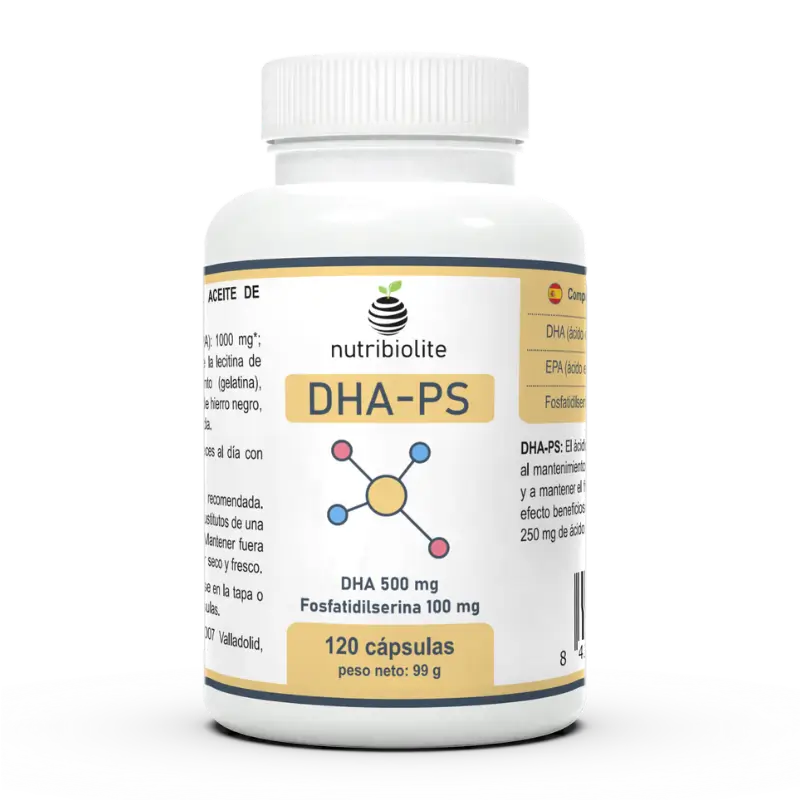
Supplement with DHA from fish oil and phosphatidylserine, designed for adults who take care of their diet and want additional support for brain function.
Final summary of the obesity-brain obesity diet axis and the role of omega-3s
The study in Nutrients reinforces an increasingly well-documented idea that the way we eat and the weight we accumulate shape the inflammatory, oxidative and metabolic environment in which our brains age.
Eating patterns rich in vegetables, fibre and marine omega-3s, along with weight control and regular physical activity, are associated with slower cognitive decline. In this context, a supplement of DHA from fish oil and phosphatidylserine may be an additional ally for those who are already taking care of their lifestyle and wish to specifically support their brain structure and function.
This content is for information only and is not a substitute for the advice of a healthcare professional.
Frequently asked questions
What does the brain-obesity-diet-diet-brain axis mean in everyday life?
It means that what we eat and excess body fat influence inflammation, oxidative stress and neuronal health. Watching your diet and weight doesn’t just affect your heart or blood sugar, it also affects your memory and mental agility over the years.
Why the study highlights marine omega-3s for the brain
Because DHA and EPA, found in oily fish, are part of neuronal membranes and mediators that resolve inflammation. Observational studies associate a higher intake of these fatty acids with more favourable cognitive trajectories, especially in people with low fish consumption.
What role does phosphatidylserine play in brain function?
Phosphatidylserine is a phospholipid that forms part of the membranes of neurons and is involved in cell signalling. Its adequate presence promotes membrane organisation and internal communication processes, key aspects of plasticity and everyday cognitive performance.
Is it enough to take a supplement if my diet is unhealthy?
The evidence from the study indicates that the main pillar is the overall dietary pattern and weight control. A supplement with DHA and phosphatidylserine makes more sense as a support for people who are already improving their diet, moving daily and cutting down on ultra-processed foods, not as a substitute for those changes.
Who might consider supplementation with DHA and phosphatidylserine?
It may be of interest to adults who are engaged in intense intellectual work or who are concerned about cognitive ageing and already follow a Mediterranean-type diet. In these cases, providing DHA from fish oil and phosphatidylserine offers specific nutritional support in line with the mechanisms described in the obesity-brain diet axis.