





A study in the American journal of translational research analysed several clinical trials of pregnant women suffering from hyperemesis gravidarum, an intense form of nausea and vomiting. The review, which brought together ten controlled studies with different forms of ginger, found that its use was associated with a clear reduction in episodes of nausea and vomiting, with no signs of relevant harm to mother or baby.
For these women, who are often afraid to use drugs, having an option based on a familiar root such as ginger can make a practical difference to their day-to-day lives. The finding does not promise miracles, but it does promise realistic physiological support in a very specific situation where digestive discomfort dominates the day.
In simple terms, the study suggests that ginger may be a useful tool for reducing the intensity of nausea in pregnancy complicated by hyperemesis gravidarum. The authors found that, overall, women taking ginger had fewer symptoms than those receiving placebo or other comparisons, such as vitamin B6 or certain medications.
This result is of particular interest to pregnant women with severe nausea, but it also provides a broader clue that ginger is not only part of traditional cuisine, but also acts on digestive pathways involved in the sensation of nausea and the movement of the stomach. That same physiology is relevant to anyone seeking greater digestive comfort in their daily routine.
What this meta-analysis of ginger did for women with severe nausea
The work brought together ten clinical trials and comparative studies of pregnant women diagnosed with hyperemesis gravidarum. Different forms of ginger, such as capsules, powders or fortified biscuits, were tested against placebo, vitamin B6 or a common anti-nausea drug.
The researchers calculated a pooled result and found that the group taking ginger had fewer episodes of nausea and vomiting. The magnitude of the effect was moderate, i.e. enough to be noticeable in practice, although it did not completely eliminate the symptoms. In addition, side effects were rare and no signs of significant harm to mother or foetus were detected within the limits of the studies.
The review was based on strict methodological criteria and quality guidelines for meta-analysis. Still, the authors recall that the trials involved modest sample sizes and relatively short durations, so more long-term data are needed. Despite these limitations, the message is clear: ginger appears to be a reasonable option for non-pharmacological management of severe nausea in pregnancy.
How ginger acts on the stomach and the feeling of nausea
Ginger, known as Zingiber officinale, contains compounds such as gingerols and shogaols, which interact with receptors in the gastrointestinal tract and nervous system. These compounds modulate signals that travel from the stomach and intestine to the vomiting centre in the brain, which may reduce the sensation of nausea.
In addition, ginger influences gastric motility, i.e. the way the stomach empties and moves. When the stomach empties with more rhythm and less spasm, the feeling of heaviness and discomfort is often reduced. Effects on local inflammation and sensitivity of the digestive mucosa have also been described, factors that contribute to overall comfort after meals.
Taken together, these mechanisms help to understand why ginger crops up again and again in studies on nausea, motion sickness and difficult digestion. It does not act as a strong sedative, but as a modulator of digestive signals that the body already uses, which fits well with a physiological support and daily routine approach.
Simple habits to support digestion and reduce discomfort
Beyond ginger, the way you eat and organise your day has a direct influence on how your digestive system feels. Meals that are very large, high in fat or eaten in a hurry tend to increase the sensation of heaviness, reflux or nausea, especially in sensitive people.
Dividing meals into smaller, more frequent portions, chewing calmly and avoiding lying down immediately after eating are simple measures that often alleviate discomfort. It also helps to moderate the consumption of alcohol, strong coffee and sugary drinks, which can irritate the digestive mucosa or alter the motility of the stomach.
Gentle movement, such as walking for a few minutes after meals, promotes intestinal transit and a feeling of lightness. Maintaining adequate hydration and prioritising foods rich in fibre, such as fruit, vegetables and whole grains, contribute to a more stable bowel rhythm. In this context, traditional ingredients such as ginger fit the bill as additional allies for those seeking more consistent digestive comfort.
How a digestive supplement can be supported by the evidence on ginger
The hyperemesis gravidarum study reinforces something that traditional experience already pointed to – ginger has a clear role in managing digestive discomfort and nausea. When formulated in a supplement, it seeks to take advantage of this same physiological route, offering a concentrated dose that is easy to integrate into the daily routine.
In a digestive formulation, dried ginger root extract is often combined with other substances that act at different points in the digestive process, such as enzymes that help break down food or plant extracts that promote the expulsion of gas and a feeling of lightness. The idea is to create a synergy, with ginger modulating the sensation of nausea and the movement of the stomach, while other components support the digestion of fats, proteins and carbohydrates.
In this way, the person who is already taking care of their diet and lifestyle can add extra support when they feel their digestion becoming heavier or irregular. Ginger, supported by meta-analyses such as the one described above, provides the backbone of digestive comfort, and the combination with other well-chosen ingredients extends that effect throughout the entire meal, from the entry of the food to its transit through the gut.
How Nutribiolite’s DIGELIT fits into this digestive comfort approach
In this context, a product like DIGELIT sits at the intersection between the scientific evidence on ginger and the everyday need for lighter digestion. By including dry ginger root extract, the formulation relies on the same plant studied for hyperemesis gravidarum, but here with a focus on general digestive comfort.
The ginger in DIGELIT helps modulate the sensation of nausea and promotes more harmonious gastric movement, which can result in less heaviness after meals. When this ingredient is combined with digestive enzymes and other specific plant extracts, the result is comprehensive support, facilitating the breakdown of nutrients and supporting the stomach at times when it is most stressed.
It is designed for adults who already pay attention to their diet, for example by cutting down on fried and ultra-processed foods, and who want extra support to maintain their digestive wellbeing on days of larger meals or increased stress. The presence of ginger, backed by clinical meta-analysis, provides a solid pillar in this combination.
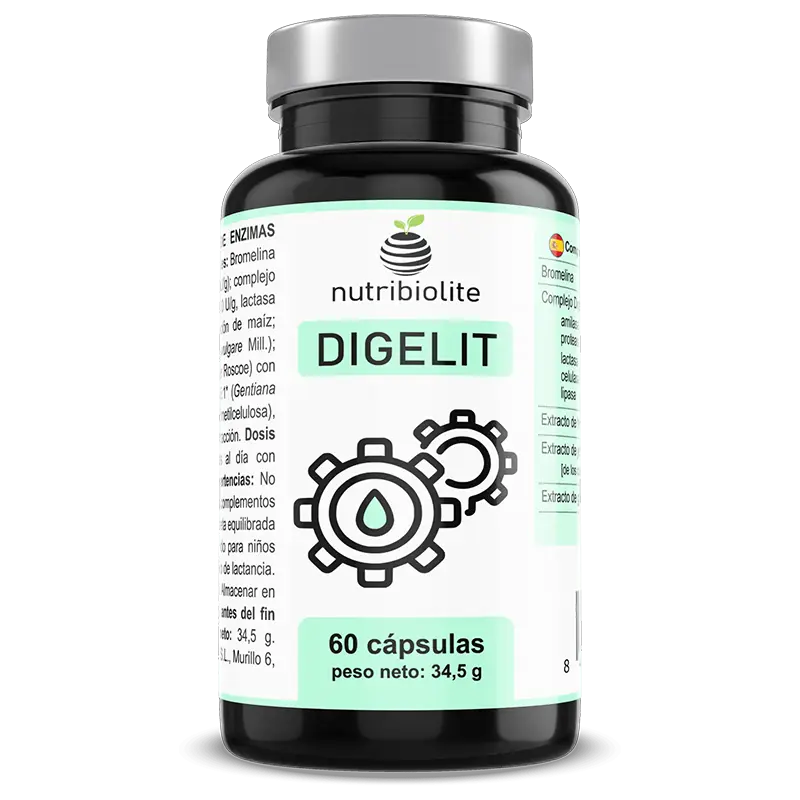
DIGELIT relies on ginger extract and other digestive components to support gastrointestinal comfort in everyday life.
Final summary, ginger, habits and responsible digestive support
Meta-analysis in women with hyperemesis gravidarum shows that ginger can significantly reduce nausea and vomiting, with a favourable safety profile within the limits studied. This result reinforces its role as a useful tool in the management of digestive discomfort, always integrated into an overall plan that includes adapted nutrition and medical follow-up where appropriate.
For the general population, the message is clear: taking care of daily habits and relying on scientifically supported ingredients, such as ginger, can realistically improve the digestive experience. Supplements formulated around such extracts fit the bill as an additional resource for those who wish to maintain their gastrointestinal wellness on a sound physiological basis.
This content is informational and is not a substitute for the advice of a healthcare professional.
Frequently asked questions
What did the study show about the effectiveness of ginger on morning sickness?
The meta-analysis found that women with hyperemesis gravidarum who took ginger had fewer episodes of nausea and vomiting than the control groups. The effect was modest and was considered clinically relevant within the context of the study.
Is ginger only for morning sickness or for other digestive complaints as well?
The study focused on severe morning sickness, but other work has explored ginger’s role in motion sickness and heavy digestion. In practice, it is used as a general support for digestive comfort, always as part of a healthy habits approach.
How does the ginger in the study relate to the ginger that a supplement such as DIGELIT can include?
Both use Zingiber officinale root, which provides the same active compounds responsible for the digestive effect. In a supplement, the dry extract allows this action to be concentrated and combined with other ingredients that support digestion.
Can I have confidence in the safety of ginger based on the available evidence?
The trials included in the meta-analysis showed no relevant harm to mother or foetus at the doses studied. However, safety always depends on the personal context and the amount used, so it is advisable to follow the directions for use of each product.
What role do dietary habits play in the use of ginger or digestive supplements?
Ginger and digestive supplements work best when combined with moderate meals, proper chewing and regular schedules. These habits reduce the burden on the digestive system and allow the supporting ingredients to work in a way that is more consistent with natural physiology.