



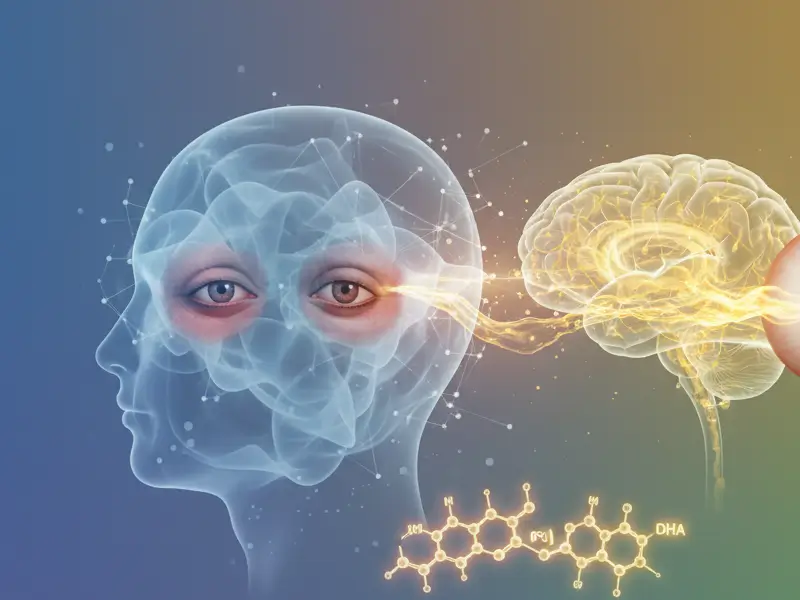

You end the day feeling like you have cotton wool in your head, and yet you keep looking at screens because work, messages and life just won’t stop. It’s frustrating to try to concentrate and find it harder to retain what you’ve just read, especially when your mind used to be more focused.
In addition, your eyes also take their toll: dryness, heaviness and that need to blink more to “reset” your eyes. It makes sense, because brain and retina share something very specific: both are built on high-quality fats and phospholipids, and when these are lacking in the modern diet, performance suffers silently.
In fact, that’s why there’s so much talk of “digital fatigue” and “brain fog” as a trend, as they describe the same scenario – too much stimulus and not enough raw material to keep up the pace. The good news is that there is a very reasonable foothold if you understand which part of your body is asking for reinforcements.
When your brain slows down and your eyes burn.
The brain runs on electrical signals, but those signals travel over cell membranes that must be both flexible and stable. DHA, an omega-3 particularly abundant in nerve tissue, is part of this architecture, and is therefore associated with smoother transmission when lifestyle is not.
The retina, at the same time, is one of the tissues with the highest concentration of DHA in the body, because it needs to transform light into information with enormous precision for hours at a time. However, if your diet has been veering towards ultra-processed and less interesting fats, the omega-3 intake often falls short, and the typical experience is an eye that tires sooner than you’d like.
Then there’s phosphatidylserine, a phospholipid that also lives in neuronal membranes and is involved in how cells communicate with each other. Instead, when your day is filled with stress, irregular sleep and multitasking, that communication calls for order, because the brain is trying to maintain focus with limited resources, and the result is noticeable as scatter.
Still, it’s not about seeking a “perfect mind”, but about giving the nervous system coherent materials to do its work with less friction. That’s why a smart strategy often combines realistic habits, such as visual breaks and good hydration, with nutrients that match the biology of the retina and the brain.
The duo that feeds neurons and the retina
If you recognise yourself in this mix of mental fog and fatigued eyes, the first step is simple, though not always easy: ensure consistent DHA, ideally from the diet, and support membrane integrity with specific phospholipids. In addition, when your week does not allow for regular oily fish, a well-thought-out formula keeps everything from relying on willpower.
That’s where Nutribiolite DHA-PS comes in, because it brings together two pieces that speak the same physiological language, DHA as a structural omega-3 and phosphatidylserine as a membrane phospholipid. This combination is designed for those who want to perform with more stability in the face of long days, intense reading and excessive screen time, without turning their routine into a never-ending project.
Three specific micro-benefits that are usually appreciated with consistency: easier to sustain focus on long tasks without unnecessary mental “jumps”, a more comfortable reading sensation on the screen when you take breaks and take care of the lighting, and a perception of more regular mental agility at the end of the day, when the slump usually appears.
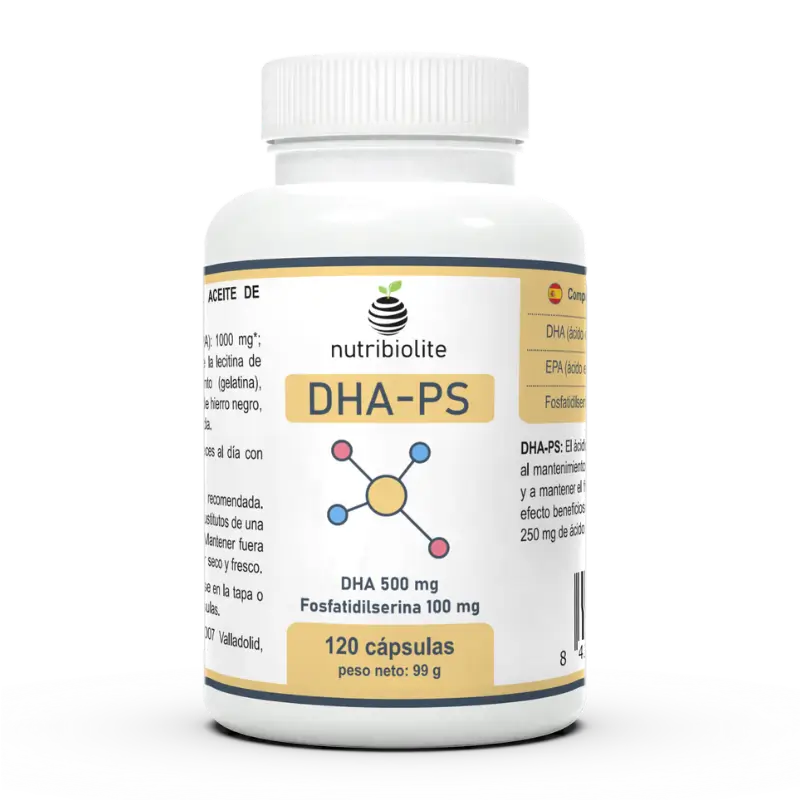
DHA and phosphatidylserine, a solid foundation for mind and eyes.
So if your goal is to regain clarity without relying on coffee spikes and without ending the day with exhausted eyesight, it makes sense to start with the basics – well-nourished membranes and a steady supply of DHA, with the extra support of phosphatidylserine.
Typical questions, clear answers
What if I already take a regular omega-3?
If you already take omega-3s, check whether they prioritise DHA, because many formulas focus more on EPA. Phosphatidylserine is also added here, which fits the bill when you’re looking for more complete membrane support for sustained mental performance.
Will it give me reflux or a fishy taste?
This is a common objection, especially if you have had bad experiences with low-quality oils. Taking it with food and choosing a well-formulated product often improves tolerance, and many people notice more comfortable digestion this way.
When is it usually noticeable in day-to-day life?
In membrane nutrition, the key is consistency, because the body integrates these lipids over time. Some sensations, such as a steadier focus or less fatigue when reading, tend to be noticeable after several weeks of regular routine.
Is it just for studying, or also for work and screens?
It works for both scenarios, because the underlying problem is similar – too much visual load and too much cognitive demand for hours at a time. If you combine the supplement with short breaks for distant gazing and adequate lighting, the result usually feels more rounded.
Is there anyone I should consult beforehand?
Yes, if you are taking medication, especially anticoagulants or blood thinners, or if you are pregnant or breastfeeding, it is best to discuss this with a healthcare professional. This is a prudent way to tailor any supplement to your specific situation.
Before we begin, a note of caution
This content is for information only and is not a substitute for medical advice. Food supplements should not be used as a substitute for a balanced diet and healthy lifestyle, and it is important to adhere to the dosage indicated on the package; if you have a medical condition or are taking medication, consult a healthcare professional before using DHA-PS.