





You open your laptop, jump between 12 tabs, answer messages and, when it’s finally your turn to concentrate, you get that weird feeling: your head is thick and your eyes can’t quite “get a grip” on the text. It’s more common than it seems, because the modern day demands sustained focus while your eyes work at close range for hours.
On social media they call it a “brain fog reset” and talk about turning off notifications, taking breaks or even swapping coffee for tea. All of this helps, but many people still find that the brain tires prematurely and the eyes become heavy by the end of the afternoon, so the useful question is: what is your physiology asking for when this happens to you?
The answer is usually less mystical and more concrete, and quite logical: your mental performance depends on well-nourished neuronal membranes and a retina that, at the same time, is made of very specific lipids. When those fine bricks are missing or worn out, the system works, yet it no longer feels “fine”.
Why you find it hard to think and focus your eyesight
Your brain doesn’t work in a vacuum, because every thought, every memory and every decision is transmitted through neurons that communicate by electrical and chemical signals. For that communication to be agile, the neuron membrane needs to maintain a flexible structure, and here the right lipids make a difference to the fluidity and efficiency with which receptors and messengers move.
In fact, DHA is one of the most characteristic fats in nerve tissue, and it also appears in large quantities in the retina, where demand is brutal when you spend hours with screens and close focus. If the retina is “pulling” on resources all day long, it is normal that you will eventually notice subjective dryness, eyestrain or that feeling of eyestrain that forces you to strain.
Phosphatidylserine, on the other hand, is part of the architecture of cell membranes and is involved in how the cell handles signals, energy and response to everyday stress. When your day is fast-paced, your body prioritises survival over schedule, and so mental clarity becomes more fragile, especially if you’re sleeping poorly or eating in a hurry.
The combo that feeds neurons and the retina
If you understand that the real problem often lies in the quality of the “stuff” the brain and eyes work with, the next step becomes simple and practical. Instead of chasing endless hacks, it makes sense to reinforce the components that the nervous system uses on a daily basis, instead of asking your willpower for miracles.
That’s where Nutribiolite’s DHA-PS fits in, a formula designed to support neuronal membrane and retinal nutrition, as well as accompany times of high mental demand. It’s not a promise of superpowers, it’s a smart way to give the body raw materials it uses in areas where precision matters.
In practice, these 3 specific micro-benefits tend to be the most valued when you integrate it consistently into your daily routine, because the useful effects almost always depend on regularity:
1) Steadier focus: helps sustain attention without that “heavy head” feeling mid-task, especially when you work in blocks and minimise interruptions.
2) More comfortable reading and screen time: promotes a more comfortable viewing experience over long days by supporting the characteristic lipid structure of the retina.
3) Better sense of clarity under pressure: helps your performance feel more orderly on intense days, which is why many people use it during study seasons or project deadlines.
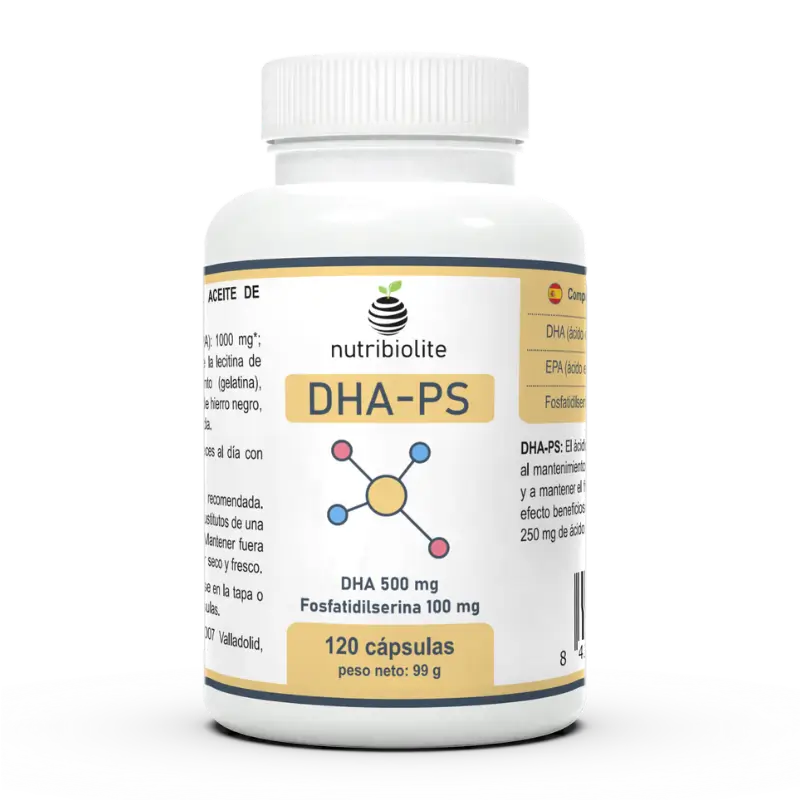
Specific nutrition for a sharper mind and a more comfortable view on a daily basis.
One important detail: the supplement works best when your routine is on track, so combine it with visual breaks, natural light in the morning and sufficient protein at mealtimes. At the same time, if your day includes a lot of screens, turning down the brightness in the evening and consciously blinking adds up to more than it seems.
Typical questions, clear answers
Isn’t eating oily fish enough for me?
Oily fish is a great base and provides other interesting nutrients, but not everyone eats it often enough or with consistent quality. DHA-PS facilitates a regular and measurable intake, so it fits when you want to take care of your brain and eyes without relying on “let’s see if I can remember this week”.
I’m wary of omega-3s because of reflux.
This is a typical objection and it makes sense, because some people experience discomfort if they take it on an empty stomach or with very light meals. Take it with a main meal and a glass of water, and adjust the timing to your digestion to make it more comfortable.
When is it best to take it in order to notice it?
The most important thing is daily consistency, because you’re supporting structure and function, not looking for a one-minute boost. Many people take it with breakfast or lunch, and maintain that habit so that the body integrates it without friction.
I already take an omega-3, what does PS provide?
DHA is a key player, and phosphatidylserine adds additional support for membrane dynamics and cellular signal management. That combination is interesting when the challenge is more like sustained mental clarity and performance with screens, rather than a single target.
Is there anyone I should consult first?
Yes, it is prudent to consult if you are on anticoagulant or antiplatelet medication, if you are pregnant or breastfeeding, or if you have a relevant medical condition. This consultation is usually quick and gives you the confidence to use it with peace of mind.
Before we begin, a note of caution
This content is for informational purposes only and is not a substitute for the advice of a healthcare professional. Food supplements should not be used as a substitute for a balanced diet and healthy lifestyle, and you should not exceed the recommended daily dose; if you have any personal concerns, please consult your doctor or pharmacist.