





A study in Molecules (Basel, Switzerland) in 2024 reviews how long-chain omega-3 fatty acids, especially EPA and DHA, influence gut-brain communication in adults. The authors analyse research in humans and experimental models and describe that these lipids modulate inflammation, microbiota, gut and blood-brain barriers and the stress axis. It all converges on one practical idea: taking care of the quality of the fats you eat can be reflected in your mental clarity and how you manage stress.
For an adult, the message is clear. A sufficient intake of marine omega-3s is associated with better functioning of the gut-brain network, with support for memory, attention and emotional balance. The effect is not instantaneous, it builds with daily diet and routines that respect the body’s rhythms.
Study describes how marine omega-3s play a role in the gut-brain network
The paper is a scientific review that compiles dozens of studies on EPA and DHA, the main marine omega-3s. It analyses clinical trials, observational studies and animal models exploring their impact on the gut, brain, immune system and stress axis.
The authors describe consistent, albeit moderate, effects on systemic inflammation, gut and brain barrier integrity, neuronal plasticity and cortisol regulation. This is not a single large effect, but many small adjustments in physiological pathways that, taken together, can be seen in cognitive performance and everyday mental well-being.
Molecular mechanisms link neuronal membranes, inflammation and microbiota
At the most basic level, EPA and DHA are incorporated into the phospholipids of cell membranes, especially in neurons and immune system cells. This incorporation increases membrane fluidity, which facilitates the functioning of receptors and ion channels involved in signal transmission between neurons.
The study explains that EPA and DHA generate lipid mediators that tend to resolve inflammation. They reduce the production of pro-inflammatory cytokines and promote resolving molecules that help shut down inflammatory processes. This protects delicate structures such as the gut barrier and the blood-brain barrier, which act as filters between the gut and the blood and between the blood and the brain.
In addition, the review describes how omega-3s influence the gut microbiota. They are associated with increased presence of beneficial bacteria and increased production of short-chain fatty acids, compounds that nourish the cells of the colon and participate in immune regulation. Through these pathways, the gut sends more stable signals to the brain, providing an environment conducive to neurogenesis, synaptic plasticity and a more balanced stress axis.
The practical result is a brain with more flexible membranes, less inflammatory noise and more stable gut-brain communication, factors that are linked to better sustained attention, memory and emotional regulation in daily life.
Daily habits that support the gut-brain axis along with omega-3s
The review underlines that omega-3s work within a lifestyle context. To harness their potential, the basis is a diet rich in fresh foods and with good amounts of fibre, which nourishes the gut microbiota. Vegetables, fruits, legumes and whole grains are constant allies.
As for fats, it is advisable to prioritise oily fish such as sardines, mackerel, salmon and trout, as well as nuts and seeds, and to reduce trans fats and excess omega-6 from refined oils. This balance helps EPA and DHA to be effectively incorporated into cell membranes.
The gut-brain axis also responds to movement and rest. Regular physical activity, including brisk walking, improves insulin sensitivity, reduces low-grade inflammation and promotes the release of neurotrophic factors that support brain plasticity. Sufficient sleep and stable schedules help maintain a more orderly stress axis and a gut with predictable rhythms.
Finally, stress management through simple breathing techniques, breaks during the day and quality social contact reduces the burden on the hypothalamic-pituitary-adrenal axis. In this context, omega-3s act as a building block in a system that is already working in the right direction.
How Nutribiolite DHA PS fits into the physiology described by the study
The study focuses on EPA and DHA as key players in the gut-brain network. Nutribiolite DHA PS is a food supplement based on fish oil rich in DHA, to which phosphatidylserine, a phospholipid naturally present in the membranes of neurons, is added.
DHA is the main omega-3 in brain grey matter. It is part of membrane phospholipids and contributes to their fluidity, which facilitates communication between neurons and the adaptation of synapses. This same property appears in the review, which links the adequate presence of DHA with improved synaptic plasticity and support for cognitive functions such as memory and learning.
Phosphatidylserine is a structural component of neuronal membranes and is involved in cell signalling. Its presence in the same formulation together with DHA makes physiological sense, because both act at the same structural level, the lipid bilayer of neurons. This supports membrane stability and the organisation of receptors involved in signal transmission.
The review also highlights the role of omega-3s in modulating inflammation and protecting barriers such as the intestinal and blood-brain barrier. Adequate DHA, such as that provided by fish oil supplementation, contributes to the generation of omega-3-derived mediators associated with the resolution of inflammation and the preservation of these barriers. This fits with the idea of DHA PS as supporting more stable gut-brain communication and a brain environment that is less exposed to inflammatory signals.
DHA PS is intended for adults who already take care of their diet and physical activity and want additional physiological support for their mental performance and emotional well-being, within a routine that includes sufficient rest and stress management.
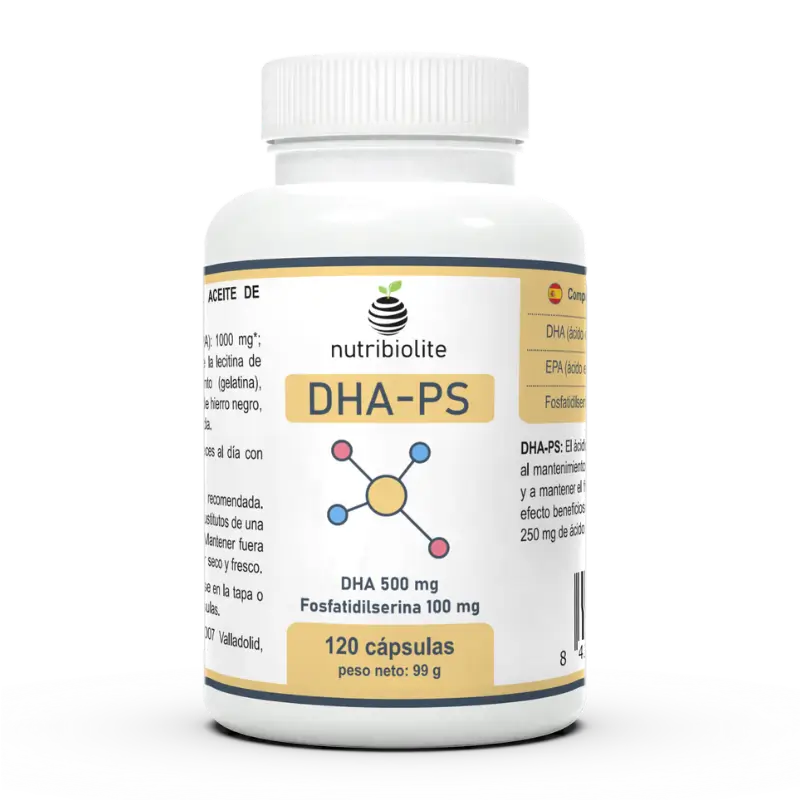
Supplement with DHA from fish oil and phosphatidylserine, designed for adults who wish to support cognitive function and mental well-being.
Final summary, taking care of gut, brain and dietary fats
The review published in Molecules reinforces a simple idea, what happens in the gut influences the brain and marine omega-3s are part of that bridge. Providing enough EPA and, especially, DHA is associated with more flexible neuronal membranes, less low-grade inflammation and a more favourable microbiota.
Combined with a fibre-rich diet, regular physical activity, adequate rest and stress management strategies, these nutrients can support your mental clarity and emotional balance over time. Nutribiolite DHA PS is situated in this same physiological logic, concentrating DHA and phosphatidylserine in a formulation designed to support adult cognitive function.
This content is for information only and does not replace the advice of a healthcare professional.
Frequently asked questions
What is the gut-brain axis and why does it matter for my mind?
The gut-brain axis is the communication network between the digestive system and the central nervous system. It includes nerves, hormones, immune system and microbiota. When it works well, it promotes a clearer mind and better stress management.
What role do EPA and DHA omega-3s play in the adult brain?
EPA and DHA are integrated into the membranes of neurons and modulate inflammation. The reviewed study links them to improved synaptic plasticity, protection of barriers such as the blood-brain barrier and support for functions such as memory and attention in adults.
How can a supplement with DHA and phosphatidylserine help me in my daily life?
A supplement with DHA and phosphatidylserine provides structural materials for neuronal membranes. It may be of interest to mentally challenged adults who already take care of their diet and are looking for extra support for mental clarity and cognitive performance.
Is the diet sufficient or does it make sense to consider an extra omega-3 intake?
If you eat oily fish several times a week and maintain a balanced diet, your omega-3 intake may be adequate. When fish consumption is low or irregular, a DHA supplement may help to meet this physiological need.
How long does it take to notice the effects of taking care of the gut-brain axis?
Changes in microbiota, inflammation and cell membranes are gradual. With a combination of good diet, healthy habits and a steady supply of omega 3, many people notice improvements in mental clarity and stress management after several weeks or months.