





A large study in Foods (Basel, Switzerland) published in 2024 reviewed hundreds of papers on omega-3 and omega-6 fatty acids in adults. The authors conclude that a good intake of omega-3s, especially DHA and EPA, is associated with lower triglycerides, better cardiovascular health, support for brain function and reduced systemic inflammation.
The paper summarises evidence in healthy adults and in people with a range of risk factors, from lipid disorders to mood problems. For everyday life, the message is clear – the quality and balance of the fats we eat influences how our heart, brain and immune system function, and how we age.
Study highlights central role of omega-3s in heart, brain and inflammation
The review analyses clinical and observational studies published between 2010 and 2025 on omega-3 and omega-6. It includes work in thousands of adults with different profiles, from the general population to people at high cardiovascular risk or with depressive symptoms.
The authors describe consistent effects of long-chain omega-3s, EPA and DHA, in reducing triglycerides and supporting cardiovascular health. They also report data linking higher DHA intake with better cognitive performance, lower risk of brain deterioration and better mood regulation, although with variable results depending on dose, duration and study design.
In inflammation, the evidence indicates that EPA and DHA promote pro-resolving mediators, molecules that help to quench inflammation once its function has been fulfilled. In contrast, too much omega-6 without enough omega-3 tends to tip the balance towards a more inflammatory environment.
How omega-3s act on the brain, neurons and emotional balance
Docosahexaenoic acid, known as DHA, is a type of long-chain omega-3 that is particularly concentrated in the brain and retina. It forms part of the membranes of neurons and synapses, the points of communication between nerve cells.
When there is sufficient DHA in the diet, neuronal membranes are more flexible and respond better to stimuli. This promotes signal transmission, synaptic plasticity and processes such as memory and learning. The study explains that DHA also modulates factors such as oxidative stress and inflammation in the central nervous system.
In parallel, the balance between omega-3 and omega-6 influences the production of mediators that affect mood. The authors note that an adequate intake of EPA and DHA has been associated with a lower risk of depression in some groups of adults, and with a better response to stress in experimental studies.
Daily habits to harness the science of omega-3s in your routine
The paper stresses that mammals do not synthesise essential omega-3s on their own, so they rely on diet. For an adult, this means prioritising sources such as oily fish, seafood, some algae and, to a lesser extent, seeds and nuts.
An eating pattern that combines oily fish several times a week, olive oil as the main fat, natural nuts and little ultra-processed food helps to approach a more favourable omega-6, omega-3 balance, close to the 4:1 or even 1:1 ratio cited by the authors.
In addition to diet, taking care of sleep, regular physical activity and stress management help the body to better utilise these fatty acids. The study points out that chronic inflammation, sedentary lifestyles and excess refined sugars can sabotage some of the beneficial potential of omega-3s.
How supplementation with DHA and phosphatidylserine may fit this evidence
The scientific review highlights the role of DHA as a structural component of the brain and as a modulator of inflammation and blood lipids. It also notes the importance of well-organised neuronal membranes in sustaining communication between neurons and cognitive performance.
In this context, a supplement combining DHA from purified fish oil with phosphatidylserine may make sense for adults who wish to support their brain and eye health, and who may not achieve optimal intakes from diet alone. Phosphatidylserine is a phospholipid naturally present in the membranes of neurons, where it contributes to membrane fluidity and cell signalling.
The combination of DHA and phosphatidylserine integrates two key components of neuronal membrane structure. DHA provides flexibility and responsiveness, while phosphatidylserine helps organise proteins and receptors on the cell surface. This synergy aligns with what the study describes about the importance of quality fats in the brain – it’s not just about providing omega-3s, but how they are integrated into the architecture of the neuron.
Lifestyle habits that enhance the effect of DHA and phosphatidylserine supplementation
The study stresses that supplements are not a substitute for a balanced diet and healthy lifestyle. They work best when integrated into a routine that already takes care of the heart, brain and metabolism.
For an adult person with a high mental workload, intense intellectual workload or who spends many hours in front of screens, it makes sense to combine a dietary pattern rich in oily fish and vegetables with a specific DHA and phosphatidylserine supplement. This approach supports existing physiological processes such as neuronal membrane renewal and oxidative stress management.
It is advisable to maintain a constant intake over time, as the incorporation of DHA into membranes and the turnover of phospholipids is a gradual process. The study reminds us that the benefits observed in lipid markers, inflammation and brain function usually appear after weeks or months of regular omega-3 intake.
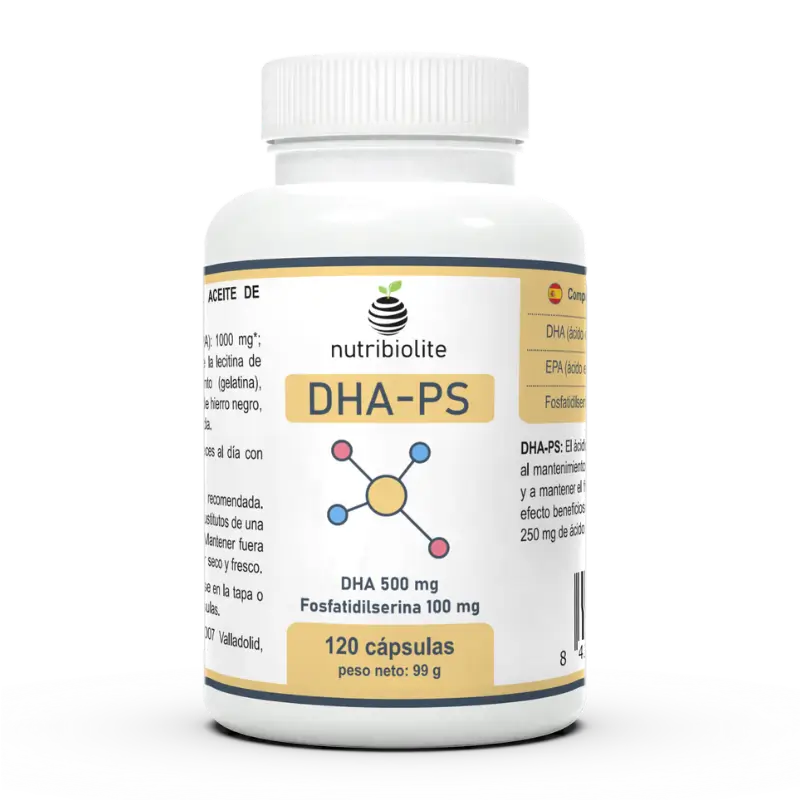
Nutribiolite DHA-PS combines omega-3 from fish oil and phosphatidylserine in a clean formula, designed for adults who want to support their brain and vision function within a healthy lifestyle.
What we can take away from this study into our daily lives
The review in Foods reinforces a simple idea, the quality of the fats we consume influences the health of our heart, brain and immune system. A good balance of omega-3 and omega-6, with a focus on DHA and EPA, is associated with lower triglycerides, better control of inflammation and support for cognitive function.
In practice, this means taking care of your diet, moving regularly and, when it makes sense, considering a supplement that provides DHA in combination with phospholipids such as phosphatidylserine. It is a way of accompanying physiological processes that already exist, not replacing them.
This content is informative and does not replace the advice of a health professional.
Frequently asked questions
What is the difference between dietary and supplemental omega-3s?
Omega-3s from fish, shellfish or seeds come along with other nutrients, such as protein and minerals. A supplement concentrates DHA and EPA in known and consistent doses, making it easier to achieve a regular intake when dietary intake is insufficient or fish consumption is low.
Why does the study put so much emphasis on the balance between omega-6 and omega-3?
Because both types of fats share metabolic pathways. Too much omega-6 without enough omega-3 promotes more inflammatory mediators. A balance close to 4 to 1 or 1 to 1, which is what the review highlights, is associated with a better cardiovascular and brain profile.
What does phosphatidylserine provide together with DHA in a supplement?
Phosphatidylserine is part of the membranes of neurons and helps organise proteins and receptors. Combined with DHA, which provides membrane flexibility, it offers dual structural support to the nerve cell, in line with the evidence for the importance of quality fats in the brain.
How long does it usually take to notice the effect of extra omega-3 intake?
The studies reviewed indicate that changes in triglycerides, markers of inflammation or cognitive function appear after several weeks or months of regular intake. This is not an immediate effect, but an ongoing support to physiology.
Does it make sense to take a DHA and phosphatidylserine supplement if I already eat oily fish?
It depends on the frequency and quantity. If oily fish consumption is low or irregular, a supplement can help to ensure a constant supply of DHA and phosphatidylserine, always within a routine that also takes into account diet, exercise and rest.