




A study in Antioxidants (Basel, Switzerland) in 2023 reviewed dozens of papers on how antioxidant- and fatty acid-rich diets influence the management of neurodegenerative diseases. The authors conclude that certain dietary patterns and supplementation with quality fats are associated with better maintenance of brain function over the years.
The work focuses on adults, many of whom are older or at risk of neurological decline, and looks at everything from Mediterranean-style diets to polyunsaturated fatty acid supplements. The practical message is clear – what we eat every day, and the nutrients we add as supplements, can make a difference to how the brain ages.
Study links diet to management of neurodegenerative processes
The review published in Antioxidants compiles clinical and observational studies in people with diseases such as Alzheimer’s, Parkinson’s, multiple sclerosis and other neurodegenerative conditions. It is not a single trial, but a comprehensive analysis of the available evidence.
The researchers describe that diets rich in fruits, vegetables, unsaturated fats and oily fish are associated with lower risk of cognitive decline and slower progression of symptoms. They also highlight the role of supplementation with omega-3 fatty acids and other micronutrients as part of an overall management strategy, always in conjunction with healthy habits.
Antioxidants and fatty acids support key brain pathways
The article explains that many neurodegenerative diseases share the same underlying problem – excess free radicals, chronic inflammation and damage to the mitochondria, which are the powerhouses of neurons. When these structures fail, the brain loses efficiency and memory, attention and other functions suffer.
The authors describe that dietary antioxidants and polyunsaturated fatty acids, such as omega-3s, help stabilise neuronal membranes and modulate inflammation. In plain language, they provide flexible raw material to build and repair the neuronal envelope, while reducing the inflammatory noise that damages neurons.
The study also notes that certain fatty acid supplements have been associated with improved performance on cognitive tests in adults, especially when integrated into Mediterranean or MIND-type dietary patterns rich in vegetables, legumes and fish.
Lifestyle habits that support the management of brain ageing
The review stresses that no supplementation compensates for a poor diet or a sedentary lifestyle. The most consistent results appear when several pillars are combined: a diet rich in vegetables and fish, control of excess sugars and trans fats, regular physical activity and good stress management.
In practice, this means prioritising oily fish several times a week, using olive oil as the main fat, filling the plate with vegetables of different colours and reducing ultra-processed foods. Benefits are also seen when limiting sugary drinks and maintaining a healthy weight, factors that reduce systemic inflammation that also affects the brain.
Moderate exercise, such as brisk walking on most days, improves cerebral blood flow and is associated with better cognitive performance. Sufficient rest and an active social life complete a physiological environment more conducive to balanced brain ageing.
How Nutribiolite DHA PS fits into this physiological management of the adult brain
Although the Antioxidants review looks at multiple nutrients and dietary patterns, one of the main themes it highlights is the role of fatty acids in brain health. This is the context for Nutribiolite’s DHA PS supplement, a fish oil-based product rich in DHA, a structural omega-3 in the brain, and phosphatidylserine, a key phospholipid in neuronal membranes.
Docosahexaenoic acid, known as DHA, is a key component of the cerebral cortex and retina. It is involved in membrane fluidity, communication between neurons and modulation of inflammatory processes. The review we are discussing includes studies in which omega-3 intake is associated with better maintenance of cognitive function in adults, which reinforces the interest in formulas that provide DHA in defined amounts.
Phosphatidylserine forms part of the lipid bilayer of neurons and helps electrical and chemical signals to be transmitted efficiently. Combining DHA from fish oil with phosphatidylserine in a single supplement, as DHA PS does, provides neuronal membranes with both the flexible fatty acid and the structural phospholipid that organises them. This synergy makes physiological sense, because the membrane is a unit where fat and phospholipids work together.
DHA PS is intended for adults who already take care of their diet and physical activity, and want additional support in managing daily mental performance and long-term brain health. Its role is not to replace a diet rich in fish and vegetables, but to concentrate in capsules a specific combination of DHA and phosphatidylserine aligned with the evidence linking quality fatty acids with improved brain function.
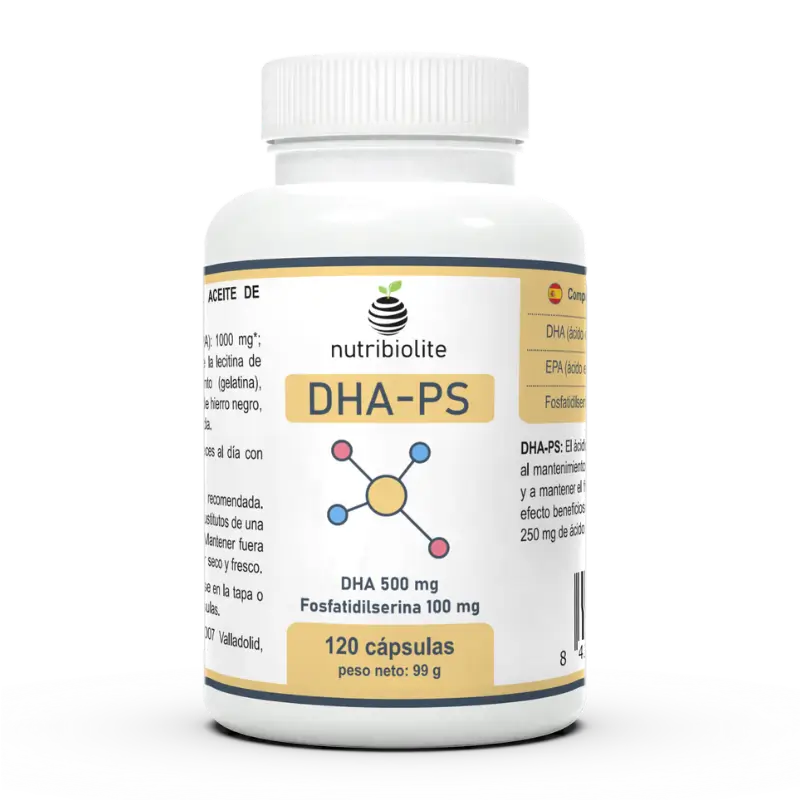
A supplement with DHA from fish oil and phosphatidylserine, aimed at adults who wish to physiologically support their daily brain health.
Caring for the brain is a sum of daily decisions
The central message of the study in Antioxidants is that the management of neurodegenerative diseases does not depend on a single factor. It is the result of years of diet, movement, rest and exposure to key nutrients such as omega-3 fatty acids.
Choosing dietary patterns rich in vegetables and fish, maintaining an active lifestyle and, when it makes sense, incorporating supplements such as a concentrated source of DHA and phosphatidylserine, allows adults to consciously take care of their brain health. Every gesture adds up to more independent ageing and better mental performance on a daily basis.
This content is for information only and does not replace the advice of a health professional.
Frequently asked questions
What is the relationship between omega-3 fatty acids and brain health?
DHA, a type of omega-3, is a structural part of the membranes of neurons. Evidence reviewed in Antioxidants indicates that adequate intake of quality fats is associated with better maintenance of cognitive function in adults.
How supplementing with DHA and phosphatidylserine differs from eating fish
Oily fish provides a broad mix of nutrients, including omega-3s. A supplement such as DHA PS concentrates DHA from fish oil and combines it with phosphatidylserine, which offers a known dose and synergy specific to neuronal membranes, always in support of a varied diet.
For what type of person can it make sense to take DHA PS?
It may make sense for adults who already follow a reasonably healthy diet, with an interest in looking after their daily mental performance and long-term brain health. It is best integrated into a lifestyle that includes exercise, sufficient rest and low ultra-processed foods.
The Antioxidants study speaks directly to DHA PS
No, the review generally discusses the role of antioxidants, dietary patterns and quality fat supplementation in the management of neurodegenerative diseases. The connection with DHA PS is that it provides DHA and phosphatidylserine, two components aligned with the physiological pathways described in the article.
Taking a supplement alone is enough to protect the brain.
No, the evidence shows that the best results come from a combination of good nutrition, physical activity, rest and, if desired, support with supplements. A product like DHA PS can be one piece of an overall brain care strategy.