





A study in Nutrients 2023 reviewed dozens of papers on how diet modulates the gut-brain axis and its role in neurodegenerative diseases. The authors analysed data in mostly older adults and concluded that certain dietary components, such as omega-3 fatty acids, can influence communication between gut microbiota and the brain.
For everyday life, this means that what we eat not only nourishes the body, but also conditions inflammatory messages, defence and brain plasticity. The review proposes precision nutrition, tailored to the individual’s microbiota, genes and metabolism, as a way to preserve long-term cognitive health.
Precision nutrition puts the gut-brain axis at the centre of brain ageing
The paper in Nutrients is a systematic review, i.e. it brings together and critically analyses previous studies in humans and animal models. It does not focus on a single trial, but on the body of evidence on microbiota, diet and neurodegenerative processes such as Alzheimer’s, Parkinson’s or multiple sclerosis.
The authors describe that alterations in the microbiota, known as dysbiosis, are associated with increased intestinal permeability, low-grade inflammation and changes in brain proteins sensitive to oxidative damage. Against this background, they highlight dietary patterns rich in fibre, polyphenols and omega-3 fatty acids as one of the most coherent strategies to modulate the gut-brain axis and support cognitive function over the years.
How microbiota and omega-3s connect to brain health
The gut-brain axis is a communication network linking microbiota, enteric nervous system, vagus nerve, immune system and brain. When the microbiota is in balance, it produces metabolites such as short-chain fatty acids and vitamins that help keep gut and blood-brain barriers intact and regulate inflammation.
The review highlights that omega-3 fatty acids, especially docosahexaenoic acid or DHA, are structural building blocks of neuronal membranes. An environment rich in DHA promotes a more fluid membrane, which facilitates communication between neurons and the correct response to chemical signals. In addition, omega-3s are associated with a more balanced inflammatory profile, which is key in a context where sustained neuroinflammation is associated with cognitive impairment.
The article also highlights that the microbiota influences how we absorb and transform these lipids, while omega-3s can modify the bacterial composition towards more beneficial profiles. This dual pathway, microbiota modulating lipids and lipids modulating microbiota, is one of the pillars of precision nutrition applied to the brain.
Daily habits supporting the gut-brain axis and cognitive function
The review insists that there is no single miracle nutrient, but rather a pattern of living that, taken together, makes a difference. On a dietary level, it suggests prioritising vegetables, fruits, legumes, whole grains and nuts, which nourish the microbiota and increase the production of protective metabolites. This is in addition to the regular presence of long-chain omega-3 sources, such as oily fish.
Other habits consistent with this view include maintaining regular physical activity, taking care of a good night’s rest and reducing chronic stress, as the hypothalamic-pituitary-adrenal axis interacts with the microbiota and the brain. The underlying message is clear, small decisions repeated on a daily basis, from plate to movement, create the internal environment where the brain ages with more or less resilience.
How an omega-3 supplement can fit into this precision strategy
In practice, it is not always easy to maintain a consistent intake of DHA-rich oily fish, especially for people with intense schedules or specific food preferences. In these cases, some people value the use of omega-3 supplements to support their diet, as part of a broader strategy that includes diet, physical activity and stress management.
The study in Nutrients does not evaluate a specific supplement, but it does reinforce the idea that omega-3 fatty acids are key components in modulating the gut-brain axis and in preserving cognitive function during ageing. A product formulated with fish oil rich in DHA and other related phospholipids aligns with this physiological pathway by providing in a concentrated form lipids that the body already uses to build and maintain its neuronal membranes.
How Nutribiolite DHA PS, a brain and eye supplement, aligns with this physiology
Nutribiolite’s DHA PS is a fish oil-based dietary supplement rich in DHA and phosphatidylserine, aimed at supporting brain and eye function within a healthy routine. The review in Nutrients highlights the role of DHA as a structural fatty acid in the brain and its relevance in precision nutrition strategies.
In this context, a formula combining DHA from fish oil with phosphatidylserine provides a concentrated source of components that the body integrates into the membranes of neurons and retinal cells. DHA helps maintain membrane fluidity and a more balanced anti-inflammatory environment, while phosphatidylserine is involved in signalling processes and cell surface organisation, which are linked in the scientific literature to cognitive function and response to mental stress.
This combination is of particular interest to adults who already take care of their diet and physical activity, and who want additional support for brain and eye health, consistent with the evidence on omega-3 and phospholipids. It is a way of encapsulating an existing physiological pathway, the integration of essential lipids into neuronal membranes, in a convenient and easy-to-incorporate format.
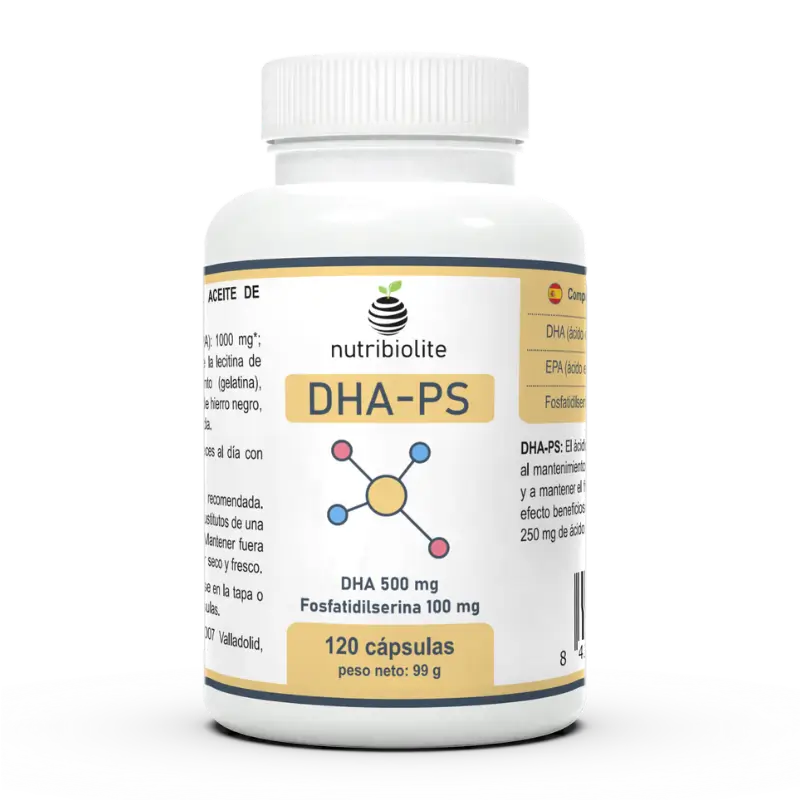
A supplement with fish oil DHA and phosphatidylserine, designed for adults who want to precisely support brain and eye health.
Integrating evidence into everyday decisions
The main message of the study is that precision nutrition, focusing on microbiota, inflammation and structural lipids such as omega-3s, opens up a realistic pathway to long-term brain care. It is not a single intervention, but the addition of a dietary pattern rich in fibre and quality fats, movement habits and, when it makes sense, specific supports such as DHA and phosphatidylserine supplementation.
In short, the gut-brain axis responds to what we do every day. Making better choices about what we eat, how we move and what kind of nutritional support we use can make a difference in how our nervous system ages.
This content is informative and is not a substitute for the advice of a healthcare professional.
Frequently asked questions
What does DHA from fish oil contribute to the brain according to recent evidence?
Docosahexaenoic acid or DHA is a key component of the membranes of neurons. The review in Nutrients highlights it as one of the most relevant fatty acids in the modulation of the gut-brain axis and in the preservation of cognitive functions during ageing.
How does precision nutrition relate to a supplement such as DHA PS?
Precision nutrition seeks to tailor the diet to individual needs, taking into account microbiota, genes and metabolism. A supplement such as DHA PS, based on fish oil rich in DHA and phosphatidylserine, fits into this logic by providing structural lipids that the body already uses in its neuronal and visual membranes.
Does it make sense to take omega 3 if I already eat oily fish regularly?
If oily fish intake is constant and sufficient, omega-3 intake can be adequate through diet alone. Some people with lower fish consumption or high cognitive demands may value a supplement as a way of ensuring a steady supply of DHA within a healthy routine.
What role does the microbiota play in omega-3 utilisation?
The review explains that the microbiota influences the absorption and transformation of polyunsaturated fatty acids. In turn, omega-3s may promote more beneficial bacterial profiles. This bi-directional interaction is considered a centrepiece of precision nutrition strategies for the brain.
Does DHA PS replace a balanced diet or other health habits?
No, a supplement such as DHA PS is intended to support a foundation of a varied diet, physical activity and adequate rest. Its function is to concentrate specific nutrients related to the structure and environment of neurons, within a lifestyle that already prioritises brain health.