




A study in Nutrients 2024, a randomised clinical trial of 149 moderately stressed adults, showed that 3 weeks of hydroponic red ginseng supplementation was associated with lower perceived stress, fewer negative emotions and faster responses on spatial planning tasks, versus placebo. The effect was modest but clear and appeared in just 21 days.
For people under continuous mental strain, these results suggest that certain Panax ginseng extracts can support stress management and cognitive agility. They do not replace rest and basic habits, but provide an additional building block in the care of daily mental performance.
What the study with red ginseng in moderately stressed adults did
The trial included 149 men and women aged 18 to 60 with moderate stress levels as measured by the Perceived Stress Scale. For three weeks they took a capsule containing 200 milligrams of hydroponic red Panax ginseng root or a placebo capsule containing flour and sugar every morning for three weeks.
The researchers measured perceived stress, mood, depressive symptoms and performance on computerised tests of memory and executive functions. After 21 days, the ginseng group showed a greater reduction in perceived stress and negative emotions, along with faster responses on a spatial planning task. The improvement was modest, but consistent versus placebo.
In safety, ginseng was well tolerated during the study, with no serious product-related adverse effects and close to 100 percent adherence. Still, the authors point out that longer studies are needed to understand its long-term impact.
How red ginseng modulates the effect of stress on the brain
Panax ginseng contains ginsenosides, bioactive compounds that act on several pathways in the nervous system and stress axis. The preparation used in the study was characterised by a very high content of rare ginsenosides, more bioavailable forms that reach the circulation and nerve tissue earlier.
At the physiological level, ginsenosides have been linked to modulation of the hypothalamic-pituitary-adrenal axis, which regulates the stress response, to the balance of neurotransmitters such as serotonin and dopamine, and to antioxidant and anti-inflammatory effects in the brain. This results in a less intense stress signal and a more favourable environment for neuronal plasticity.
In the trial, this physiology was reflected in less perceived stress, less negative affect and a slight improvement in visual memory and planning tasks. These are not dramatic changes, but a measurable adjustment in how the brain processes mental load when it receives an adaptogenic stimulus consistent with its own biochemistry.
Daily habits that enhance the physiological effect on stress and cognition
The study was conducted in adults with moderate stress, a very common situation in today’s working life. The results fit with a key insight: the brain responds better to daily challenges when the overall environment is conducive to recovery.
In practice, this involves three axes. First, sufficient and regular sleep, which helps to consolidate memories and reduce reactivity to stress. Second, moderate physical activity, which improves cerebral blood flow and promotes the release of neurotransmitters involved in well-being. Third, a diet rich in vegetables, healthy fats and quality protein, which provides the precursors needed to make neurotransmitters and protect neurons from oxidative damage.
On this basis, the use of adaptogens such as ginseng makes sense as additional support. It does not replace lifestyle pillars, but rather supports the body’s ability to sustain attention, working memory and emotional stability in mentally demanding contexts.
How Nutribiolite’s Onit, a mental performance supplement, aligns with this evidence
The red ginseng trial shows that a well-characterised adaptogen can reduce the subjective impact of stress and fine-tune certain executive functions in adults under mental stress. Nutribiolite’s Onit, a food supplement based on plants, amino acids, choline and phosphatidylserine, builds on the same logic, reinforcing physiological pathways that the brain already uses to maintain clarity, memory and focus.
In Onit’s formulation, Panax ginseng is integrated as the centrepiece of a nootropic approach to mental well-being. Its study-supported adaptogenic role is combined with structural and functional nutrients for neurons, such as choline and phosphatidylserine, which are involved in neuronal membrane integrity and synaptic transmission.
The amino acids present in Onit provide building blocks for key neurotransmitters in sustained attention and motivation. In this way, ginseng does not act in isolation, but in synergy with other components that take care of both the chemical signal and the structural support of nerve cells.
This combination is of particular interest to adults who face intellectually demanding days of meetings, quick decisions and continuous multitasking. For them, an adaptogen that modulates the effect of stress, together with nutrients that support the neuronal membrane and brain metabolism, can translate into a more stable sense of clarity and responsiveness.
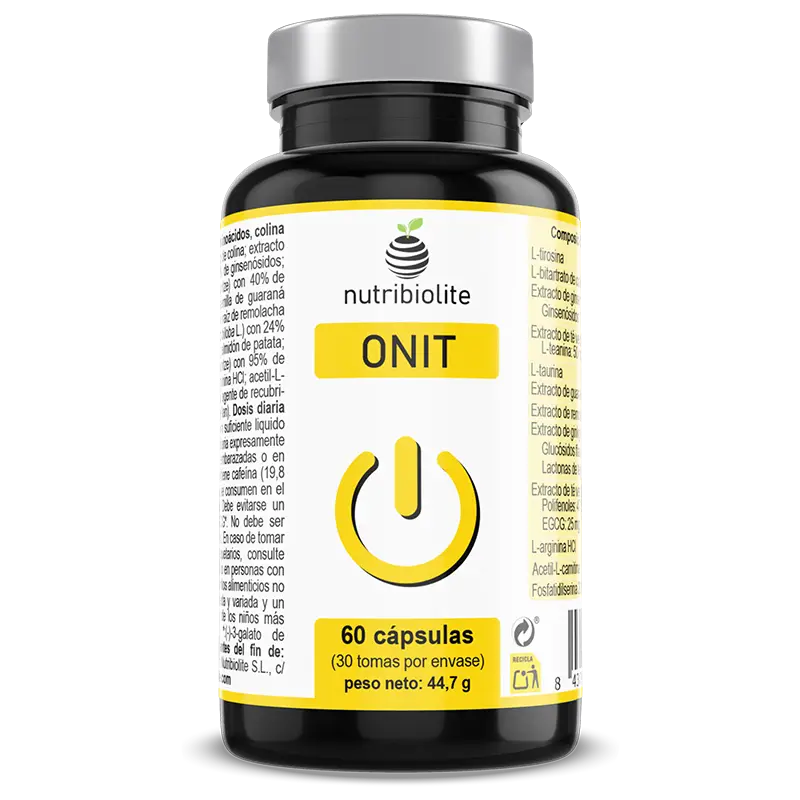
Nutribiolite’s Onit provides physiological support for mental performance in adults with a high daily cognitive load.
Onit is designed for adults who already take care of their diet, rest and physical activity and want additional physiological support for memory, concentration and management of mental effort.
What these results mean for your day-to-day life
The red ginseng clinical trial does not promise instant solutions, but it does show that a well-designed adaptogenic stimulus can reduce the subjective burden of stress and improve specific aspects of cognitive function within a few weeks.
In daily life, this translates into a combined strategy, taking care of sleep, movement and nutrition, incorporating stress management techniques and, when seeking additional reinforcement, assessing formulas that integrate adaptogens such as ginseng with key nutrients for brain structure and metabolism, as Onit does.
The central message is clear: the brain responds to constant nurturing. Small, sustained adjustments, supported by scientific evidence, can make a difference in how you cope with the mental load of each day.
This content is informational and is not a substitute for the advice of a healthcare professional.
Frequently asked questions
What the study of red ginseng in moderately stressed people showed
The clinical trial in moderately stressed adults found that 3 weeks of hydroponic red ginseng reduced perceived stress and negative emotions more than placebo. In addition, faster responses were observed on a spatial planning task, pointing to a slight improvement in executive functions.
What it means that ginseng has an adaptogen effect on stress
An adaptogen helps the body to respond in a more balanced way to stressful situations. In the case of ginseng, it has been associated with a modulation of the stress axis and neurotransmitters, which may result in a more manageable perception of stress and a more stable mental state.
Who a supplement such as Nutribiolite’s Onit may make sense for
Onit may suit healthy adults with a high cognitive load, such as professionals, advanced students or people with intellectually intense workdays. In them, physiological support combining ginseng with choline, phosphatidylserine and amino acids can help support clarity, memory and focus within an already well-cared-for lifestyle.
How Onit’s ginseng relates to the study results
The study showed that a hydroponic red ginseng preparation improved perceived stress and performance on cognitive tasks versus placebo. Onit integrates Panax ginseng into a nootropic formulation, leveraging that adaptogenic profile to support mental stress management and cognitive agility in the context of everyday life.
Taking a supplement is enough to improve memory and concentration
No supplement replaces basic habits such as getting enough sleep, moving daily and eating a balanced diet. Supplements such as Onit are best understood as an additional support to physiological processes already present, especially when the mental load is high and proactive care of cognitive performance is sought.