




The study in the *International Dental Journal* 2026 brought together 13 trials involving people with cramps or myalgia, another term for muscle pain. In four trials involving around 364 pregnant women, magnesium significantly reduced the frequency of cramps. The results outperformed the placebo – a preparation containing no magnesium – and provide practical guidance for managing these cramps.
The significant benefit applies specifically to pregnant women with cramps. In four trials involving around 396 adults, there was no significant change in night-time or persistent leg cramps. Magnesium administered intravenously also showed no benefit in older adults. One trial conducted around the time of surgery observed fewer fasciculations – small muscle contractions – and less post-operative myalgia.
The systematic review identified magnesium as the most widely studied electrolyte
A systematic review searches for, selects and compares studies using predefined criteria. This review followed international guidelines and was registered before it began. Two reviewers extracted the data and assessed potential errors that might bias the results.
The searches covered three scientific databases between January 1995 and August 2025. The authors included 13 randomised controlled trials or similar studies. Ten of these studied magnesium, making it the most widely researched electrolyte. The searches included the term ‘magnesium’ alongside ‘sodium’, ‘calcium’, ‘potassium’, ‘cramps’ and ‘muscle pain’.
The risk of methodological errors was generally low or moderate. The authors pooled comparable results and analysed different populations and settings separately.
Magnesium is involved in the signalling that coordinates nerves and muscles
Electrolytes help to control the electrical signals that activate nerves and cause muscles to contract. Magnesium stabilises neuronal membranes and regulates the release of chemical messengers between nerve cells. It also modulates calcium signals related to neuromuscular excitability.
Neuromuscular excitability describes how readily nerves and muscles respond to a signal. Nociceptors are nerve sensors that detect pain signals. Their sensitisation increases their responsiveness and may contribute to persistent muscle pain.
According to the study, a magnesium deficiency lowers the threshold required to trigger cramps. It may also facilitate the sensitisation of the nervous system. These mechanisms explain the physiological relevance of the mineral in the muscle syndromes studied.
The response to electrolytes depends on the population and the context
Sodium-containing solutions reduced susceptibility to cramps in studies on exercise and cirrhosis. These results remain limited to those contexts. There was insufficient favourable evidence for calcium and potassium within the review.
The authors consider magnesium to be the most plausible candidate for investigating temporomandibular muscle pain. This area includes the muscles that enable movement of the jaw. Its use requires specific trials in people with this condition.
The evidence was consistent for cramps associated with pregnancy but variable in other populations. Routes of administration and contexts also differed. These characteristics limit the practical scope of the findings.
Nutribiolite Mag-fusion combines a precise formula with the magnesium studied
The strongest scientific link lies with magnesium, which is present in Mag-fusion and was the focus of ten trials. The review examined electrolyte supplementation for cramps and muscle pain. The findings relate to the populations and interventions reviewed.
The daily dose of two capsules provides 247 mg of elemental magnesium from pure citrate. Bioavailability describes how much of the nutrient the body can absorb and utilise. According to the product information, citrate has high bioavailability and is well tolerated by the digestive system.
The formula includes vitamin B6 as pyridoxal-5-phosphate and vitamin B12 as methylcobalamin. It includes folate, known as vitamin B9, in the form of calcium L-5-methyltetrahydrofolate. It provides 2,000 international units of vitamin D3 as cholecalciferol. These bioactive forms are ready for direct use by the body.
Magnesium and the B vitamins contribute to normal energy metabolism and help reduce tiredness and fatigue. Vitamins B6, B9 and B12 play a role in homocysteine metabolism. Homocysteine is a compound derived from an amino acid found in food.
Magnesium and vitamin D3 contribute to the normal maintenance of muscles and bones. Vitamin D3 also supports the normal functioning of the immune system. Bamboo extract provides natural silica.
The formula is free from artificial colourings, preservatives and excipients. Each pack contains 120 vegetable capsules and provides a 60-day supply. It is manufactured in accordance with good manufacturing practices and European Union food safety standards.
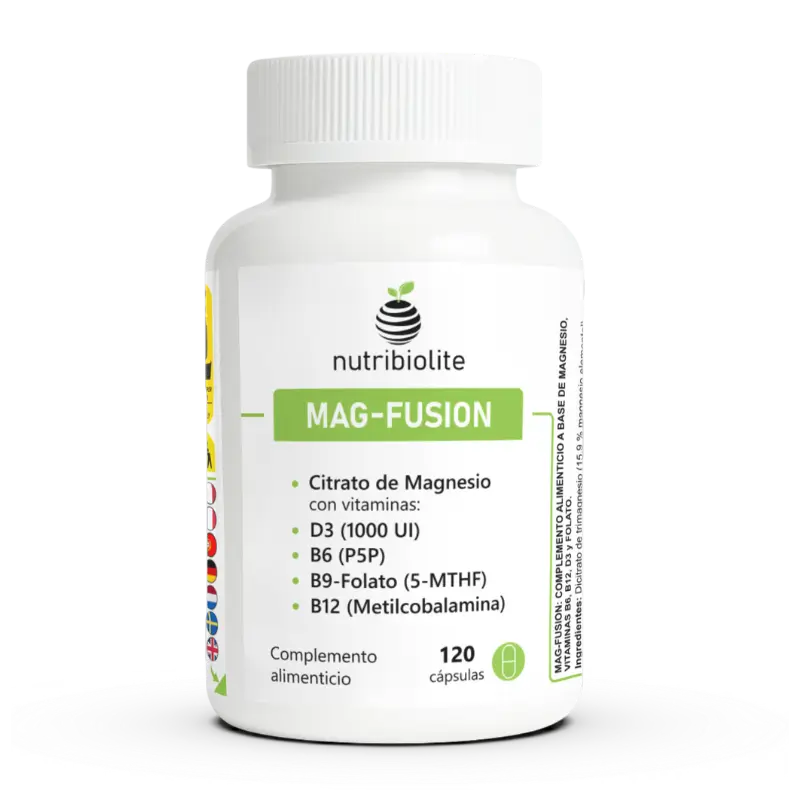
Mag-fusion provides magnesium citrate and vitamins B6, B12, D3 and folate, combined with the most widely studied electrolyte.
Five answers clarify the evidence and use of Nutribiolite Mag-fusion
What was the main finding of the review on magnesium?
In four trials involving around 364 pregnant women, magnesium significantly reduced the frequency of pregnancy-related cramps compared with placebo.
Which population did the scientific review include?
The review included 13 trials involving people with muscle cramps or pain. It included pregnant women, adults, older adults, and settings such as exercise, cirrhosis and surgery.
How might magnesium affect nerves and muscles?
Magnesium stabilises nerve cell membranes and regulates chemical messengers. It also modulates neuromuscular excitability and the sensitisation of nerve pain receptors.
How does the study relate to Mag-fusion?
Magnesium was the most widely studied electrolyte in the review. Mag-fusion provides it as pure citrate, together with bioactive vitamins and vitamin D3.
How is Mag-fusion taken and how long does a pack last?
Take one capsule twice a day after meals, with water. The 120 capsules provide a 60-day supply.
This content is for information purposes only and is not a substitute for advice from a healthcare professional.