




You finish the day and the letters on your mobile start to dance a bit, even though you could see everything normally in the morning. You blink, adjust the brightness, zoom in on the screen and carry on, because nowadays almost everything passes through a luminous interface.
It’s frustrating to feel your eyes heavy at the end of the day, especially when your work, shopping, messaging and even your leisure depend on looking closely for hours at a time. However, that feeling doesn’t come from weakness; it usually has a fairly straightforward physiological explanation.
The trend is called digital visual syndrome, although many people sum it up more simply: screen eyes. In fact, when you look at a screen for a long time, the eye blinks less, the tear film evaporates sooner, and the retina works in a constant light environment that requires well-nourished cell membranes.
Why the screen exhausts your eyes
The eye is not designed to fixate on the same distance for hours without real breaks. When you read on screen, the ciliary muscle maintains close focus, the blink rate drops, and the ocular surface loses some of that thin film that protects and lubricates.
At the same time, the retina is one of the tissues with the highest concentration of docosahexaenoic acid (DHA), a key omega-3 for the flexibility of its membranes. That flexibility matters because photoreceptors transform light into nerve signals all day long, even when you’re just responding to seemingly harmless mail.
Then comes the brain, because seeing doesn’t end at the eye. Visual information travels through neural circuits that also depend on healthy membranes, efficient communication and good availability of structural nutrients. So when life becomes screen after screen, taking care of the eye-brain pathway is no longer an aesthetic detail but a daily strategy.
Even so, eye drops, light filters and the rule of looking away every so often have their place. On the other hand, if your routine requires many hours in front of the computer, it is also a good idea to look inwards: towards the lipids that form the membranes of the retina and the neurons that process what you see.
How to nourish the eye-brain pathway
When you understand this chain, the logical choice is not to cover up the discomfort for half an hour, but to support the structures at work every time you open your laptop. That’s where DHA-PS comes in, a formula designed for those who live between screens and want to nourish brain and eyes with a smart nutritional base.
DHA-PS combines docosahexaenoic acid (DHA) with phosphatidylserine (PS), two nutrients involved in the architecture of cell membranes. DHA helps maintain the fluidity of retinal membranes, while PS is part of neuronal membranes and supports orderly cell communication.
In practice, its micro-benefits are very concrete: it provides DHA to nourish retinal membranes, adds PS to support neuronal membrane function and supports a more stable visual routine when screens occupy a large part of the day. It also fits well with simple habits such as conscious blinking, resting your eyes and adjusting your task lighting.
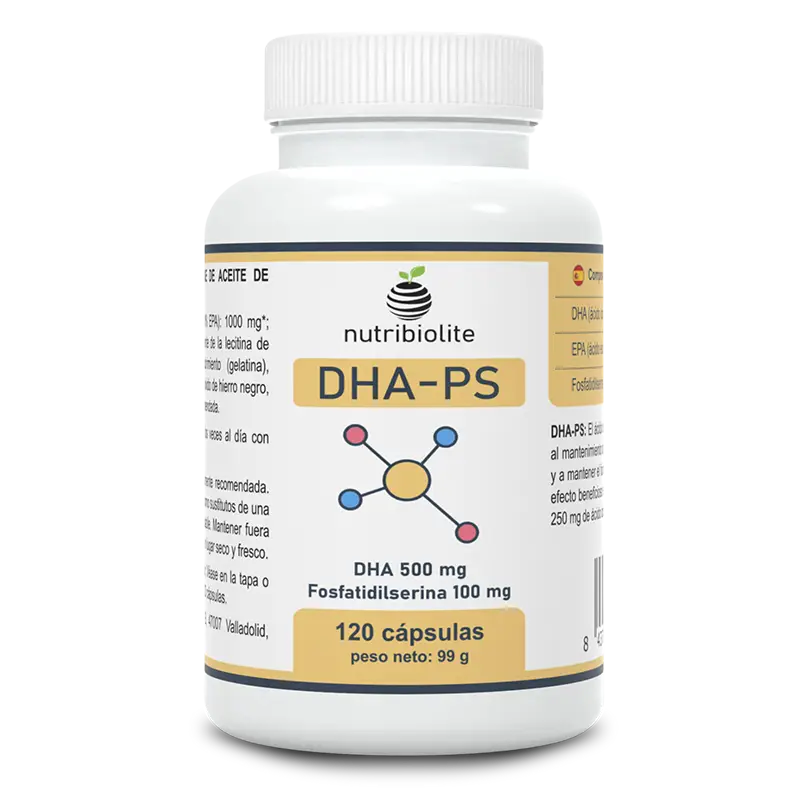
Nourish the eye-brain pathway with DHA and phosphatidylserine to support your daily visual performance.
Quick questions before you try it
Does DHA-PS work if I spend long hours with screens?
It’s a particularly good fit for demanding digital routines, because it provides structural nutrients related to retina, neural membranes and daily visual processing.
What if I have dry eyes at the end of the day?
Dryness can have many causes, but supporting internal nutrition is helpful along with visual breaks, hydration and conscious blinking.
Aren’t eye drops or light filters enough?
Drops and filters help from the outside, while DHA-PS works from the nutrition of membranes involved in visual function.
When does it make sense to take it?
It makes sense as a daily habit during periods of high screen exposure, especially if you are looking for consistency rather than an immediate effect.
Can I take it with other supplements?
In healthy adults it is usually easily integrated, although it is worth consulting if you are taking anticoagulants, chronic medication or have a medical condition.
A responsible note before continuing
This content is for information only and is not a substitute for the advice of a healthcare professional. Food supplements should not be used as a substitute for a balanced diet and a healthy lifestyle, and it is important to adhere to the recommended daily dose. If you are pregnant, breastfeeding, taking medication or have a diagnosed medical condition, please consult your healthcare professional first.