

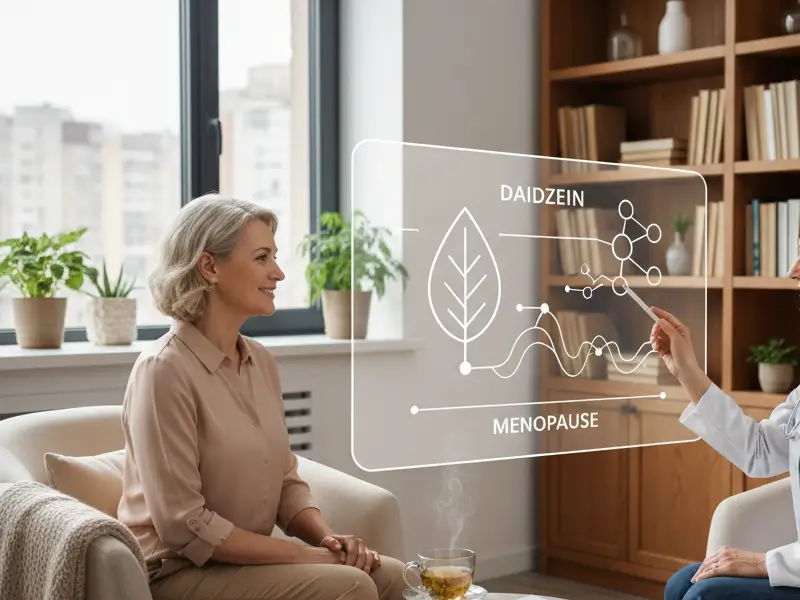

2025 review positions daidzein and genistein as key isoflavones in menopause
The researchers analysed daidzein and genistein, two phytoestrogens found in soybeans and red clover. They are plant molecules with a structure similar to oestradiol, the main human oestrogen.
The review included data from cell studies, animal studies and clinical trials. Some genistein trials used between 30 and 54 milligrams daily, with groups of about 90 to more than 200 women.
Clinical results were mixed. Some studies showed reductions in hot flushes of up to 50 percent, while others showed smaller effects. The response depends very much on the gut microbiota and the ability to produce equol.
Equol is a metabolite that some gut bacteria make from daidzein. It is easily produced by only part of the population. This is why two women may respond differently to the same isoflavone intake.
Isoflavones act as a mild modulator of oestrogen receptors.
During the menopause, oestrogen levels drop. This drop alters pathways related to body temperature, bone, skin, blood vessels and cognitive function.
Daidzein and genistein can bind to estrogen receptors. The review highlights their preference for the beta receptor, associated with tissues such as bone, brain and blood vessels.
This behaviour is described as selective estrogen receptor modulator-like activity. In plain language, they act differently depending on the tissue and hormonal context.
Antioxidant and anti-inflammatory actions are also described. This matters because the menopausal transition increases pressure on tissues that depend on hormonal and metabolic balance.
Diet provides isoflavones, but consistency makes a difference
Soy, tofu, tempeh, miso and red clover are natural sources of isoflavones. In Asian diets, consumption tends to be more regular from an early age.
In Western diets, intake tends to be low and irregular. That is the practical gap. The body needs constant exposure to sustain physiological pathways, but daily life rarely facilitates this.
The review also reminds us that bioavailability is moderate. Much of the isoflavones are transformed in the gut and liver before circulating in the body.
Therefore, habits remain the basis. Prioritising sufficient protein, muscle strength, fibre-rich foods and a stable routine helps to create a more favourable metabolic terrain.
Menovon combines soya and red clover to provide daidzein-related isoflavones
The review identifies soy and red clover as important sources of daidzein and genistein, two compounds central to the evidence reviewed. Menovon´s formula focuses on plants linked to phytoestrogens. Soy and red clover target the mechanism studied, the gentle modulation of hormone receptors during the menopause. In addition, Menovon incorporates black cohosh, chasteberry and vitamins, according to available product information. These ingredients broaden the approach to female balance at this stage, without relying solely on a plant source. Its value is in bringing together specific plant sources, linked to isoflavone research, into a precise daily routine.
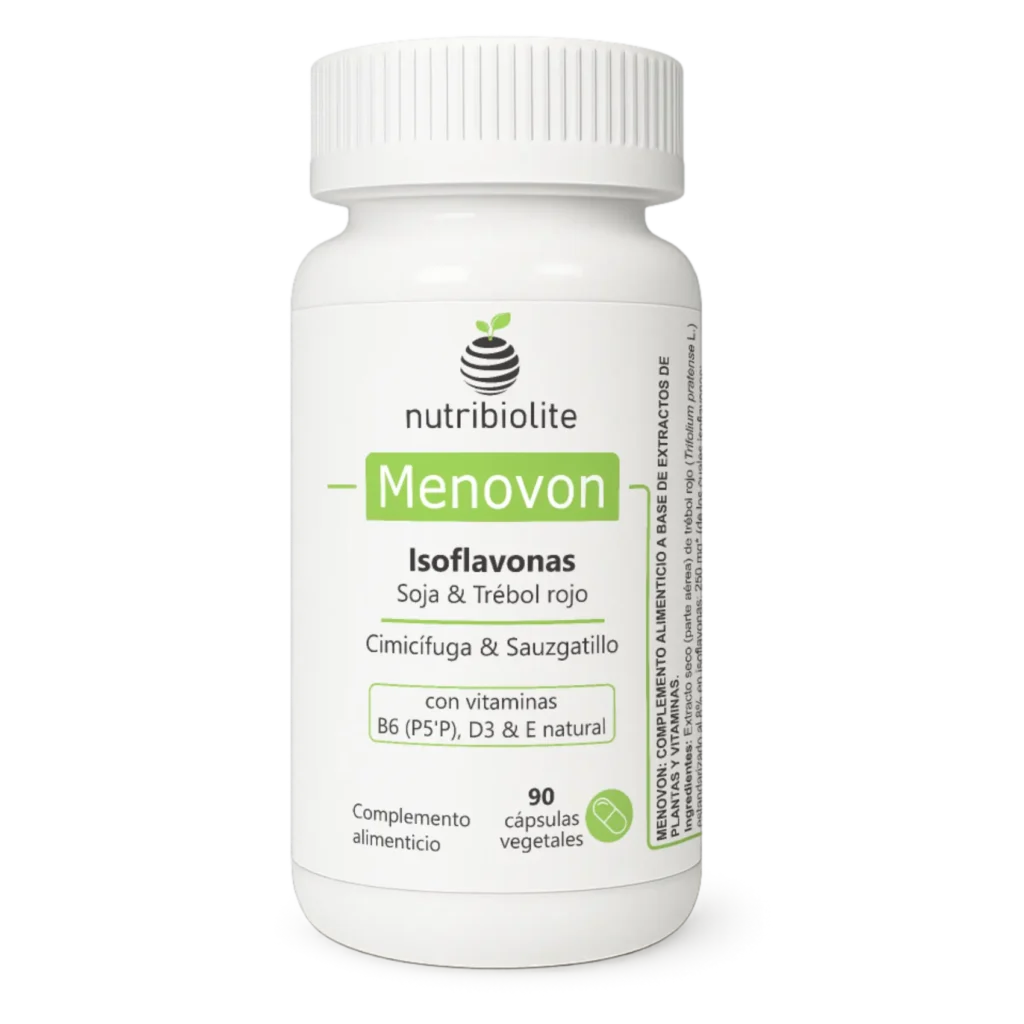
Menovon combines soy and red clover isoflavones with black cohosh, chasteberry and vitamins for the menopausal stage.
Frequently asked questions
What is daidzein and why does it matter in the menopause?
Daidzein is a plant isoflavone found in soya and red clover. The 2025 review links it to the mild modulation of estrogen receptors.
What is the difference between daidzein and genistein?
Both are isoflavones, but have slight chemical differences. Genistein tends to show greater affinity for the estrogen beta-receptor.
Why some women respond better to isoflavones
Gut microbiota plays a major role. Some people convert daidzein to equol, a metabolite with more pronounced activity on hormone receptors.
How Menovon relates to the isoflavone study
Menovon contains plant sources related to isoflavones, such as soy and red clover. The study reviews precisely those compounds present in these plants.
What habits enhance a menopausal nutritional routine?
Adequate protein, strength training, plant fibre and a steady routine help. These habits support muscle, bone and metabolism.