



A narrative review published in the *World Journal of Clinical Cases* in 2025 confirms that red yeast rice reduces plasma LDL-C levels by up to 34 per cent within 6 to 8 weeks compared with a placebo, at doses of up to 10 mg per day of monacolin K. The mechanism is comparable to that of statins: monacolin K inhibits the enzyme HMG-CoA reductase, which plays a key role in the hepatic synthesis of cholesterol. For people with mild or moderate hypercholesterolaemia and low additional cardiovascular risk, the review concludes that red yeast rice is a safe and effective supplement.
What the 2025 narrative review on red yeast rice and LDL cholesterol showed
The review analyses pooled data from multiple randomised clinical trials in patients with mild to moderate dyslipidaemia. The reduction in LDL-C achieved with red yeast rice is accompanied by reductions in total cholesterol, apolipoprotein B, high-sensitivity C-reactive protein and blood pressure. In secondary prevention studies, red yeast rice showed reductions of up to 45 per cent in the risk of atherosclerotic cardiovascular events compared with placebo.
The review also documents that red yeast rice extract has greater bioavailability than purified lovastatin, making it more effective at reducing cholesterol at equivalent doses. This finding is relevant for understanding why the natural form of the active compound, present directly in the fermented rice, offers a distinct clinical profile compared with the isolated active ingredient.
Why monacolin K acts on cholesterol synthesis in the liver
The liver produces most of the circulating cholesterol via a metabolic pathway regulated by the enzyme HMG-CoA reductase. Monacolin K, in its active acid form, competes directly with this enzyme’s natural substrate and inhibits the rate-limiting step in cholesterol synthesis. The result is a reduction in endogenous production and a compensatory increase in LDL receptors on the liver surface, which accelerates the clearance of circulating LDL.
This dual mechanism—reduced synthesis and increased hepatic uptake of LDL—explains the magnitude of the reductions observed in the clinical trials included in the review. Monacolin K is structurally identical to lovastatin, but its presence in the fermented rice matrix alters its absorption profile and bioavailability.
When diet alone is not sufficient to control LDL cholesterol
Current clinical guidelines recommend lifestyle modifications as the first step in the management of mild dyslipidaemia. However, the review notes that there is a group of people with moderate lipid imbalance and low cardiovascular risk who do not achieve normal levels through diet and exercise alone. For this group, red yeast rice represents a nutraceutical option supported by clinical evidence.
Variability in monacolin K content across commercial products is one of the critical factors identified in the review. Analyses of products available on the market have found significant differences in the actual amount of monacolin K per dose, which directly affects clinical efficacy. Choosing a product with standardised monacolin content is therefore a decision that has a direct impact on the outcome.
What the combination of red yeast rice and phytosterols offers, according to clinical data
The review includes data from a double-blind, placebo-controlled clinical trial that evaluated the combination of red yeast rice and phytosterols in 90 patients with hypercholesterolaemia. The results showed a 27% reduction in LDL-C and a 19% reduction in apolipoprotein B. This combination acts via two distinct and complementary mechanisms: phytosterols reduce the intestinal absorption of dietary cholesterol, whilst monacolin K inhibits its hepatic synthesis.
The simultaneous action on both absorption and synthesis represents a more comprehensive strategy than acting on a single mechanism. This is the physiological basis for combining both ingredients in a single supplement.
How Nutribiolite’s Protecardio follows the physiological logic of the study on red yeast rice
Protecardio combines red yeast rice standardised to 4% monacolins, 997.5 mg of phytosterols per daily dose, astaxanthin extracted from the algae Haematococcus pluvialis standardised to 5%, and coenzyme Q10. The formula acts on the three pathways of cholesterol metabolism documented in the scientific literature.
The red yeast rice in Protecardio is standardised to 4% monacolins, which guarantees a defined and reproducible content of the active ingredient. This point is particularly relevant in light of the 2025 review, which identifies variability in monacolin K content as one of the main factors limiting the efficacy of commercial red yeast rice products.
The phytosterols in Protecardio provide 997.5 mg per daily dose, exceeding the minimum threshold of 800 mg established by Regulation (EU) No 432/2012 to achieve the beneficial effect on blood cholesterol. By acting in the gut to reduce the absorption of dietary cholesterol, they complement the hepatic mechanism of monacolin K with physiological precision.
Astaxanthin from Haematococcus pluvialis provides antioxidant activity that has been studied in the context of lipid metabolism. Some studies have assessed its potential impact on the oxidation of LDL lipoproteins, a process that plays a role in cholesterol metabolism. Coenzyme Q10 addresses a specific metabolic need: as monacolins inhibit the mevalonate pathway, they may also reduce the endogenous synthesis of CoQ10, a compound essential for energy production in the mitochondria of tissues with high energy demands, such as cardiac muscle. Protecardio contains CoQ10 to counteract this effect. The formula is 100% natural and contains no additives.
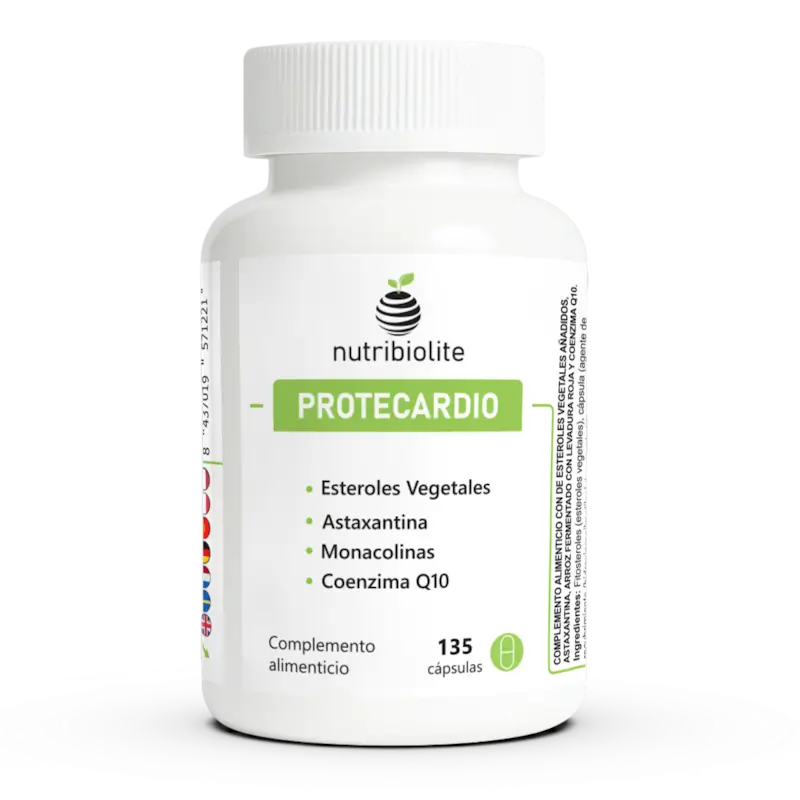
Protecardio combines red yeast rice standardised to 4% monacolins, 997.5 mg of phytosterols, astaxanthin from Haematococcus pluvialis and coenzyme Q10, in an additive-free formula for the nutritional management of cholesterol.
Frequently asked questions about red yeast rice, monacolin K and cholesterol management
What is red yeast rice and why is it used for cholesterol?
Red yeast rice is produced by fermenting wholegrain rice with the yeast Monascus purpureus. This process produces monacolins, including monacolin K, an inhibitor of the enzyme HMG-CoA reductase, which regulates cholesterol synthesis in the liver. Its use as a supplement for cholesterol management is supported by numerous clinical trials and scientific reviews.
How much can red yeast rice reduce LDL-C according to the available evidence?
According to the narrative review published in the *World Journal of Clinical Cases* in 2025, consuming up to 10 mg per day of monacolin K from red yeast rice can reduce plasma LDL-C levels by up to 34% within 6 to 8 weeks compared with a placebo, in people with mild to moderate hypercholesterolaemia. These results apply to the population studied in the clinical trials included in the review.
Why is it important for red yeast rice to be standardised for monacolins?
The 2025 review notes that the monacolin K content varies significantly between commercial red yeast rice products, and that this variability directly affects clinical efficacy. A product standardised for its monacolin content guarantees a defined and reproducible dose of the active ingredient in each serving.
What role do phytosterols play in cholesterol control alongside red yeast rice?
Phytosterols act in the gut by competing with dietary cholesterol during its absorption, thereby reducing the amount of cholesterol that enters the bloodstream. Their mechanism of action is complementary to that of red yeast rice, which acts on hepatic synthesis. A double-blind clinical trial included in the review showed a 27% reduction in LDL-C with the combination of both ingredients in patients with hypercholesterolaemia. The beneficial effect of phytosterols on blood cholesterol is recognised by Regulation (EU) No 432/2012 for a minimum daily intake of 800 mg.
Who is Protecardio intended for, and what precautions should be taken?
Protecardio is intended for adults who wish to manage their blood cholesterol levels. It is not suitable for pregnant or breastfeeding women, children under 18, adults over 70, or people taking cholesterol-lowering medication or other products containing red yeast rice or astaxanthin esters on the same day. It should be taken as part of a balanced and varied diet. If you have any health concerns, you should consult a doctor before taking it.
This content is for information purposes only and is not a substitute for advice from a healthcare professional.