




You fall asleep with real tiredness and, even so, in the middle of the night the same thing happens as always: sudden heat, pyjamas stuck on, the heart a little faster and the head thinking of anything but rest. And when you finally go back to sleep, the contrast appears, shiver, blanket, warmth again, because the body has run out of a comfortable middle ground.
This is one of the most talked-about health trends in doctors’ offices and on social media, the idea of the “broken thermostat” in the perimenopause. It sounds like a viral phrase, but it describes something very concrete: the system that regulates your temperature becomes more sensitive, so a small internal change feels like a wave.
The frustrating thing is that it often happens just when you need stability the most, because at the same time your sleep becomes lighter and your mood less tolerant of the noise of the day. In fact, many women find that hot flushes not only “annoying”, but drag energy, patience and clarity into the next day.
When the internal thermostat goes out of whack
During the transition to menopause, oestrogen levels become irregular and then tend to drop, and that hormonal signal influences the hypothalamus, which is a kind of temperature control centre. When that signal changes, the thermal comfort zone narrows, so the body reacts earlier with sweating or vasodilation to “cool down”.
In addition, the night heat rarely comes on its own, because the brief awakening triggers adrenaline and leaves you in vigilance mode, even if you just want to sleep. That’s why many nights become a sequence of micro-awakenings that you don’t remember well, yet in the morning you feel it in the form of a mental fog and a sense of incomplete rest.
On the other hand, when the nervous system receives more stable signals, the night is usually more predictable and the body stops “triggering” alarms for small changes. And here comes a practical idea: if the hormonal axis is changing, it makes sense to support the balance with traditional plant compounds, because they accompany the process without demanding a perfection from the body that it does not have right now.
How to regain calm with plant support
If it’s the hot flushes, the night sweats and the easily broken sleep that are throwing you off, the smartest strategy is usually to stick to consistency, not to chase new tricks every week. Menovon combines soy isoflavones, black cohosh, red clover and chasteberry, a blend designed to accompany hormonal change with a progressive approach, because the body responds better to repeated signals than to one-off impulses.
Isoflavones and red clover provide phytoestrogens, which bind gently to oestrogen receptors, and this helps to give a sense of greater stability when there are ups and downs. Black cohosh is traditionally used at this stage and, at the same time, is linked to neurochemical pathways involved in the perception of warmth and well-being, which is why many women associate it with less restless nights. Chasteberry, on the other hand, has been used to accompany the cyclical transition, as well as favouring a more orderly experience of change when the body is still “negotiating” its new rhythm.
In practice, these three micro-benefits fit in with what most people are looking for on a day-to-day basis, without promising magical results: a more stable feeling of temperature at social moments, fewer heat interruptions that cut into sleep, and a more bearable mood when fatigue accumulates. So if you want biologically logical support and a formula designed for this stage, Menovon is a consistent step in a realistic routine.
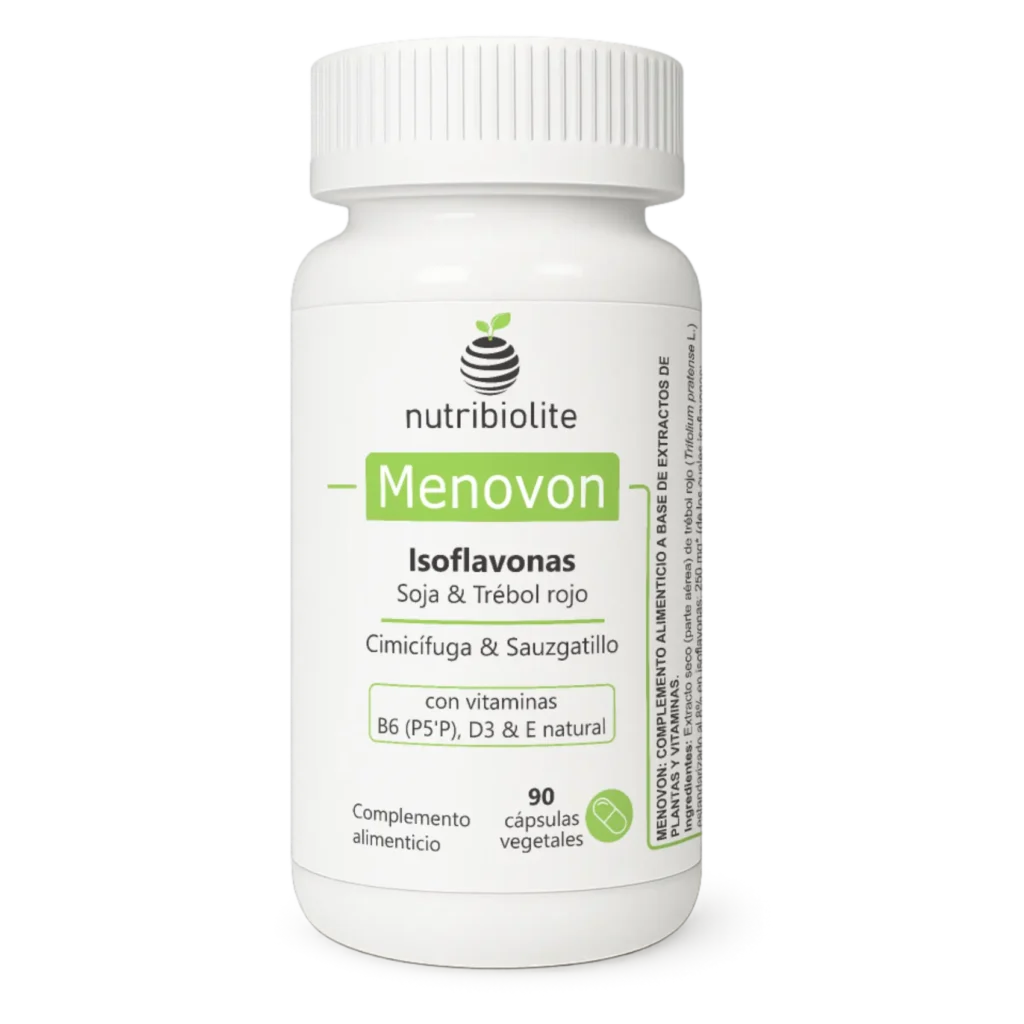
Botanical support for a more stable menopause, inside and out.
An important detail: this type of support is most appreciated when you use it consistently and accompany it with two basics, a light dinner and a cool bedroom, because both reduce the thermal “noise” at night. In addition, if your day is full of stress, a soft closing of screens also adds up, as the nervous system does not distinguish well between real threat and digital alert.
Typical questions to ask before trying it out
When do you tend to notice it more, in the morning or at night?
Many people integrate it with a daily intake and observe the change cumulatively, because the aim is to support stability, not to generate a one-off “switch” effect. Even so, context does play a role, which is why it is often particularly noticeable at night, when heat and light sleep are most evident.
I’m worried about soy – is it for me?
This is a common objection, and it makes sense to want to understand before you buy. Isoflavones are phytoestrogens, plant compounds with a mild receptor action, and are generally used for support at this stage; however, if you have a history of hormone dependence or have been prescribed specific restrictions, it is wise to check with your health professional before starting.
Can I combine it with other sleep supplements?
It is usually compatible with rest routines, although it is best to avoid mixing too many new things at once, so that you understand what is really working for you. Also, if you already take supplements with plants or ingredients with neurological action, check labels and ask if you have any doubts, to reduce unnecessary overlapping.
What if I am taking medication?
Here it is worth being especially careful, because some botanical extracts may not be suitable for certain treatments or medical conditions. The sensible recommendation is to show the label to your doctor or pharmacist, and then decide calmly and judiciously, rather than improvising.
Does it make sense if my symptoms come and go?
Yes, precisely because the perimenopause tends to be irregular, with quiet weeks and more intense weeks. Instead, a consistent routine helps give your body a repeated signal, and that often results in a more predictable experience, even when the hormonal calendar is still changing.
A note of caution to take good care of yourself
This content is informational and is not a substitute for medical advice. Food supplements should not be used as a substitute for a balanced diet and healthy lifestyle, and it is important not to exceed the recommended daily dose, and if you are pregnant, breastfeeding, have a medical condition or are taking medication, consult a healthcare professional before using Menovon.