



You open a tab to work. Then another to check a piece of information. Then you look at a message, go back to the document, remember a pending email and, when you want to realise, you’ve been busy for forty minutes without having made any real progress. It’s a despairing feeling, because it feels like activity, but the actual result falls short.
Many people experience this as a lack of discipline, although the explanation is usually much more concrete. When you string together small interruptions, the brain pays a toll every time you change targets and, in addition, it spends mental control resources on something as simple as repositioning itself.
Your attention empties with every jump
Sustained attention depends on brain networks that filter stimuli, prioritise a task and keep information active for a few minutes. When you switch between tabs, notifications and micro-decisions, that stability breaks down because your working memory has limited capacity and actually saturates sooner than you think.
This is also where dopamine comes in, which is involved in motivation and the search for novelty. A fast-changing digital environment pushes the brain to chase small, immediate rewards, which is why it is so hard to stay on a deep task when there are shorter, easier and more engaging stimuli around at the same time.
The problem is not just wasting time. Each change forces us to reactivate the previous mental context, recover the thread, stop irrelevant impulses and refocus. This cost of alternation wears out clarity, precision and constancy, yet from the outside it looks like you’re still working because you haven’t stopped moving for a minute.
Regaining the thread requires real support
When you understand this pattern, the logical response is no longer another coffee or more willpower. What is useful is to support the processes that sustain memory, concentration and mental performance, especially on days of fragmented work, because that is where the difference between being reactive and being truly focused is most noticeable.
Onit fits into that moment with a very clear logic: to help the brain keep better track of the task, sustain concentration for longer and get through the day with less of a feeling of dispersion. What’s more, its micro-benefits are easy to understand in real life: a quicker return to exactly where you left off, more mental stability in long blocks of work and a cleaner sense of clarity when there are many demands at once.
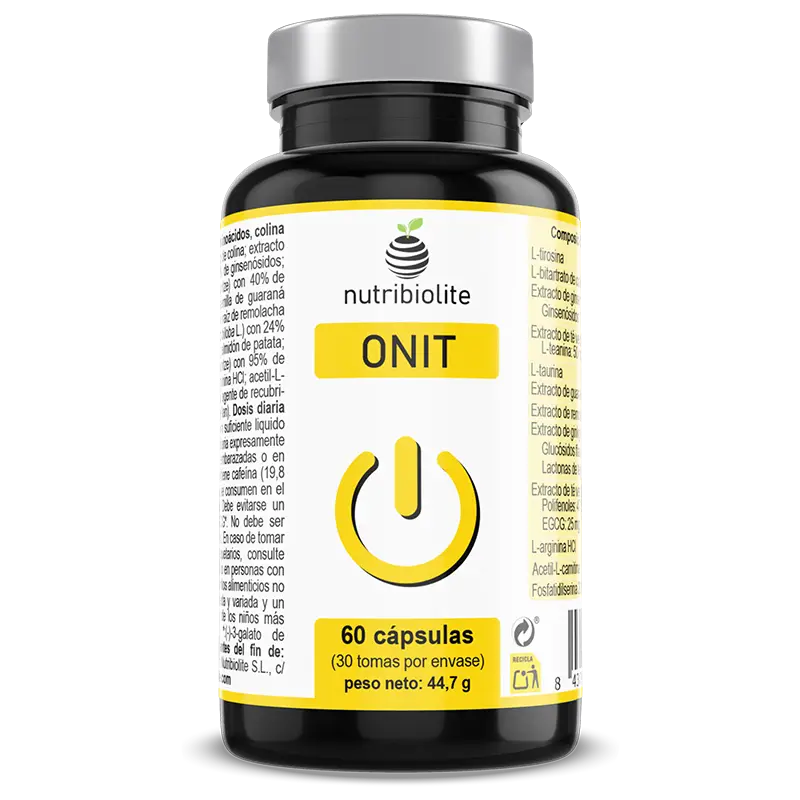
A smart aid to sustain focus, memory and mental rhythm when the day demands too much.
And here two common objections tend to crop up. The first: “if I sleep well, this should take care of itself”. Sleeping better helps a lot, but the cost of alternation and stimulus overload still exists during the day. The second: “coffee is enough for me”. Coffee can provide activation, but it does not always solve working memory, accuracy or attentional stability when the problem is constant fragmentation.
Common doubts before trying it
Is this for people who are overloaded with digital work?
It tends to fit particularly well there, because the constant switching of tasks exhausts attention and makes it more difficult to sustain the mental thread for several hours.
Does it work if my problem is jumping between tabs all day?
That is precisely one of the scenarios where it makes the most sense, as concentration is eroded by constant switching and the brain needs more support to maintain continuity.
What if I already drink coffee in the morning?
Many people drink coffee and still notice dispersion. Activation does not always equate to stable focus, because a racing mind can also work worse.
When is it more useful?
It is often noticeable on days with many meetings, demanding study, long cognitive tasks or days when you need to remember, decide and maintain precision without missing a beat.
Do I need to change anything else in my routine?
You should also reduce notifications, work in blocks and leave a single task visible. Onit fits best when the routine accompanies rather than sabotages the focus.
Use it judiciously
This content is for information only and does not replace the advice of a health professional. Food supplements should not be used as a substitute for a balanced diet and healthy lifestyle. If you are pregnant, breastfeeding, taking medication or have a medical condition, please consult a healthcare professional first.