




In 2026, a study published in *Frontiers in Nutrition* analysed vitamin D and exercise in adults with obesity. The review identified exercise as the main driver of metabolic improvements. Vitamin D was found to provide contextual support, particularly in cases of deficiency.
For these adults, physical activity drives adaptations in muscles, blood vessels and energy regulation. Adequate vitamin D status may support these responses depending on the individual context.
The review identifies exercise as the metabolic driver in obesity
Obesity is often characterised by a combination of mild chronic inflammation, insulin resistance, reduced muscle function and neurovascular abnormalities. The latter affect coordination between the brain, the circulatory system and tissues.
Metabolic inflexibility reduces the ability to switch between using fats and glucose according to the body’s needs. This problem links several metabolic changes described by the authors.
The study was a hypothesis-driven narrative review. The authors conducted targeted searches in three scientific databases on mechanisms and clinical outcomes.
The selection process lacked formal criteria and a quantitative assessment of quality. Its scope provides a conceptual synthesis of the available evidence.
Vitamin D acts via receptors present in various tissues
The vitamin D receptor is a protein that enables different tissues to respond to this vitamin. It is found in muscle, the brain, fat and the vascular endothelium.
Once activated, it regulates calcium, immune signalling and tissue-specific metabolic responses. It also plays a role in insulin sensitivity.
In muscle, it promotes the formation of mitochondria, the energy-producing structures within cells. It also regulates proteins necessary for muscle contraction.
In the brain and blood vessels, it plays a role in nerve signalling, blood flow and vascular integrity. These functions form part of the revised mechanism.
The neurovascular and muscular axis links energy, circulation and the brain
Exercise improves mitochondrial function, the health of the vascular lining and insulin sensitivity. It also promotes muscle adaptation.
During contraction, the muscle releases myokines. These molecules act as messengers between the muscle, adipose tissue, blood vessels and the brain.
Exercise can increase vitamin D receptors in the muscle and enhance its response. It can also mobilise reserves from adipose tissue.
These interactions are biologically plausible. However, there is still limited clinical evidence to support them in people with obesity.
Human evidence supports exercise and qualifies the role of vitamin D
In obesity, exercise improved insulin sensitivity, vascular function, adipose inflammation and muscle capacity. These findings had the strongest human evidence.
The effects associated with vitamin D varied according to initial deficiency, the tissue studied and the outcome measured. Its role was complementary and context-dependent.
The human trials described did not confirm consistent additional benefits from combining supplementation and exercise. Low levels were associated with obesity, although causality was not demonstrated.
The authors call for large-scale, obesity-specific trials. They also recommend taking into account baseline deficiency, specific exercise regimens and clinically relevant outcomes.
Nutribiolite Mag-fusion combines vitamin D3 with bioactive nutrients
The direct link to Mag-fusion is cholecalciferol, the D3 form included in its formula. Each dose provides 2,000 international units per day.
Mag-fusion is a food supplement for active people with specific nutritional needs. Its formula supports energy levels, muscles, bones and immunity.
Two capsules a day provide 247 milligrams of elemental magnesium from pure citrate. This form offers high bioavailability, absorption and digestive tolerance.
Magnesium contributes to energy metabolism and to muscle and nerve function. It also helps reduce tiredness and fatigue.
Magnesium and vitamin D3 contribute to the normal maintenance of bones and muscles. Vitamin D3 promotes the absorption of calcium and phosphorus.
Vitamin B6 is present as pyridoxal-5-phosphate and vitamin B12 as methylcobalamin. Folate is in the form of calcium L-5-methyltetrahydrofolate.
These forms are bioactive and ready for immediate use. All three vitamins play a part in the normal metabolism of homocysteine.
The bamboo extract provides 70 per cent natural silica. The formula contains no artificial colourings, preservatives or excipients.
Each pack contains 120 vegetarian capsules, sufficient for 60 days. This combination brings together vitamin D3, magnesium and active vitamins in a defined dose.
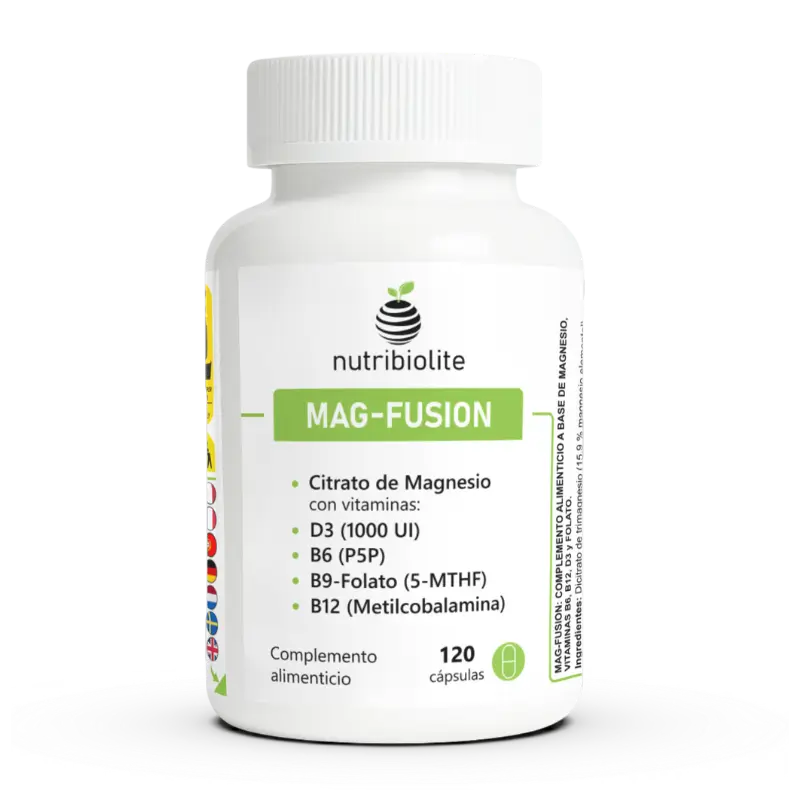
Mag-fusion provides the vitamin D3 discussed in the review, together with pure magnesium citrate and bioactive B vitamins.
These answers clarify the evidence and the use of Mag-fusion
What did the review conclude about vitamin D and exercise?
The review identified exercise as the main driver of metabolic improvement in obesity. Vitamin D provided complementary and context-dependent support.
Which population did the review focus on?
It focused on people who were overweight or obese. It also included heterogeneous human studies and evidence from animal and cell models.
How does the neurovascular-muscular axis work?
The axis connects the brain, blood vessels and muscles via circulation, nerve signals and muscle molecules. Exercise and vitamin D influence shared pathways.
How is Mag-fusion linked to the study?
Mag-fusion provides vitamin D3 in the form of cholecalciferol, an ingredient analysed in the review. Its formula also contains magnesium citrate and bioactive B vitamins.
How is Mag-fusion taken and what does the daily dose provide?
Take one capsule twice a day, after meals and with water. Two capsules provide 247 milligrams of elemental magnesium. This amount complies with the recommended limit of 250 milligrams for dissociable salts in supplements.
This content is for information purposes only and is not a substitute for advice from a healthcare professional.