




A simple intervention, such as personalised music in the ICU, can transform the indoor environment for those struggling with insomnia or stress. A study in Intensive Care Nursing 2025 showed that listening to music tailored to personal taste significantly improves mood, reduces feelings of fatigue and tension, and promotes a gentle lowering of heart rate in critically ill patients.
What does this mean for you? Although the study focused on hospitalised patients, science suggests that small relaxation rituals before bedtime, such as a quiet melody or a steady routine, prepare the body and mind for a deeper, more restful sleep. The benefit is especially notable for those seeking to improve their sleep quality and emotional well-being after demanding days.
Music and routine, invisible allies of stable sleep
The clinical trial conducted in Spain assigned 151 patients to listen to personalised music alongside routine care during their ICU stay. Following the music sessions, clear improvements were observed in all six dimensions of mood assessed (anger, fatigue, vigour, tension, among others), along with a measurable decrease in pain and heart rate.
These results suggest that external cues that promote calm and reassurance (such as soft music or dim lighting) may synchronise our nervous system to ease the transition to sleep. Although the participants were critically ill patients, the physiological underpinnings are shared: we all respond to sensory stimuli that help to progressively “switch off” the active brain of the day.
The natural sleep cycle and how to strengthen it
Sleep is a complex process involving hormones such as melatonin, neurotransmitters (serotonin) and precursor molecules (such as 5-HTP). Everyday factors – stress, screens, heavy dinners – can interfere with this chain, making it difficult both to fall asleep and to maintain a continuous rest.
That is why, in addition to relaxing rituals, it is important to pay attention to what is happening inside the body. From the age of 40 onwards, melatonin levels tend to decrease, which can cause sleep to become lighter and more interrupted. This is where physiological support, inspired by the body’s own natural mechanisms, can make sense.
How 4Sleep fits into your physiological routine
At times when habits are not enough to restore a natural sleep rhythm – due to sustained stress, long journeys or hormonal changes – it makes sense to seek support from formulas aligned with human physiology. 4Sleep follows this logic: it combines melatonin (1 mg), recognised by the EFSA as a sleep aid when taken before bedtime, with 5-HTP extracted from Griffonia simplicifolia (49 mg per capsule), a direct precursor of serotonin and melatonin.
The formula is completed by standardised extracts of valerian and chamomile, traditional plants that promote relaxation without the risk of dependence or daytime drowsiness. Each capsule provides safe and precise doses, free of synthetic additives, thus facilitating a smooth transition between wakefulness and rest.
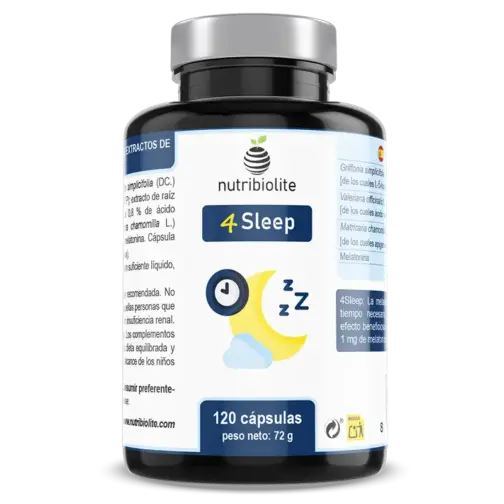
Melatonin 1 mg and 5-HTP with relaxing herbs.
Frequently asked questions
How and when should I take 4Sleep?
It is recommended to take one capsule about 30 minutes before bedtime, always at the same time and with a glass of water. Keeping to a routine helps to reinforce the natural effects of the supplement.
Does 4Sleep cause drowsiness the next day?
No. The formula is designed to support sleep without leaving a hangover feeling or residual drowsiness on waking.
Why is it relevant to combine melatonin with 5-HTP?
5-HTP acts as a direct precursor of serotonin and melatonin, optimising endogenous production and promoting a physiological transition to rest.
What differentiates 4Sleep from melatonin-only supplements?
4Sleep combines melatonin in safe doses with standardised extracts of Griffonia (5-HTP), valerian and chamomile. It thus supports both the onset and quality of sleep through various natural routes.
Can it be taken together with relaxing routines such as soft music?
Yes. Integrating relaxing habits before bedtime enhances the physiological effects of the supplement and helps to create a favourable environment for a good night’s rest.
This content is for informational purposes only and is not a substitute for the advice of a healthcare professional.