



A study published in PLoS ONE in 2025 analysed how green tea consumption affects mental performance, subjective fatigue and the state of flow in healthy young adults. Twenty-two healthy young men completed cognitive tasks under three conditions: no drink, water and green tea. The results showed that green tea maintained levels of arousal and prevented the increase in mental fatigue observed in the other conditions.
The most notable finding was the state of flow. The flow score in the green tea condition was significantly higher than in the other two conditions (p = 0.0009 compared with no drink). Participants also perceived the task duration as shorter when consuming green tea (p = 0.0016 compared with no drink; p = 0.0061 compared with water). These effects were observed with small amounts of tea and short periods of consumption.
What the study on green tea in healthy young adults revealed about mental fatigue and the flow state
The study found no significant differences in objective task performance between conditions, which the authors attribute to a ceiling effect, given that accuracy exceeded 95 per cent in all groups. What did vary statistically significantly, however, was the subjective experience during the cognitive tasks.
In the no-drink condition and the water condition, subjective fatigue increased following the tasks. In the green tea condition, this increase did not occur. Alertness levels remained stable. The research was conducted exclusively on healthy young men aged between 18 and 26, so its results apply to that specific population and cannot be generalised to other groups.
The bioactive compounds in green tea, including L-theanine, catechins and caffeine, interact with various neurochemical systems. L-theanine influences neurotransmitters such as GABA, dopamine and serotonin, which are involved in regulating mood and attention. Previous research has shown that the combination of L-theanine and caffeine improves performance in demanding attention tasks and reduces feelings of tiredness.
Why the pace of modern life makes it difficult to obtain green tea compounds on a consistent basis
Green tea contains a variety of bioactive compounds, the presence of which varies depending on the origin, processing and preparation of each infusion. The concentrations of L-theanine, EGCG and caffeine in a standard cup of tea are difficult to control precisely.
Furthermore, maintaining a regular intake of green tea throughout days of high intellectual demand requires consistency and availability. The natural variability of the drink means that the amount of active ingredients ingested varies from one serving to the next. For those seeking a precise and reliable supply of these compounds, a standardised extract offers a more controlled alternative.
How Onit by Nutribiolite, a nootropic food supplement, aligns with the physiological rationale of the study
The study analysed the bioactive compounds in green tea, particularly L-theanine and catechins such as EGCG, in relation to the maintenance of mental alertness and the experience of flow during cognitive tasks in healthy young people. Nutribiolite’s Onit contains two standardised green tea leaf extracts (Camellia sinensis L. Kuntze): one concentrated at 40% L-theanine and 6% EGCG, and another containing 95% polyphenols, 80% catechins and 50% EGCG. This dual extraction provides a more comprehensive profile of green tea’s bioactive compounds than a conventional single extract would offer.
Unlike drinking green tea as an infusion, where the concentration of L-theanine and catechins varies depending on the variety, steeping time and temperature, Onit’s standardised extracts guarantee a consistent composition in every capsule. The caffeine in Onit comes from guarana extract (Paullinia cupana Kunth), which contains 22 per cent natural caffeine, providing 19.8 mg per daily dose of two capsules – a moderate amount that is lower than that found in a cup of coffee. Guarana also contains theobromine and theophylline, which regulate the release of caffeine and prolong its action in the body more gradually than caffeine on its own.
Onit’s formula also includes L-tyrosine, a precursor to neurotransmitters such as dopamine and noradrenaline; choline, an essential nutrient for the formation of acetylcholine; plant-derived phosphatidylserine, a structural phospholipid of neuronal membranes; acetyl-L-carnitine, which crosses the blood-brain barrier and plays a role in neuronal energy metabolism; Korean ginseng containing 20% ginsenosides; Ginkgo biloba containing 24% flavonoid glycosides and 6% terpene lactones; L-taurine; L-arginine; and beetroot extract. Onit contains no additives, preservatives, added sugars, gluten, lactose or genetically modified organisms. Its capsule is plant-based.
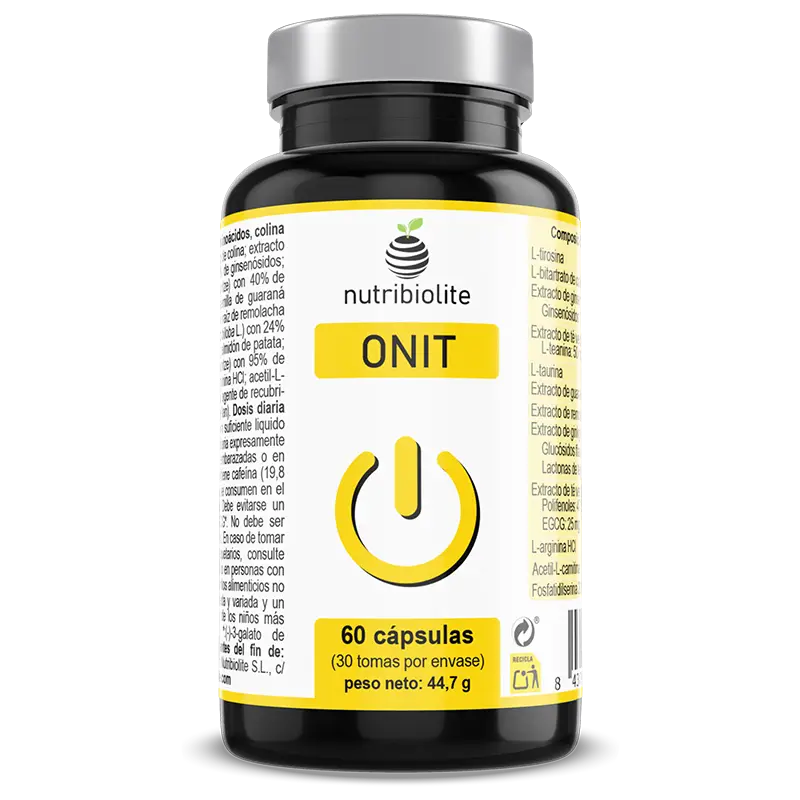
Onit combines a double standardised extract of green tea concentrated in L-theanine and EGCG, guarana with natural caffeine, Korean ginseng, ginkgo biloba, plant-based phosphatidylserine, choline and L-tyrosine, in an additive-free formula designed to support mental performance during periods of high intellectual demand.
Frequently asked questions about green tea, cognitive performance and Onit
What did the 2025 PLoS ONE study find regarding green tea and the state of flow?
The study found that green tea consumption was associated with significantly higher flow scores during cognitive tasks, compared with not drinking anything (p = 0.0009) or drinking water alone. Participants also perceived the task duration as shorter in the green tea condition. The study was conducted on 22 healthy young men aged between 18 and 26.
What is the state of flow and why is it relevant to cognitive tasks?
Flow is a state of deep absorption in a task in which time seems to pass more quickly and concentration is maintained without apparent effort. In the context of intellectual work, experiencing flow is associated with greater productivity and a lower perception of mental load. The study used a validated questionnaire to measure flow during cognitive tasks modelled on office work.
Why does Onit use two different green tea extracts?
Each green tea extract in Onit is optimised to concentrate different active ingredients. The first provides 40% L-theanine and 6% EGCG. The second is concentrated to 95% polyphenols, 80% catechins and 50% EGCG. This combination provides a more comprehensive profile of green tea’s bioactive compounds than a single standard extract would offer.
Can the caffeine in Onit cause nervousness?
Onit contains 19.8 mg of caffeine per daily dose of two capsules, a significantly lower amount than that found in a cup of coffee. The caffeine comes from guarana extract, which also contains theobromine and theophylline. These compounds modulate the release of caffeine, resulting in a more gradual and sustained stimulation, with a lower likelihood of causing sudden energy spikes or nervousness. However, it is recommended that you stick to the recommended dose and avoid taking it between meals.
Is Onit suitable for people who are already taking other products containing green tea?
Onit should not be taken on the same day as other products containing green tea, given its EGCG content. A daily intake of 800 mg or more of EGCG should be avoided. Its use is not recommended for people undergoing treatment with antidepressants or antidiabetic medication, for pregnant or breastfeeding women, or for those under the age of 18. If you are taking anticoagulants or antiplatelet medication, you should consult a doctor beforehand.
This content is for information purposes only and is not a substitute for advice from a healthcare professional.