




A study in Endocrinology, diabetes & metabolism 2026 synthesised eight meta-analyses of randomised controlled trials to assess the effect of coenzyme Q10 (CoQ10) on markers of glycaemic control. The pooled analysis showed that CoQ10 supplementation is associated with a reduction in fasting glucose of 5.04 mg/dL. The effects on HbA1c, HOMA-IR and insulin varied according to the method of analysis used.
The authors conclude that CoQ10 may have a moderately beneficial effect on glycaemic control in people with metabolic conditions, including type 2 diabetes, obesity, polycystic ovary syndrome and chronic kidney disease. The results are relevant to this specific population and do not generalise to healthy adults.
What mechanisms explain the effect of CoQ10 on blood glucose in people with metabolic conditions?
CoQ10 acts on three physiological fronts that affect glucose regulation. First, it neutralises free radicals in mitochondria, reducing oxidative stress associated with insulin resistance. Second, it improves mitochondrial function and ATP production, promoting better cellular glucose utilisation. Third, it modulates chronic low-grade inflammation, a factor directly linked to impaired insulin signalling.
People with type 2 diabetes have significantly lower plasma levels of CoQ10 than healthy individuals. Statin use, hyperglycaemia-induced oxidative stress and insufficient absorption are factors that further reduce these levels. Replenishment through supplementation aims to restore the availability of this compound in cells.
Why monacolins from red yeast-fermented rice reduce endogenous CoQ10 levels and what this involves
Monacolin K, the active compound in red yeast-fermented rice, inhibits the enzyme HMG-CoA reductase, the same metabolic pathway used by statins to reduce cholesterol synthesis in the liver. This inhibition also reduces endogenous CoQ10 production, as the two molecules share part of the same biosynthetic pathway.
This biochemical relationship is not a minor side effect. CoQ10 is essential for energy production in the heart, kidneys and liver, organs with high metabolic demand. When its endogenous synthesis decreases, external supply becomes functionally relevant to muscular and cardiovascular energy balance.
How Nutribiolite’s Protecardio, a dietary supplement for cholesterol control, incorporates CoQ10 in a multiday formula
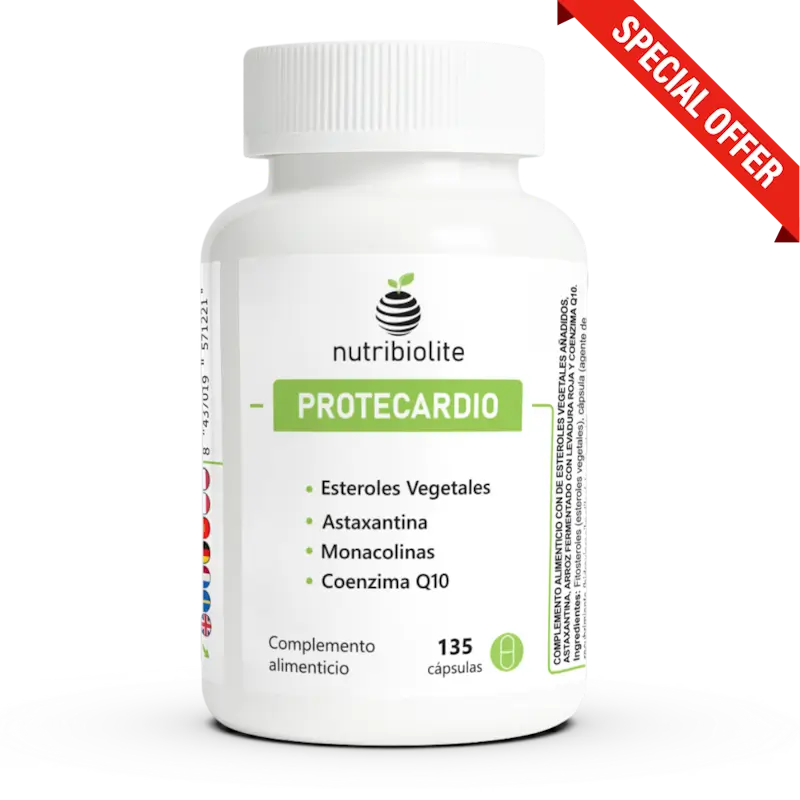
Protecardio combines phytosterols (997.5 mg per daily dose), red yeast fermented rice standardised to 4% monacolins, astaxanthin from the algae Haematococcus pluvialis standardised to 5% and coenzyme Q10, in a 100% natural formula with no additives.
The study analysed focused on coenzyme Q10, an ingredient present in Protecardio. The rationale for including it in this formula responds directly to the mechanism described in the scientific literature: the monacolins in red yeast-fermented rice reduce endogenous CoQ10 synthesis, and the Protecardio formula incorporates this compound to compensate for this physiological effect.
Phytosterols act in the intestine in competition with cholesterol during absorption, providing 997.5 mg per daily dose, above the threshold of 800 mg established as effective under Regulation (EU) No 432/2012. Astaxanthin, extracted from the algae Haematococcus pluvialis and standardised to 5%, provides antioxidant properties studied in relation to lipid peroxidation and LDL cholesterol metabolism. The formula contains no additives.
What role does glycaemic metabolism play in the context of cardiovascular risk according to the available evidence?
Dysregulation of glucose metabolism increases susceptibility to chronic diseases such as dyslipidaemia and cardiovascular disease. Maintaining HbA1c below 7.0% is an established clinical target to reduce the risk of microvascular and cardiovascular complications. The relationship between glucose, lipids and cardiovascular health is part of the same metabolic axis.
In this context, CoQ10 appears in the research as a compound with the potential to support mitochondrial energy metabolism and reduce oxidative stress, two factors involved in both glycaemic control and cardiovascular health. The study results pertain to individuals with specific metabolic conditions, and any consideration of supplementation should be made with professional guidance.
Frequently asked questions about CoQ10, Protecardio and metabolic control
What did the study show about CoQ10 and fasting glucose?
The pooled analysis of eight meta-analyses showed that CoQ10 supplementation is associated with a mean reduction of 5.04 mg/dL in fasting glucose in people with metabolic conditions such as type 2 diabetes, obesity and metabolic syndrome. The effects on HbA1c and insulin were significant in some analyses but not in others, depending on the statistical method used.
Why does the Protecardio formula include CoQ10 alongside monacolins?
Monacolins from red yeast-fermented rice inhibit the enzyme HMG-CoA reductase, the same pathway that reduces endogenous CoQ10 synthesis. For this reason, Protecardio’s formula incorporates coenzyme Q10 to compensate for this reduction and support cellular energy balance, especially in organs with high metabolic demand such as the heart and liver.
Who is Protecardio for?
Protecardio is intended for adults who wish to control their blood cholesterol levels naturally. It is not suitable for pregnant or breastfeeding women, those under 18 years of age or those over 70 years of age. It should also not be taken with cholesterol-lowering medicines or other products containing red yeast rice or astaxanthin esters on the same day.
How is Protecardio taken and why with meals?
Take three capsules a day, one with each main meal. Phytosterols work by reducing the absorption of cholesterol during digestion, so taking them with food improves their effectiveness. In addition, astaxanthin and coenzyme Q10 are fat-soluble compounds whose absorption is optimised in the presence of dietary fats.
Can Protecardio be combined with other Nutribiolite supplements?
Protecardio can be combined with other Nutribiolite supplements according to individual needs. For example, its combination with Omega 3 + Vitamins D3 and K2 may offer additional support for cardiovascular and bone health. Before combining supplements, it is advisable to consult a health professional.
This content is for informational purposes only and is not a substitute for the advice of a healthcare professional.