



What are the benefits of combining nutrients for the brain and eyes in an omega-3 supplement? A review in the *Clinical Kidney Journal* (2026) highlights the importance of distinguishing between the types of fatty acids, their quantities and their form.
Nutribiolite’s DHA-PS combines DHA, which contributes to normal brain function and the maintenance of normal vision, with sunflower phosphatidylserine. The formula combines both ingredients in small soft capsules for a simple daily regimen.
The publication reviews the use of fish oil in adults with chronic kidney disease. It includes PISCES, a randomised trial involving 1,228 people on haemodialysis that compared 1.6 g of EPA and 0.8 g of DHA daily with a placebo. After a median follow-up of 3.5 years, this combination reduced cardiovascular events compared with placebo, without a significant reduction in all-cause mortality. The authors call for independent confirmation. Their findings do not apply to DHA-PS, which uses different dosages and incorporates phosphatidylserine.
Why DHA-PS combines two components of cell membranes
The review explains that omega-3s play a role in the structure and function of cell membranes—the envelopes that enclose cells and are involved in signal transduction. DHA forms part of these structures in the brain and retina.
Phosphatidylserine is a phospholipid, a type of fat that is also a component of cell membranes. DHA-PS provides 100 mg of phosphatidylserine per day, derived from sunflower lecithin. This formulation combines two components linked to cell structure, without relying on a soya-based source.
DHA-PS prioritises DHA for the brain and vision
The benefit of DHA for normal brain function and the maintenance of normal vision is achieved with a daily intake of 250 mg. DHA-PS provides 500 mg of DHA in its two daily capsules, meaning the recommended intake covers the amount required for these benefits.
The review also notes that the form of the oil and the simultaneous intake of fat influence the bioavailability of omega-3s. DHA-PS uses fish oil containing 50 per cent DHA in the form of triglycerides, a common structure found in dietary fats. The recommended intake is to take it with meals.
DHA-PS makes it easy to stick to the regimen with its small capsules
The review notes that frequent doses and a lingering fishy aftertaste can make it difficult to stick to the regimen. DHA-PS presents both ingredients in small soft capsules, with no fishy smell or taste. The pack contains 120 capsules, sufficient for 60 days’ use.
To complement nutritional care for the brain and eyes, DHA-PS combines a specific dose of DHA and sunflower phosphatidylserine with a convenient format to help you stick to your regimen. You can find full details of the formula on its product page.
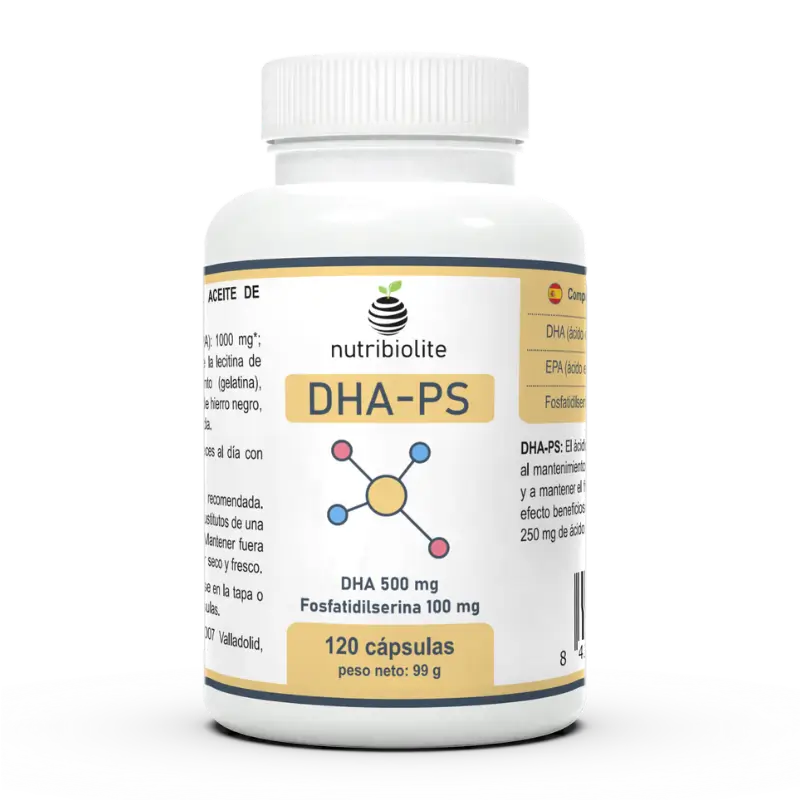
DHA-PS combines DHA, which contributes to normal brain function and the maintenance of normal vision, with sunflower phosphatidylserine. Its 120 small soft capsules provide a 60-day supply.
Frequently asked questions about DHA-PS
What is the function of each ingredient?
DHA contributes to normal brain function and the maintenance of normal vision. Phosphatidylserine is a structural component of cell membranes.
How much DHA and phosphatidylserine does the daily dose provide?
It provides 500 mg of DHA and 100 mg of phosphatidylserine in two capsules.
How should DHA-PS be taken?
Take one capsule twice a day, with plenty of liquid at mealtimes. Do not exceed the recommended daily dose.
Does it contain soya or any allergens?
Phosphatidylserine is derived from sunflower and the formula is free from soya, gluten and lactose. It contains fish oil, so it should be avoided if you are allergic to fish.
How long does a pack last?
The 120 soft capsules provide a 60-day supply when taken as recommended, which is approximately two months’ supply.
Food supplements should not be used as a substitute for a balanced and varied diet and a healthy lifestyle.
This content is for information purposes only and is not a substitute for advice from a healthcare professional.