




A systematic review published in the study in Foods (Basel, Switzerland) 2026 looked at the available evidence on polyunsaturated omega-3 fatty acids and healthy ageing. The authors reviewed clinical trials published up to November 2025 in PubMed, Web of Science, Scopus and the Cochrane Library. The overall conclusion is that older adults with higher intakes of omega-3s, especially DHA and EPA, tend to maintain better cardiovascular and cognitive function over time.
The study focuses on older adults, a population in which chronic inflammation and oxidative stress accelerate physiological decline. The researchers found that doses of between 1 and 3 g daily of combined EPA and DHA, maintained for at least 12 months, were associated with modest but consistent improvements in cognitive domains such as memory and processing speed. The results are more relevant in people with low baseline omega-3 status or pre-existing cardiovascular disease.
Why chronic inflammation and omega-3 deficiency affect the brain and heart in adulthood
The human body cannot synthesise omega-3s on its own. It depends entirely on diet. The problem is that the current Western diet has an omega-3/omega-6 ratio of about 1:20, far from the 1:1 to 1:5 range considered physiologically optimal by the scientific literature. This imbalance favours pro-inflammatory pathways and hinders normal immune regulation.
DHA is the most abundant omega-3 fatty acid in the human brain. It forms a structural part of the phospholipids of neuronal membranes, especially in the grey matter, and is present in high concentration in the retina. Its role in membrane fluidity, synaptic transmission and neurogenesis makes it a nutrient of particular relevance for the maintenance of brain and visual function. The review highlights that the bioavailability of omega-3s is highly dependent on their chemical form: triglycerides and phospholipids are absorbed more efficiently than ethyl esters, a common form in many lower quality supplements.
Why achieving effective doses of omega-3s from diet alone is difficult in modern life
The WHO recommends at least two servings of oily fish per week for adults. Older adults with sarcopenia may need up to three servings per week to achieve between 4 and 4.59 g per day of omega-3. This volume of regular consumption of fresh oily fish does not fit in with the usual eating patterns of a large part of the population in Spain and Latin America.
In addition, not all supplements available on the market provide a clinically significant dose or guarantee the most bioavailable chemical form. The review explicitly points out that the effectiveness of an omega-3 supplement varies depending on the source, purity, concentration, fatty acid form and manufacturing standards. These factors make real differences in nutritional outcome.
How Nutribiolite’s DHA-PS, a dietary supplement with omega-3 and phosphatidylserine, responds to the physiological rationale of the study
The review highlights DHA and EPA as the long-chain omega-3s with the strongest support in the evidence for cognitive function and cardiovascular health in older adults. Nutribiolite DHA-PS provides 500 mg of DHA and EPA per daily dose from Omegatex® fish oil, developed by the Spanish company Solutex®. This oil presents DHA in the form of triglycerides, the form that scientific review identifies as more efficiently absorbed than ethyl esters. It is also IFOS-certified, which guarantees purity, freshness and freedom from contaminants such as heavy metals.
The formula also incorporates Sharp-PS® Green phosphatidylserine, obtained from sunflower seeds from sustainable European agriculture, completely free of soya. Phosphatidylserine is a structural phospholipid of neuronal membranes whose concentration in the brain tends to decrease with age. In neurons, it acts as a functional platform for DHA, which can account for up to 30% of the fatty acids in this phospholipid. By formulating both ingredients in the same softgel, a lipophilic environment is created that improves the solubilisation and bioavailability of phosphatidylserine during digestive transit, which is not the case when taken separately.
Each daily dose provides 500 mg of DHA and 100 mg of phosphatidylserine, in 120 small, easy-to-swallow softgels. The formula contains no synthetic additives, preservatives, soya, gluten, lactose or added sugars, and has no fishy smell or taste.
Regulation (EU) No 432/2012 recognises that DHA contributes to the maintenance of normal vision and normal brain function, with a beneficial effect from 250 mg daily. DHA-PS provides 500 mg of DHA per daily dose.
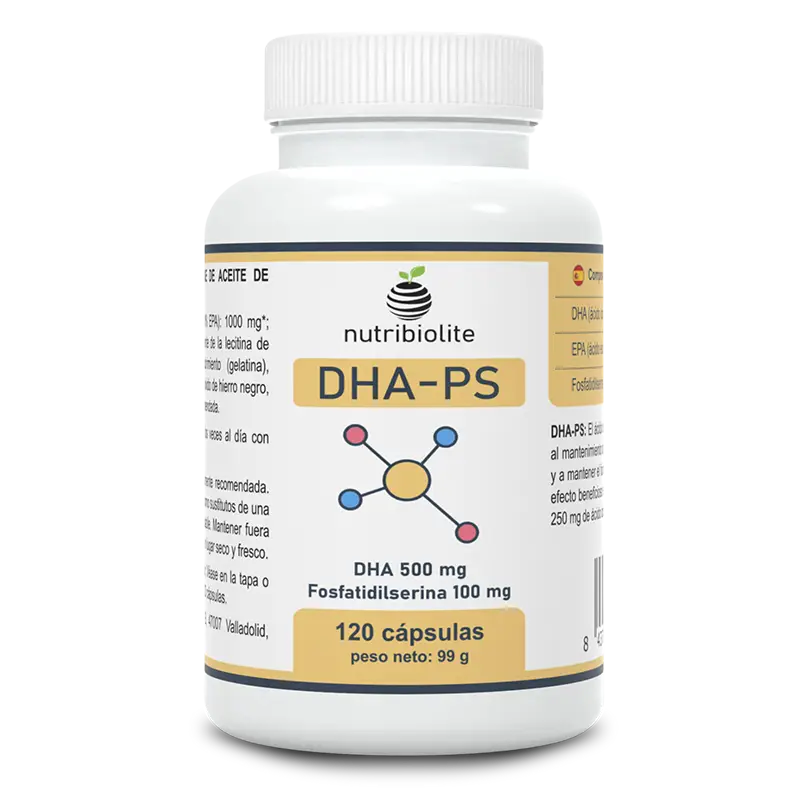
DHA-PS combines Omegatex® fish oil with 50% DHA in the form of triglycerides and soya-free Sharp-PS® Green phosphatidylserine in a formula without synthetic additives designed to support brain and vision function.
Frequently asked questions about omega-3, DHA and healthy ageing
What is the difference between DHA in triglyceride form and DHA in ethyl ester form?
The chemical form of DHA directly influences its intestinal absorption. Triglycerides, the form present in DHA-PS Omegatex® oil, are absorbed more efficiently than ethyl esters, which require an additional enzymatic step to be processed. The scientific review published in Foods (Basel, Switzerland) 2026 explicitly points out this difference as a relevant factor for the nutritional outcome of the supplement.
Who can take DHA-PS?
DHA-PS is suitable for adults of all ages, including pregnant and lactating women on medical advice, as well as older people who wish to supplement their diet with omega-3 and phosphatidylserine. Before starting any dietary supplement, it is advisable to consult a health professional.
Does DHA-PS contain soy, gluten or other common allergens?
No. DHA-PS uses Sharp-PS® Green phosphatidylserine, obtained from sunflower lecithin, which is completely soy-free. The formula also contains no gluten, lactose, preservatives or synthetic additives, making it suitable for people with common food sensitivities.
How long is it recommended to take DHA-PS for sustained nutritional support?
The review suggests that the most consistent effects in older adults are seen with sustained supplementation for at least 12 months. Individual response varies according to baseline omega-3 status and the person’s overall diet. DHA-PS is designed to integrate comfortably into the daily routine over the long term.
What certifications support the quality of DHA-PS fish oil?
The Omegatex® fish oil in DHA-PS is IFOS (International Fish Oil Standards) certified, which guarantees the highest standards of purity, freshness and potency, including the absence of heavy metals and other contaminants. All ingredients also comply with European food safety regulations.
This content is for information only and is not a substitute for the advice of a healthcare professional.